Aluminium all-in cost: what sits above the LME price
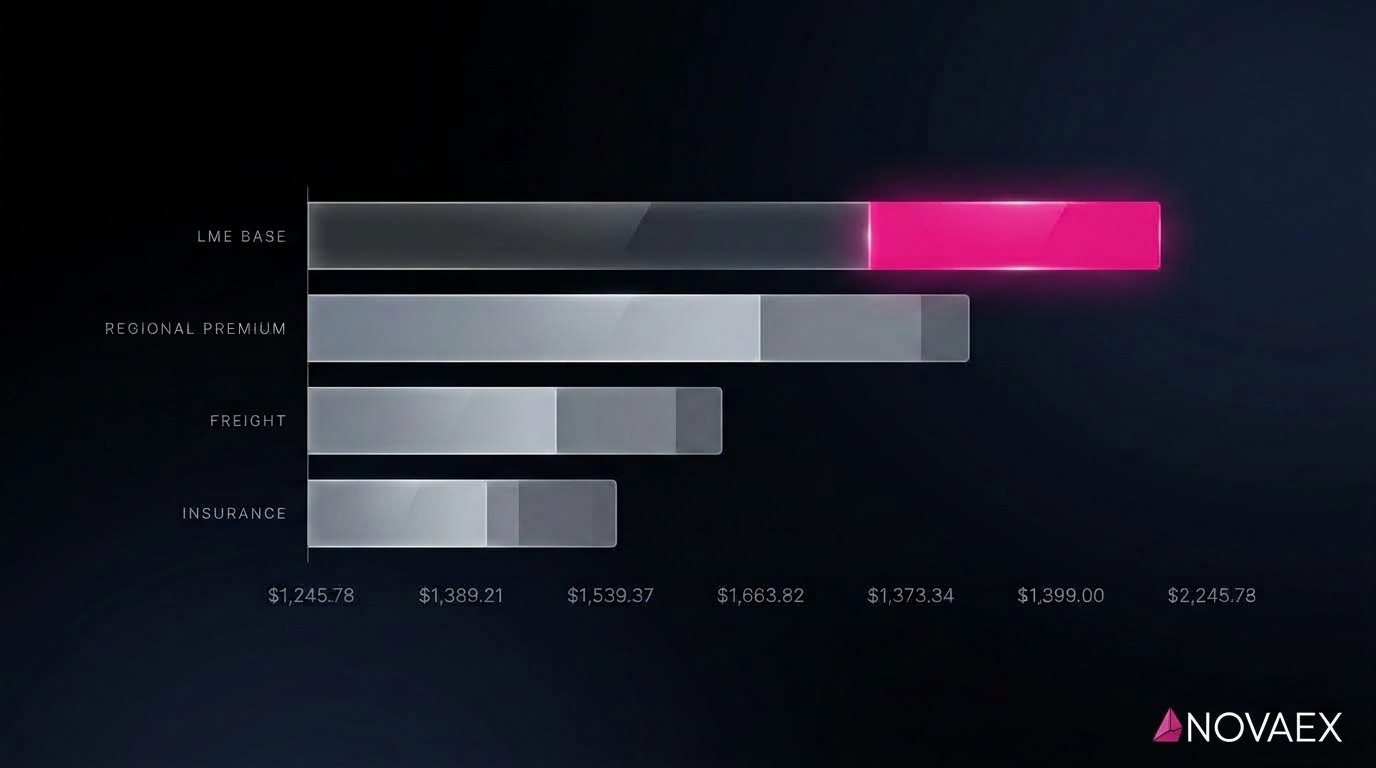
The LME hedge covers the base. The margin lives in the premium, freight and duty on top of it.
Your aluminium bill was never the LME price. Your all-in cost is the LME cash price plus the regional premium plus freight, insurance and duty to your door. The LME futures hedge most buyers hold covers only the first leg. It leaves the premium and logistics to move against a fixed-price sale.
What is the aluminium all-in cost?
The all-in cost is the delivered price you actually pay for physical aluminium: LME base price plus regional premium plus freight, insurance and any duty. The base is the exchange number on screen. The premium is what it costs to get real metal to your region, in your shape, when you need it. Freight and insurance close the last gap to your door. If you quote customers off the LME alone, you are quoting off a fraction of what you will pay.
Most downstream buyers learn this at the invoice. The purchase order says LME plus premium plus extras. The hedge, if there is one, says LME only. That mismatch is the exposure.
Why does the regional premium separate from the LME base price?
The regional premium pays for physical availability where you are: smelter offers, warehouse stocks, freight lanes, power costs, trade policy and queues. The LME price clears global expectations for primary metal. The premium clears the local fight for units.
That is why the two can pull apart fast. In the first half of 2026, Fastmarkets reporting carried Rotterdam P1020A duty-paid premium assessments around $360-390 per tonne while the US Midwest premium printed above 100 cents per lb, and S&P Global reported the Q1 2026 Japan MJP premium settling at $195 per tonne, up 126% on the quarter. Same base metal, three different local prices, driven by logistics and regional tightness rather than the LME curve.
For a fabricator in the GCC or the EU, that separation lands directly in margin. Your sales team watches LME. Your cost moves on premium.
What sits in the stack beyond the premium?
Four legs, each with its own timing.
LME base. Set daily, liquid, hedgeable with standard futures. This is the leg everyone sees.
Regional premium. Set by negotiation or by assessment (Fastmarkets MB, Platts, MJP negotiations), reset monthly or quarterly. Moves on local stocks, freight disruption and duty changes. Fix it in the physical contract or through a dedicated premium contract. The LME lists aluminium premium contracts for exactly this leg.
Freight. Priced per shipment. Moves on fuel, routes and events such as the Strait of Hormuz disruption flagged in 2026 premium coverage. Fixable per booking, not hedgeable on exchange.
Insurance and duty. Small per tonne, fixed by policy and tariff. Known in advance, rarely hedged, still part of the quote.
Write the four down for this week's tonnage, with dates. Most cost owners who do find the premium is the largest unhedged line.
Which part of the stack moves your margin most?
The part you have not fixed. An LME hedge without a premium fix leaves the local leg open. The local leg is the one that gaps when freight lanes close or regional stocks thin. A fixed premium with a floating LME leaves the base open, which at least has a liquid hedge.
So sequence it. Cover the base with the standard LME hedge matched to your quotation period. Then close the premium, either by fixing it in the physical contract or with an LME aluminium premium contract matched to your region. Freight gets booked and passed through. Duty gets costed, not hedged.
A manufacturer holding a fixed-price sale does not need a hedging desk to do this. It needs one sheet: tonnage, quotation period, base fixed or floating, premium fixed or floating, freight booked or open. The open boxes are the exposure.
Compute your all-in delta this week, then hedge the premium leg first.