Novaex Blog
Analysis, insights, and strategies from the experts at Novaex. Exploring the trends and technologies shaping commodity trading and risk management.
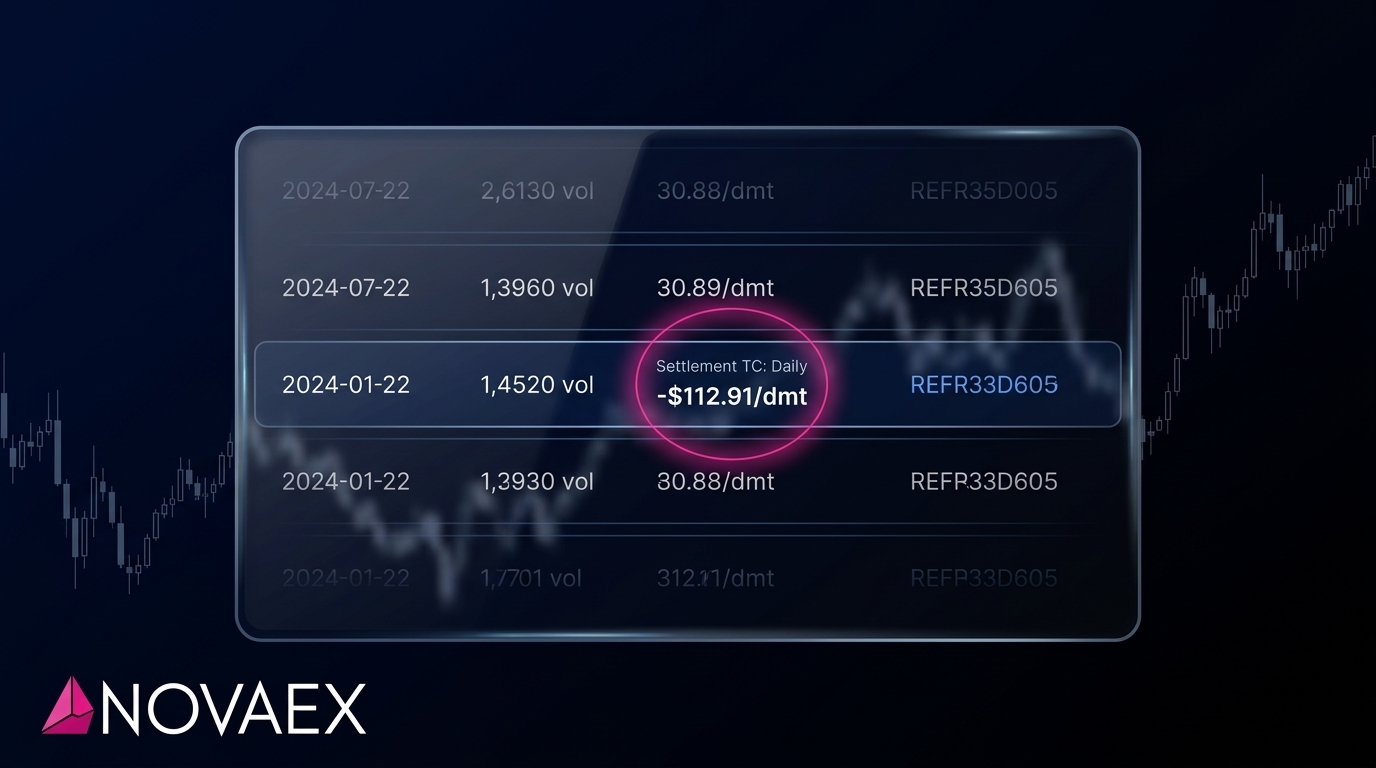
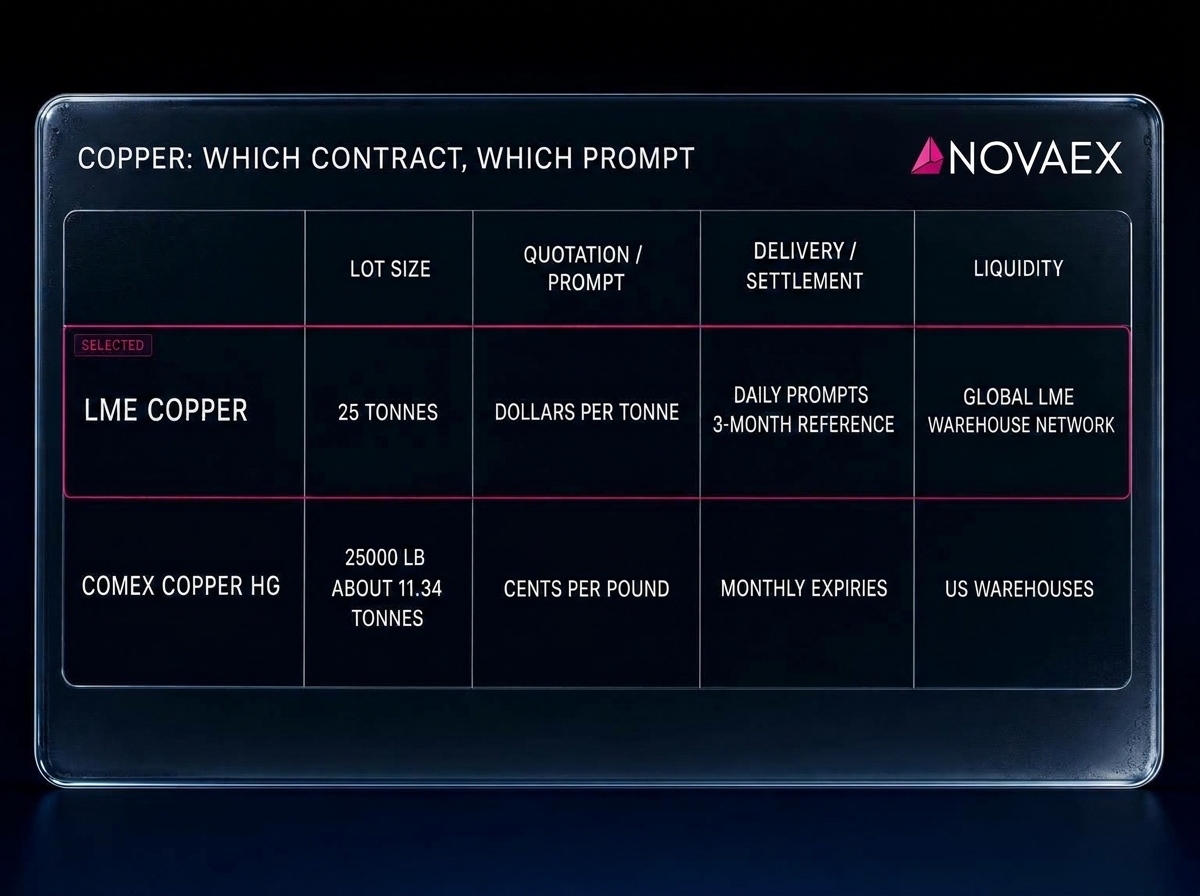
LME vs COMEX copper: which contract and which prompt date?
Hedge copper where the physical prices, match the prompt to the quotation period, and name what would flip the call.
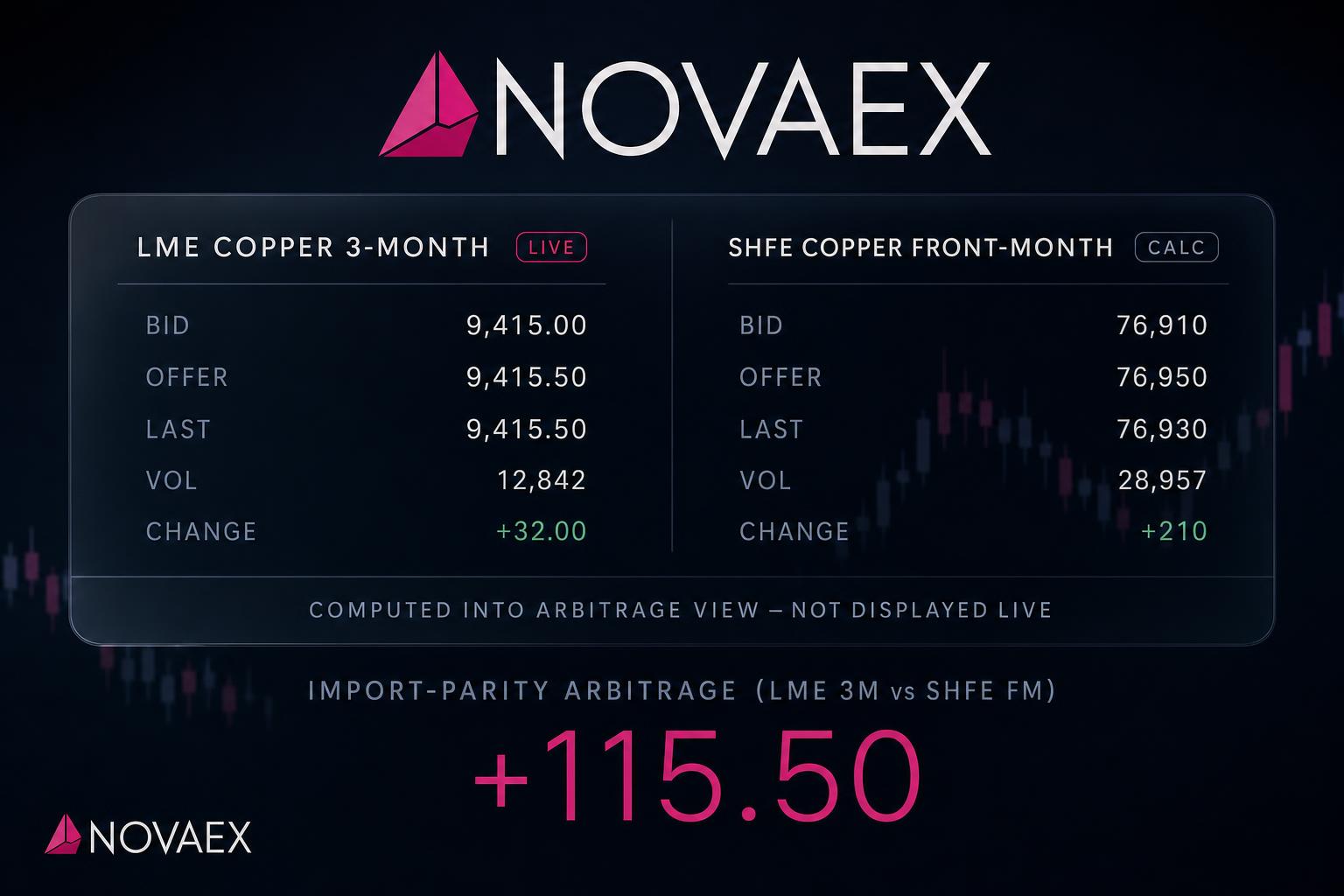
SHFE vs LME copper spread: what the Shanghai leg tells a hedger
London shows the global paper price. Shanghai shows what China will pay for the metal itself. The gap between them, net of freight, duty, VAT and currency, is the import window — and it moves before the London desk opens.
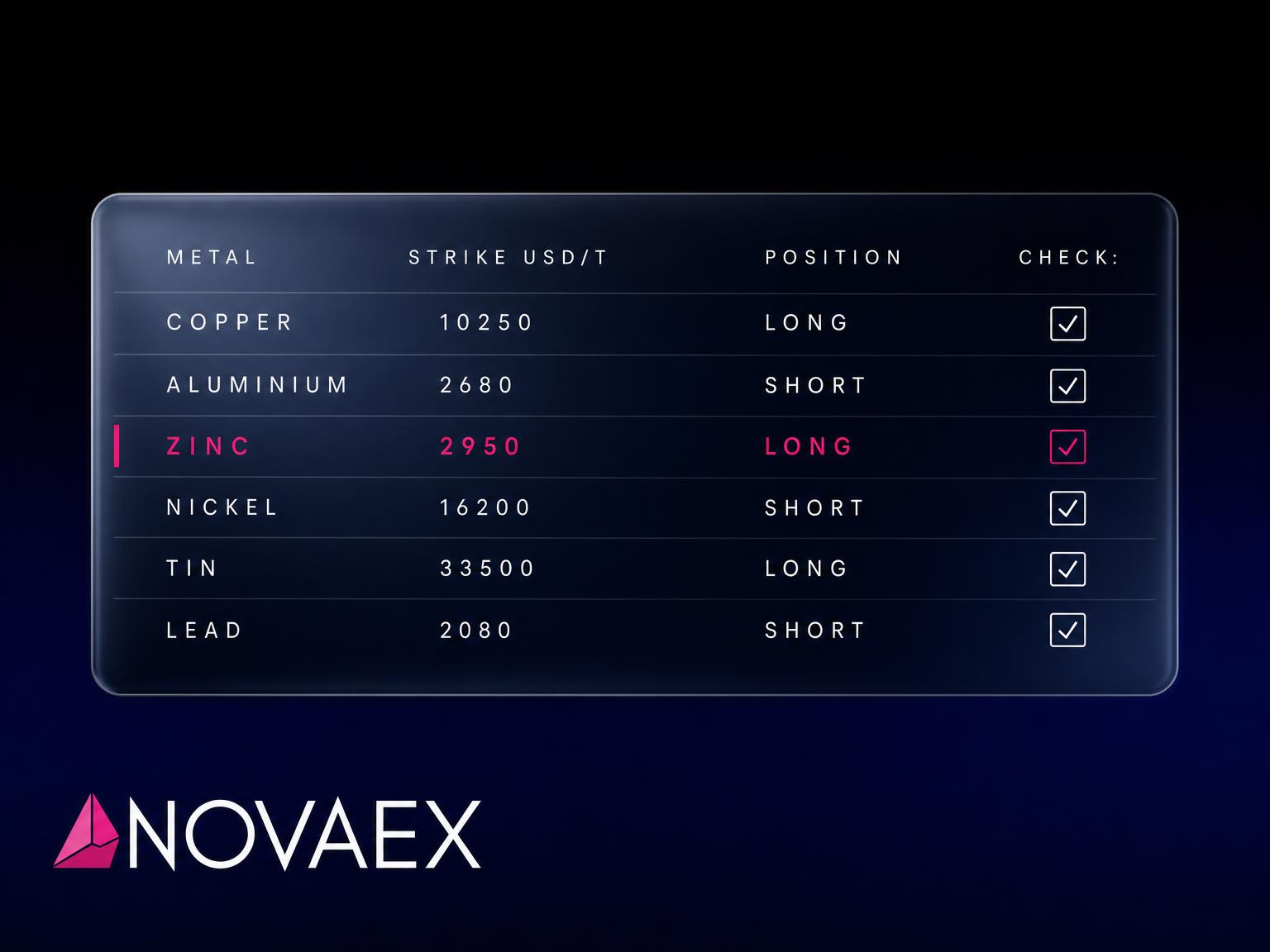
First automated LME options expiry is tomorrow: what to check today
Tomorrow is the first automated LME options expiry. Four checks to run today: near-the-money strikes, exercise assumptions, the broker reconciliation, and the sign-off.
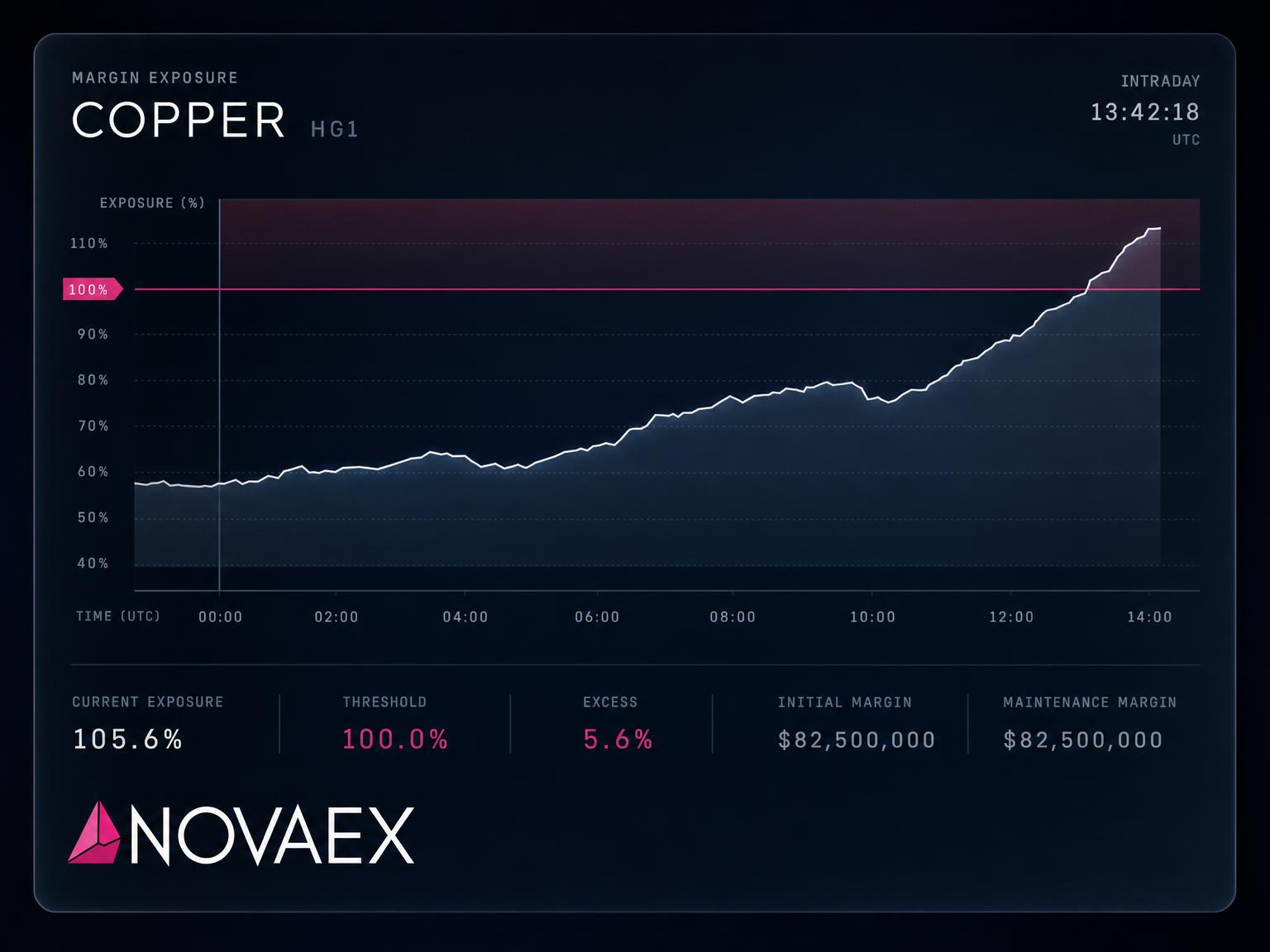
Margin calls on metals hedges: reading exposure before the broker does
Hold your own line below the broker's, read distance to it before the desk opens, and act on the cross.
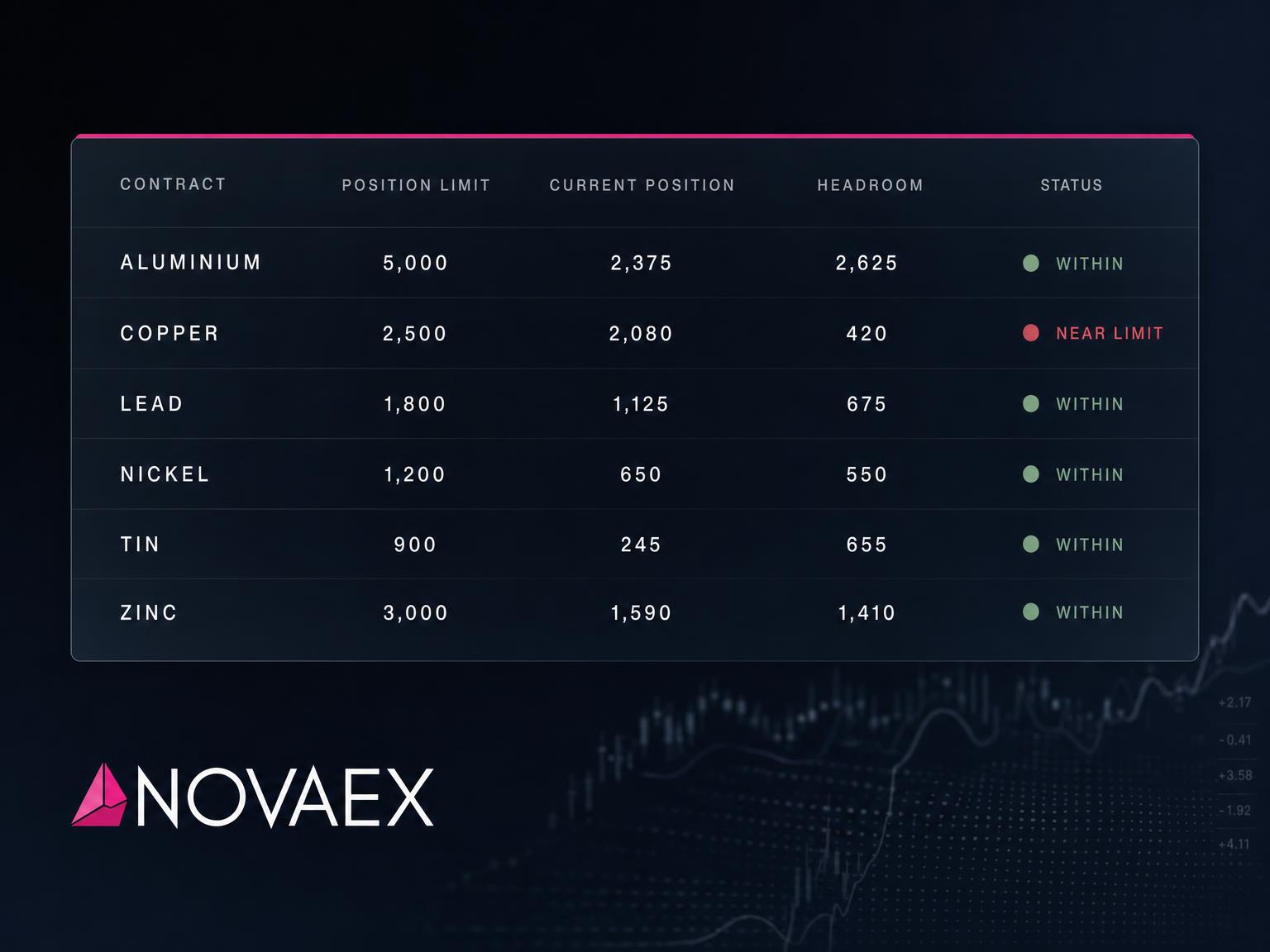
Position limits and reporting: what UK and EU regimes ask of a metals book
UK limits move to the LME on 6 July 2026; EU limits stay with authorities under Article 57. What each regime counts, reports, and asks you to prove.
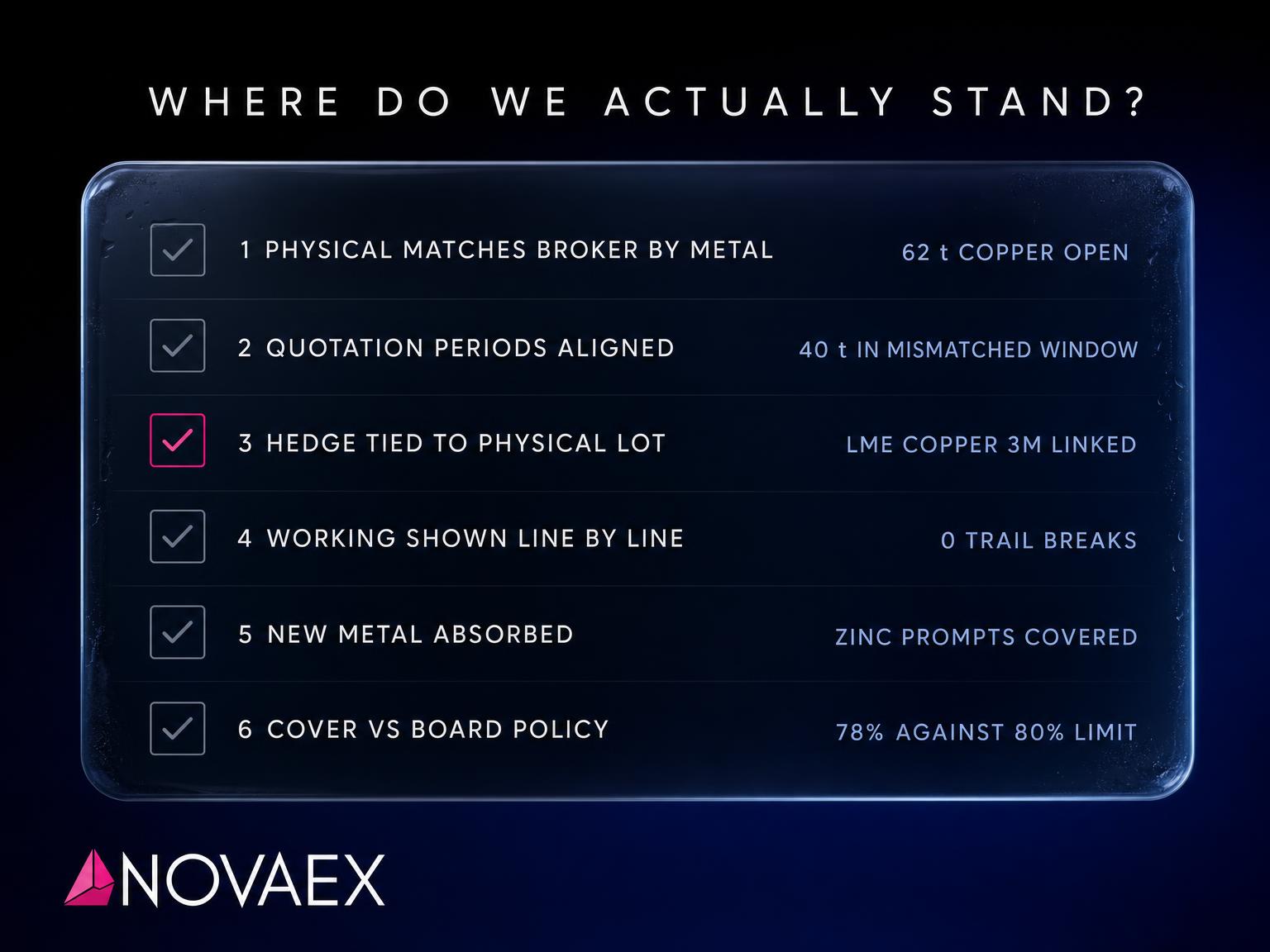
Where do we actually stand? A quarter-end checklist for a base-metals book
Six reconciliation tests to work before the desk opens, each with a figure you write down.
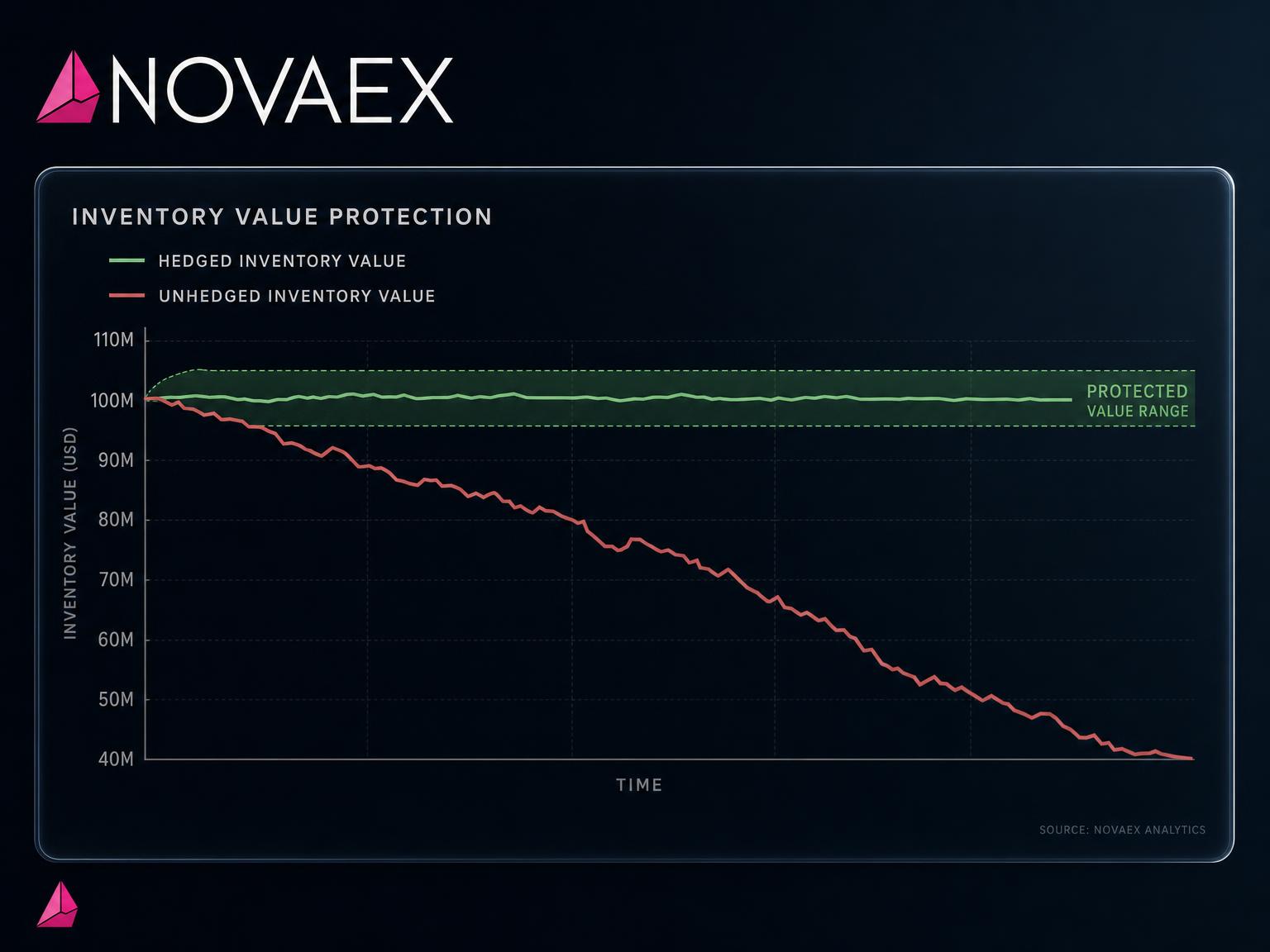
Inventory value and EBITDA: what a producer's hedge is actually protecting
What the hedge holds on the P&L, what it never touched, and the page that gets the CFO into the room.
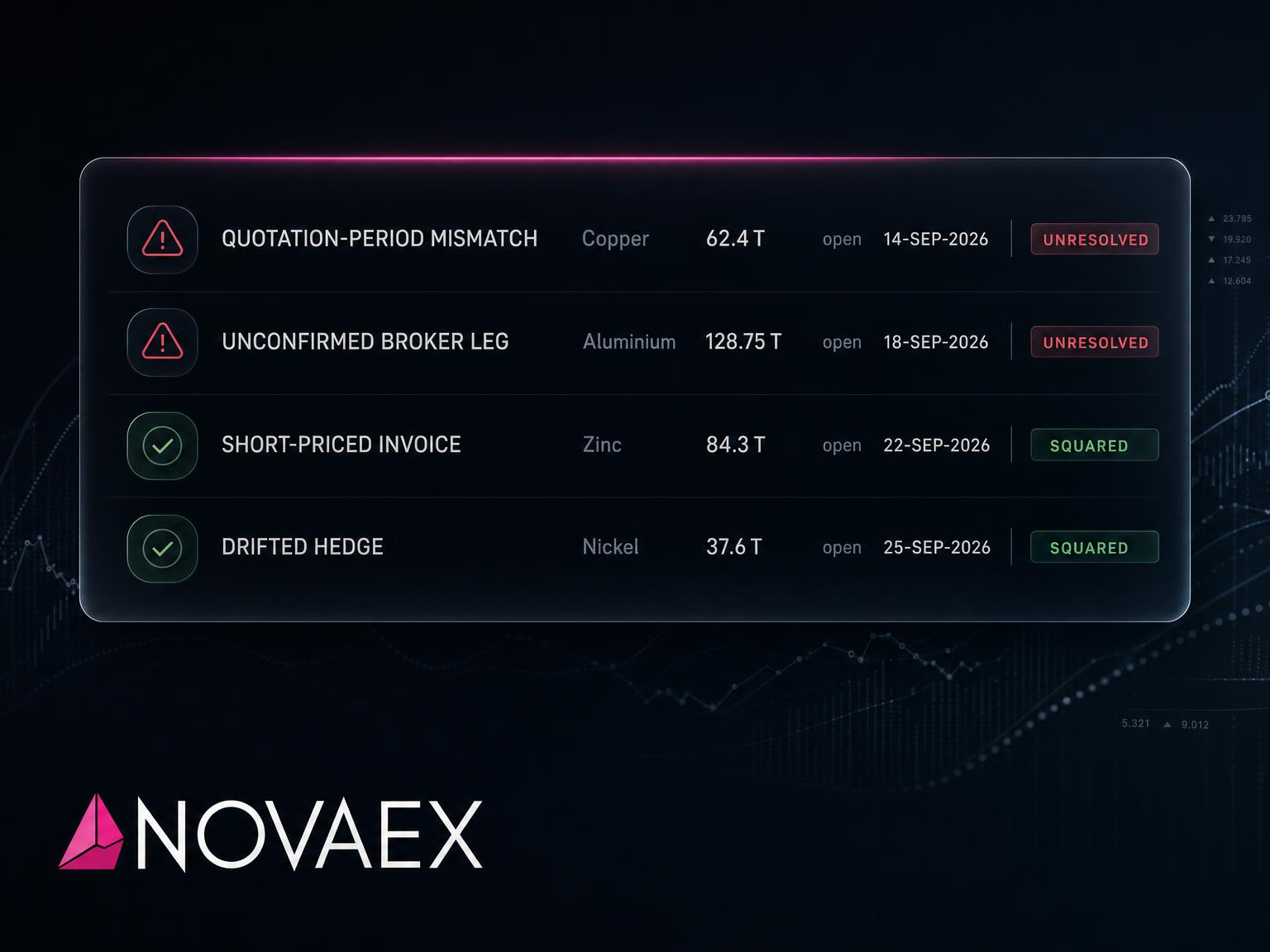
Quarter-end close: the four breaks that show up every time
Two days before the 30th: the four break types that move every quarter-end close, and the check that catches each one this week.
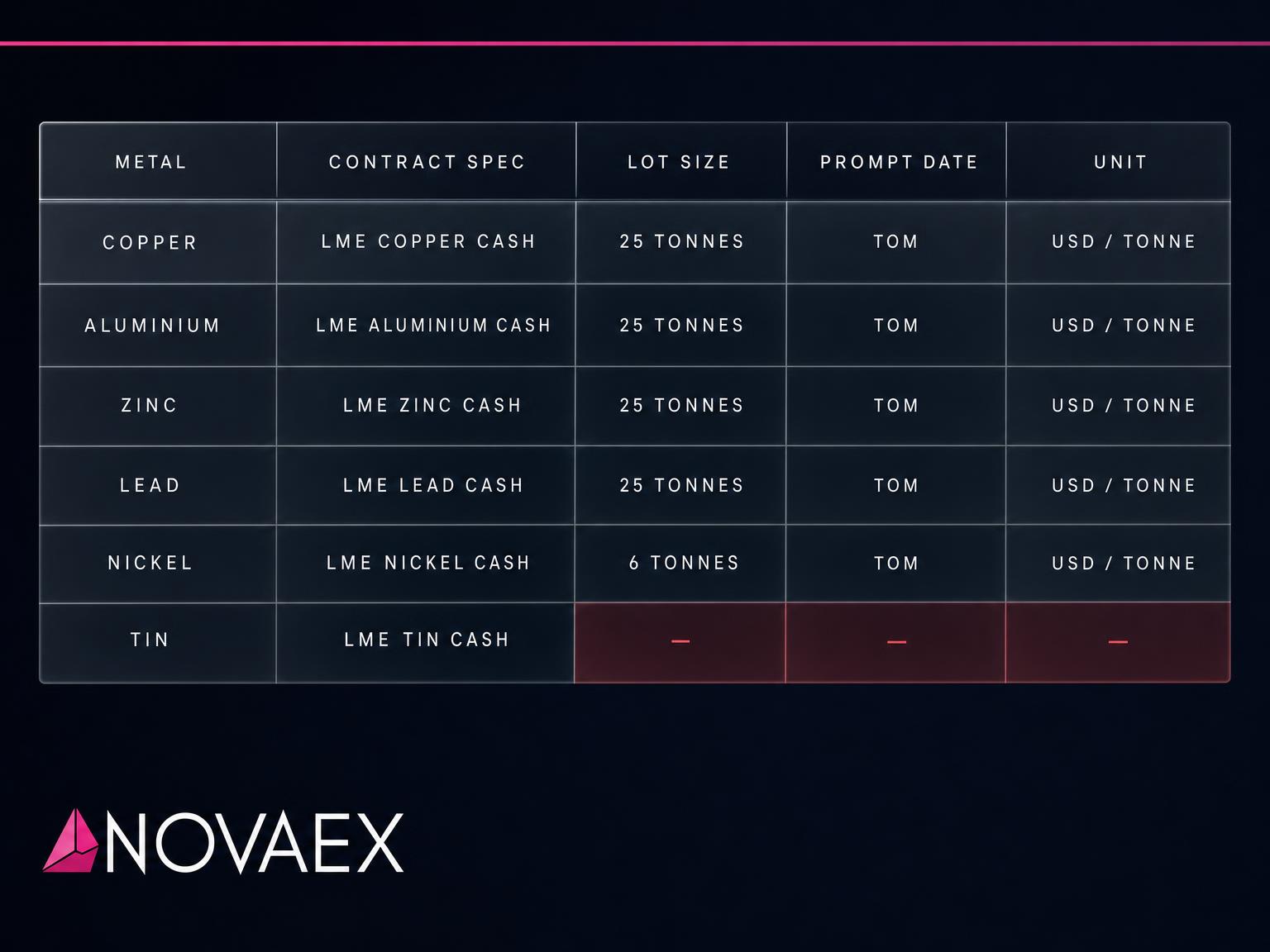
Adding a metal to the book: what breaks in your reconciliation
Growth breaks reconciliation first. The three mappings to check before the next metal lands — lot size, prompt date, units — line by line.
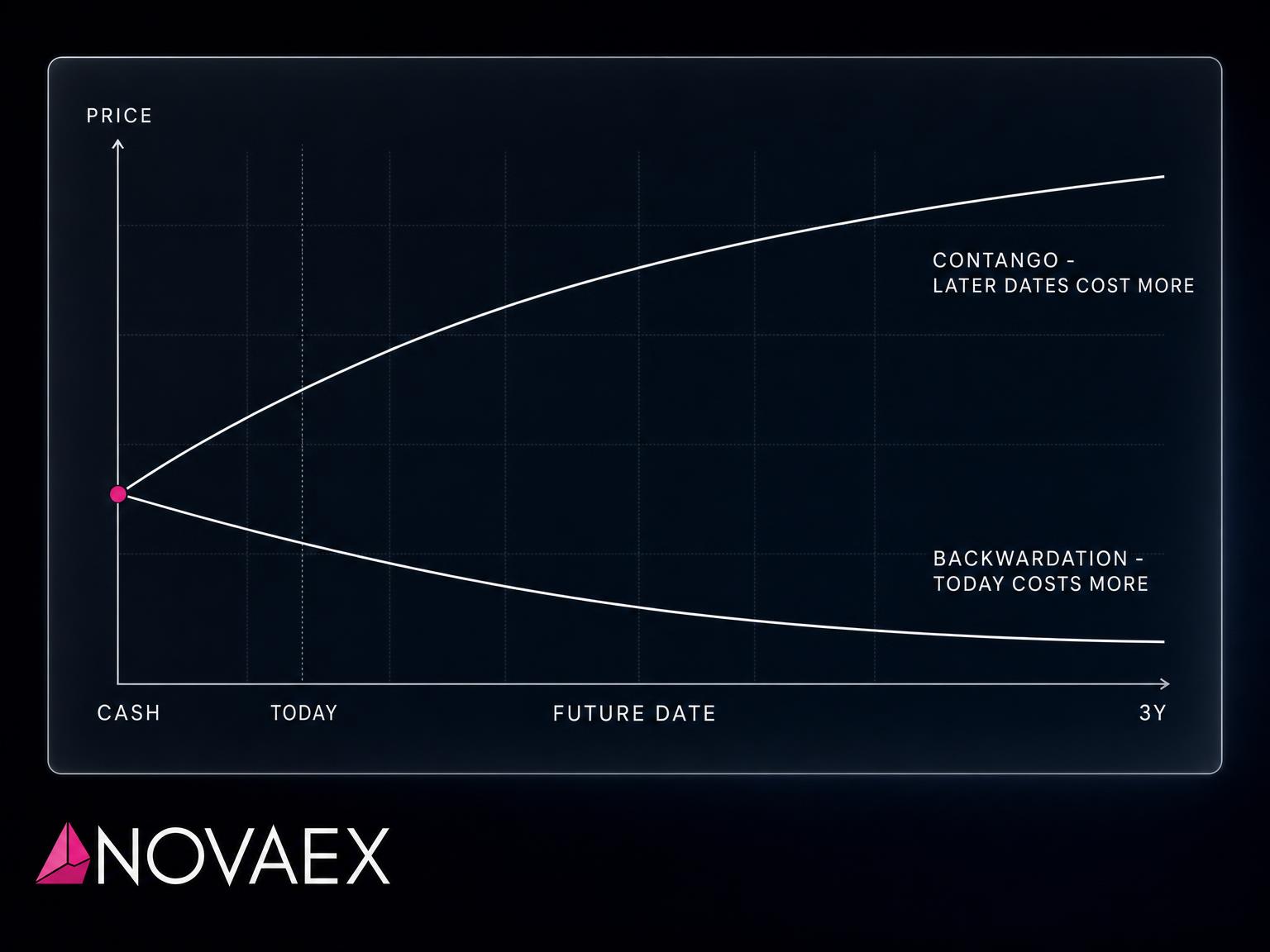
The forward curve, for the board: what contango and backwardation cost
Contango and backwardation translated for the board: what each shape costs in cash and cover, and the two sentences that carry it.
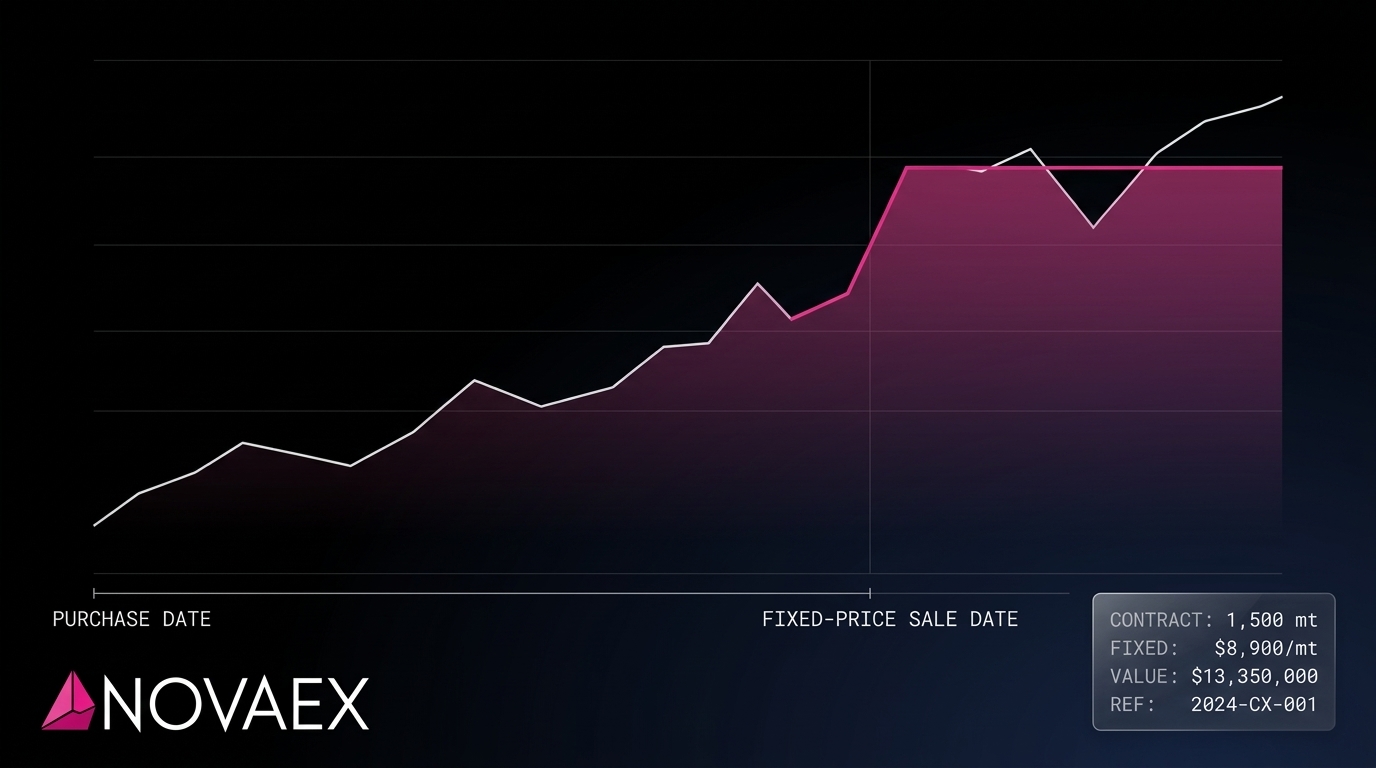
Why fixed-price sales lose margin when metal prices rise
The margin on a fixed-price sale lives between two dates. Date the window, run the worst move across it, then cover it.
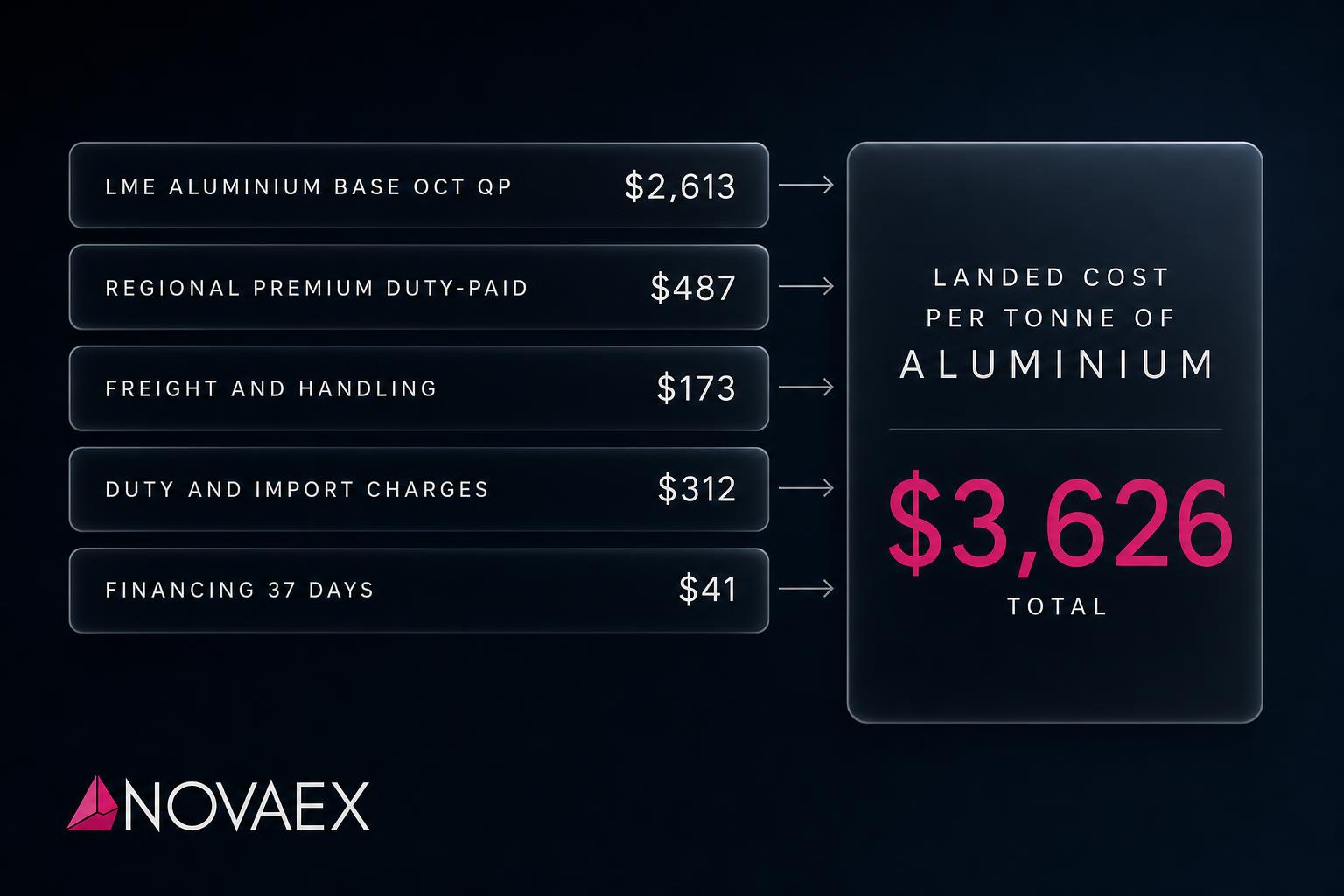
How to Turn a Floating Metal Price Into a Landed Cost You Can Quote
Metal, premium, freight, duty, financing — one build-up that turns a floating input into a fixed customer price.
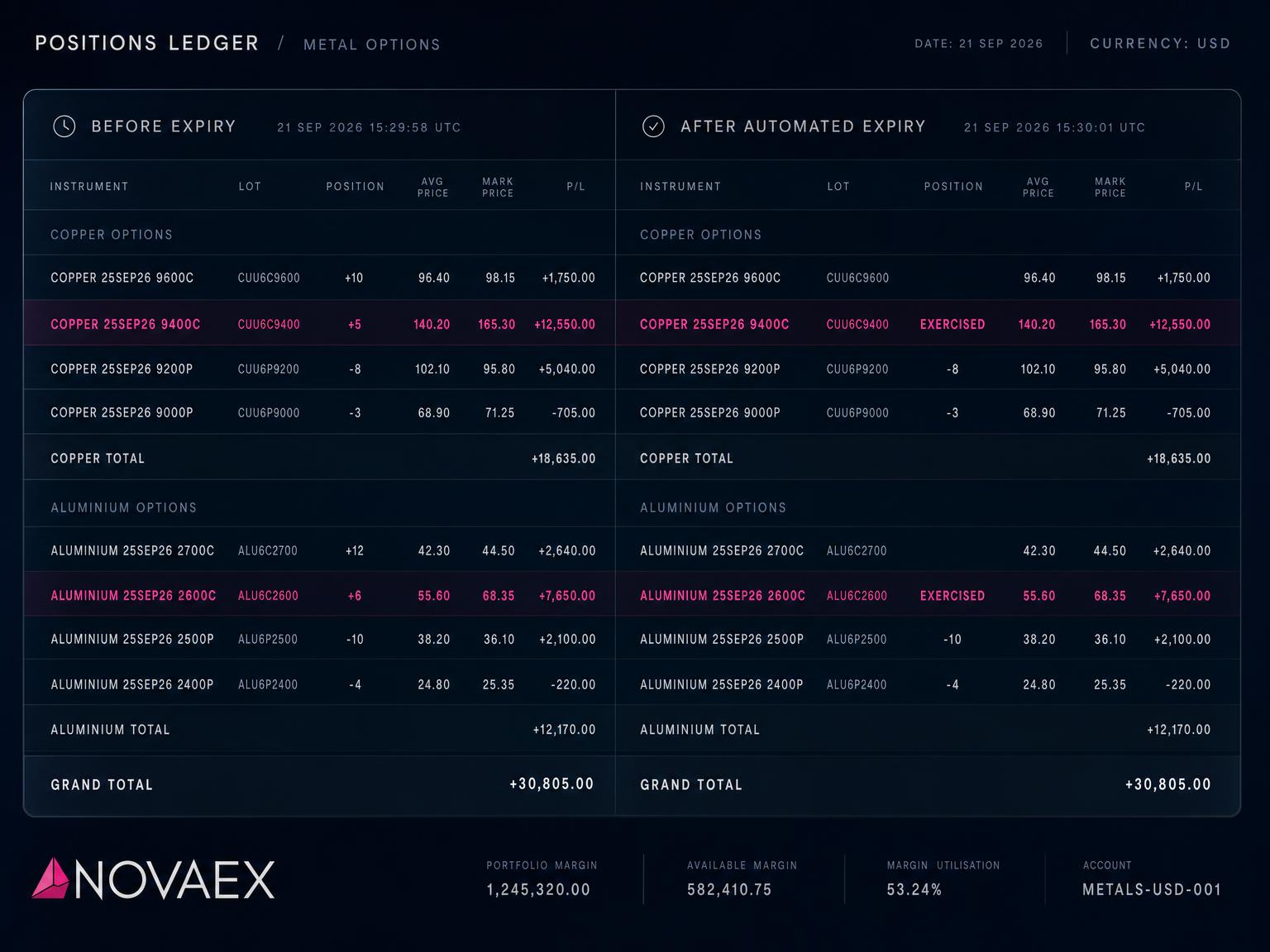
Expiry ran automatically today: what changed for your open positions
Automated expiry ran today. What it did to your open positions, and the four checks to run before the close.
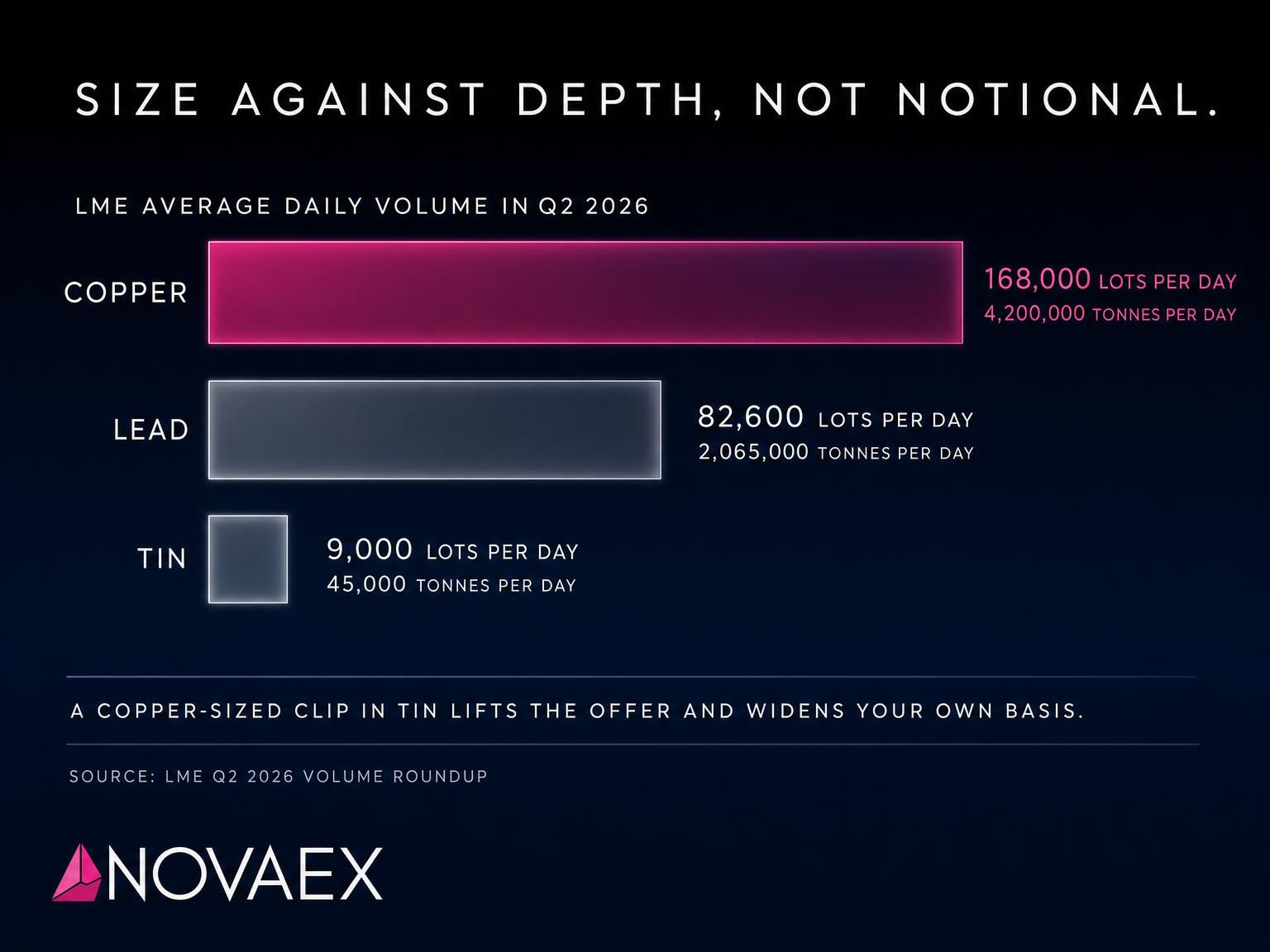
Tin and lead: how to hedge thin liquidity without widening your basis
Copper absorbs a desk-sized order. Tin reads it before it prints. The sizing rule that keeps the hedge from moving its own basis.
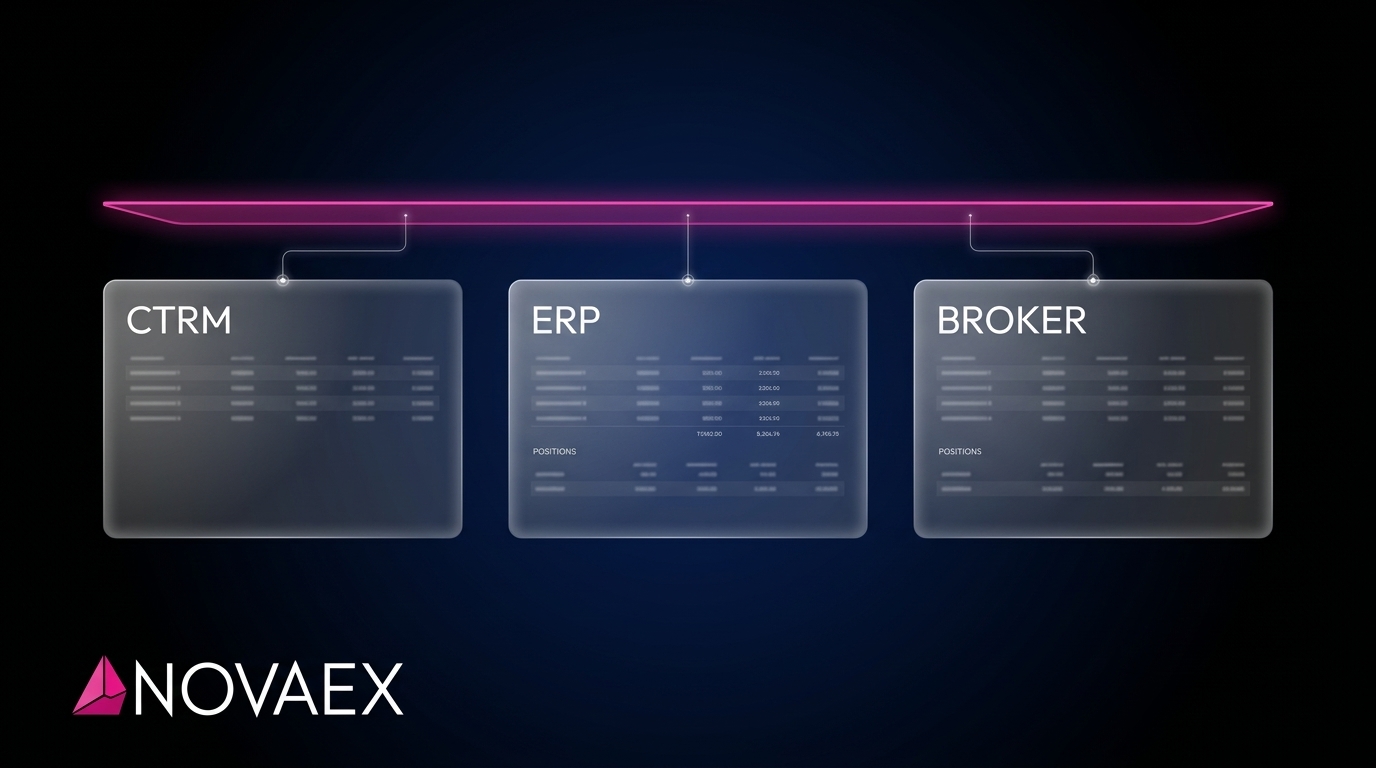
Can you reconcile three books without replacing your CTRM?
What the overlay reads, what it leaves alone, and the one feed to connect first.
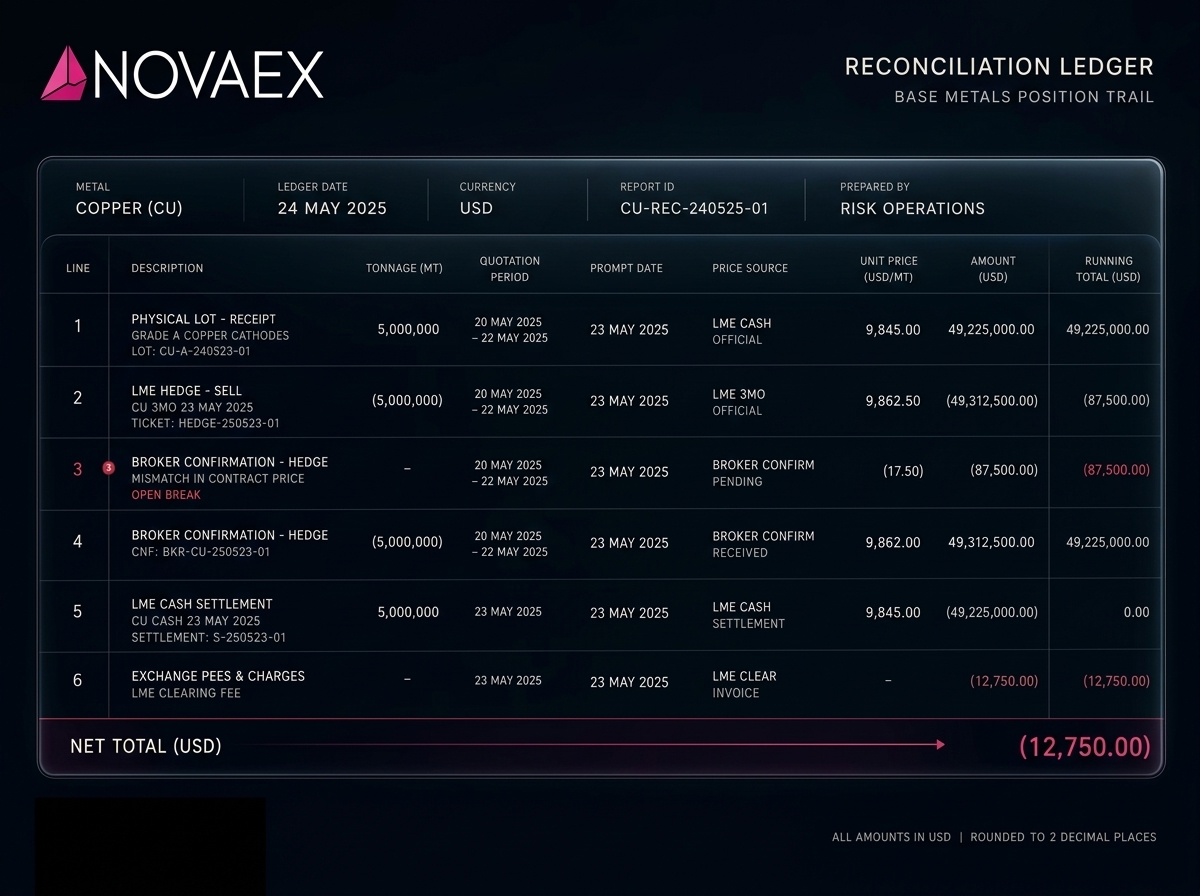
Show me the working: what a board or auditor asks for, and what most desks can produce
The board and the auditor ask the same question two ways. The answer is one artefact: a timestamped net with the trail attached.
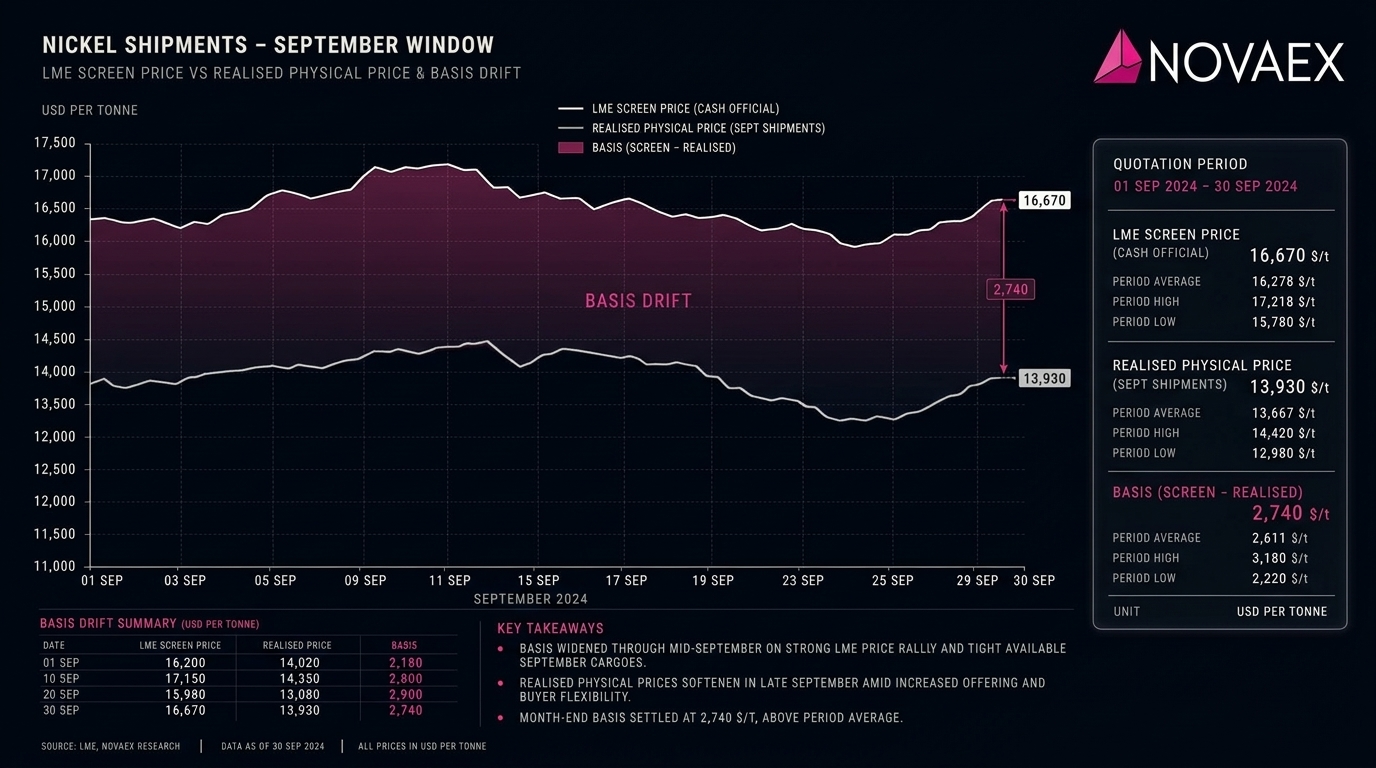
Nickel basis risk: what it actually costs on an export book
Screen price is not realised price. A three-shipment method for pricing nickel basis in dollars per tonne — and the hedge fix it points to.
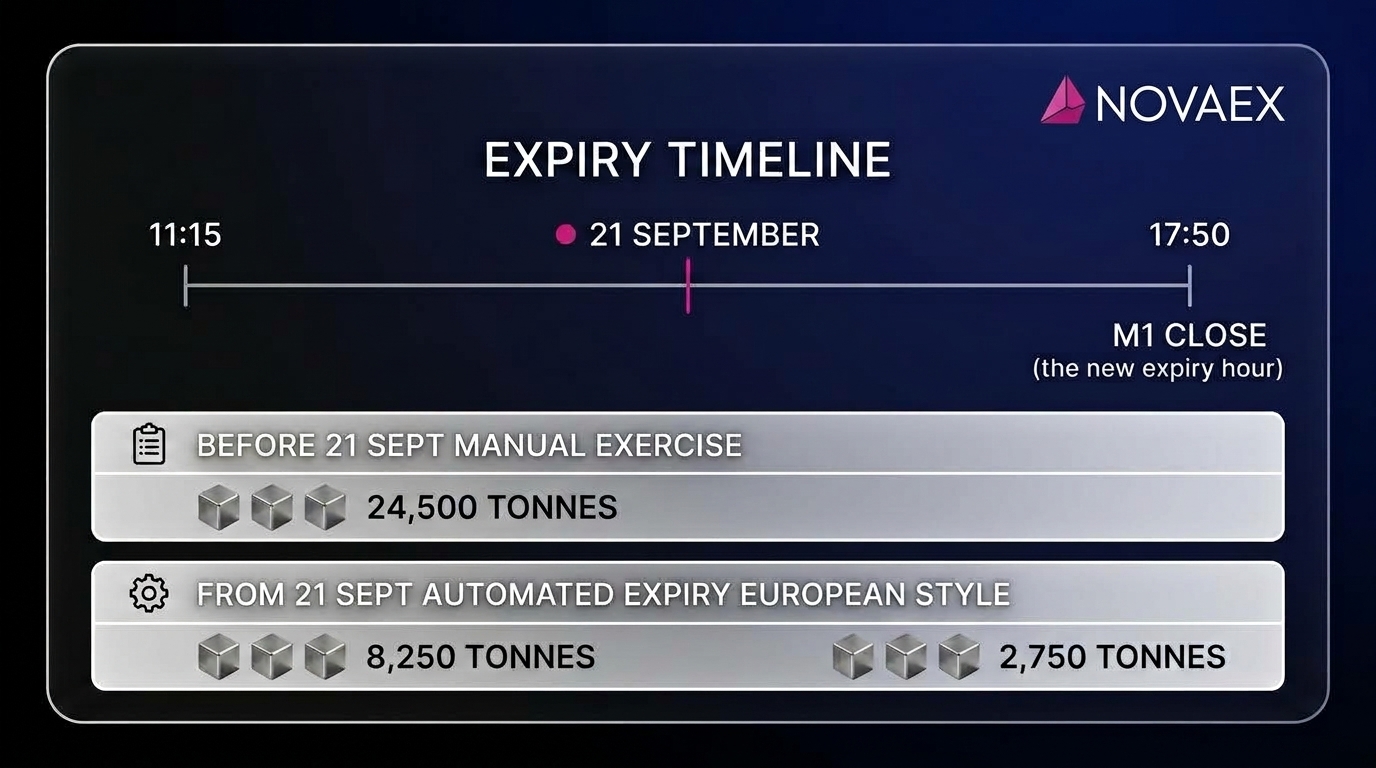
What automated expiry and European-style LME options change on your desk
The 21 September cutover as a desk procedure: what happens to open positions, what to decide before the date, and what stops being manual.
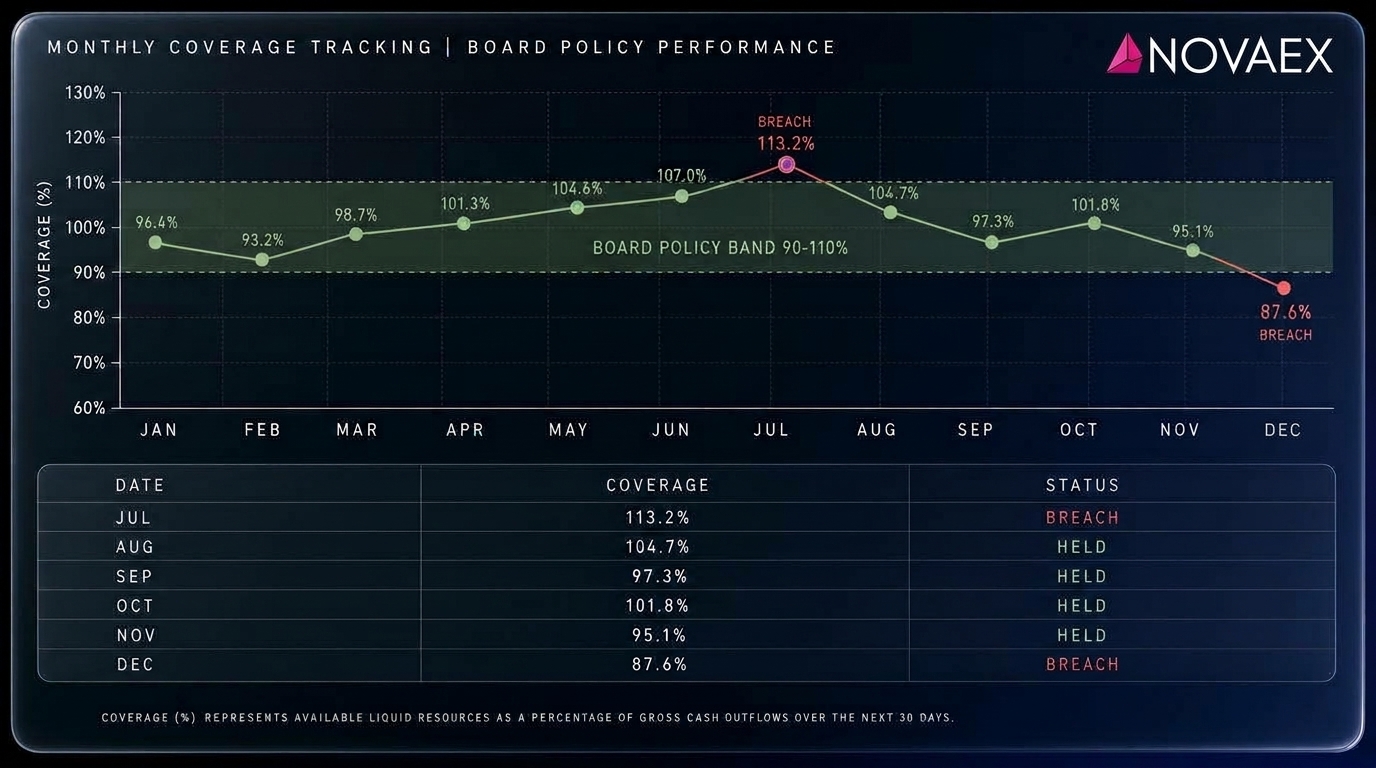
Proving hedge coverage against board policy without waiting for the close
Board policy sets the band. An intra-month coverage read proves you held it.
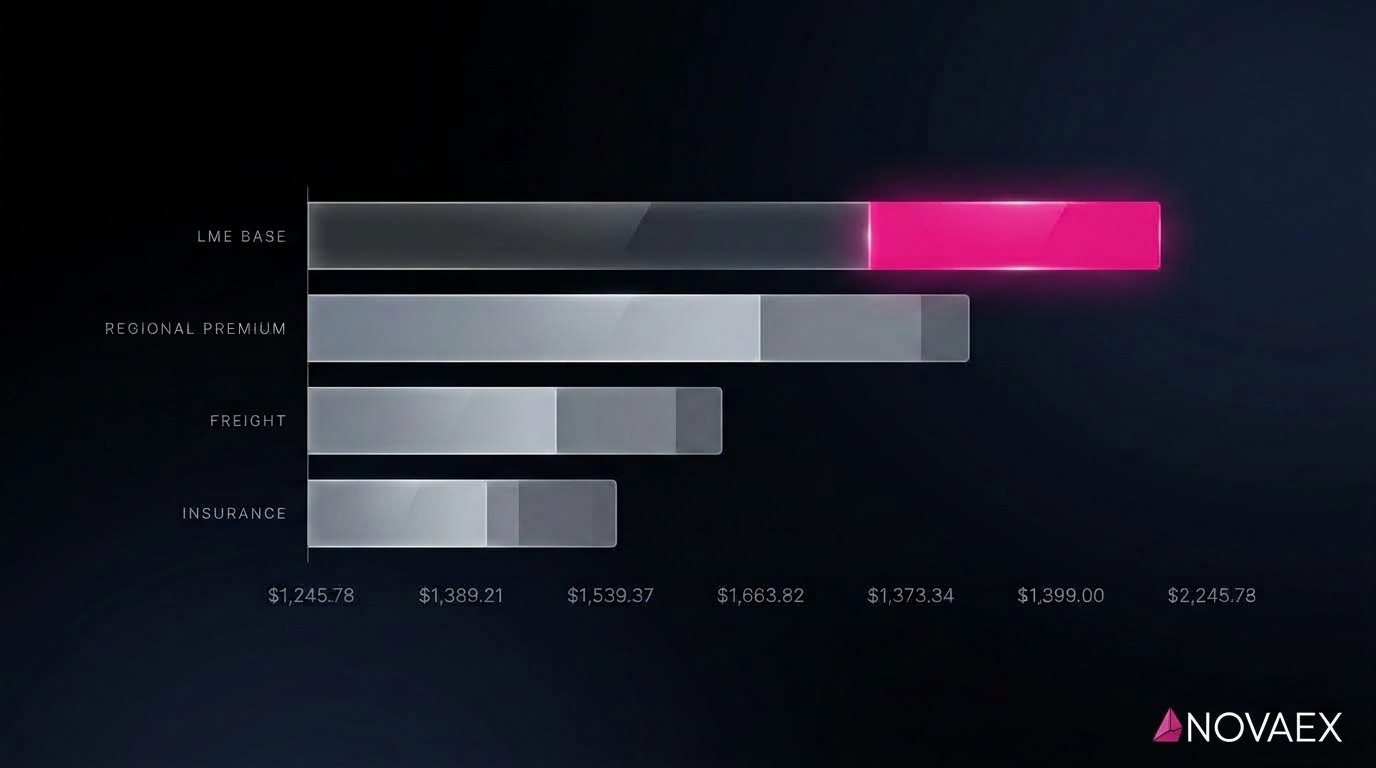
Aluminium all-in cost: what sits above the LME price
The LME hedge covers the base. The margin lives in the premium, freight and duty on top of it.
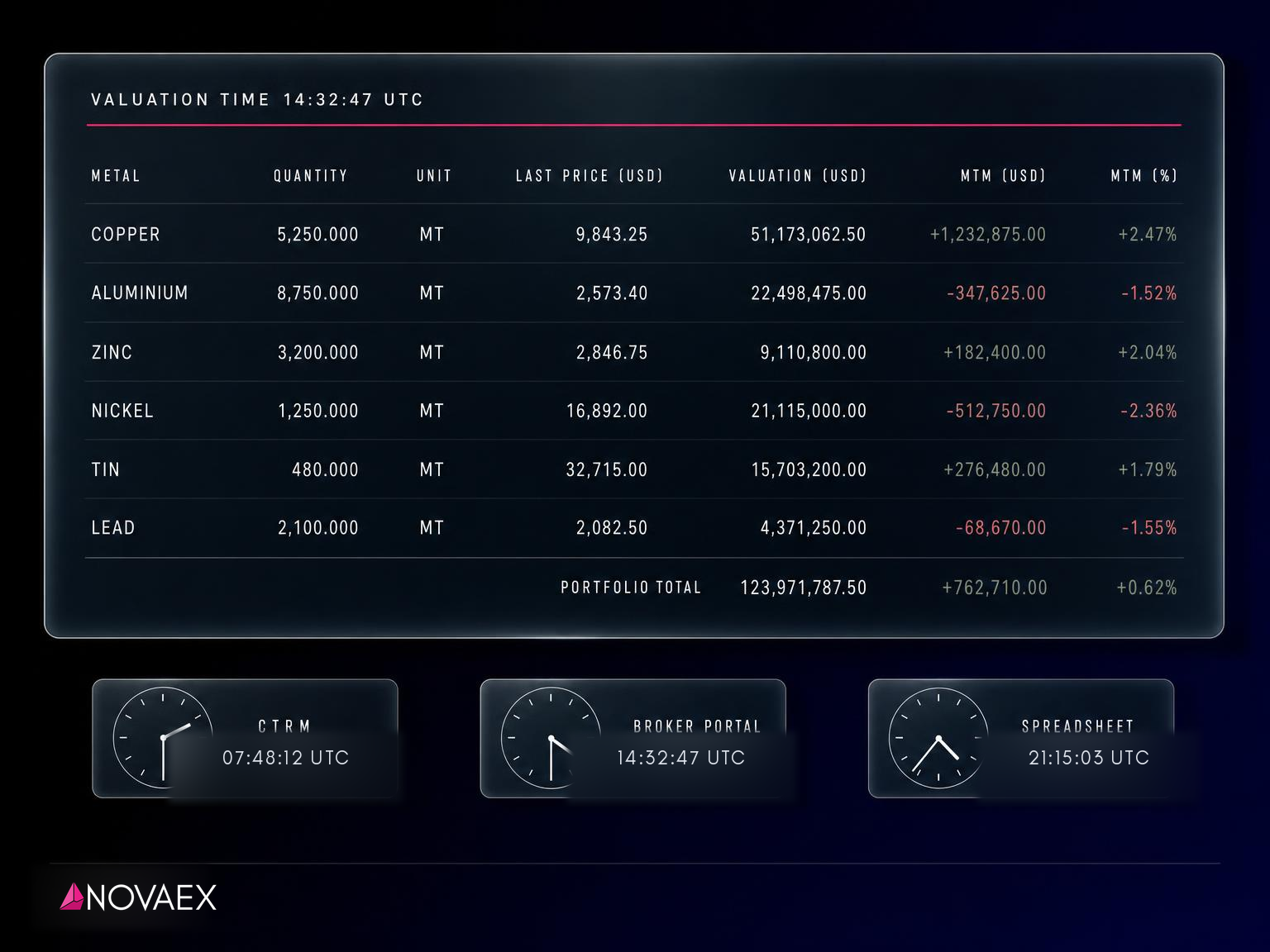
What time of day is your daily MTM actually struck?
Your CTRM, your broker portal and your spreadsheet each strike their valuation at a different hour. One published clock turns three closes into a number you can prove.
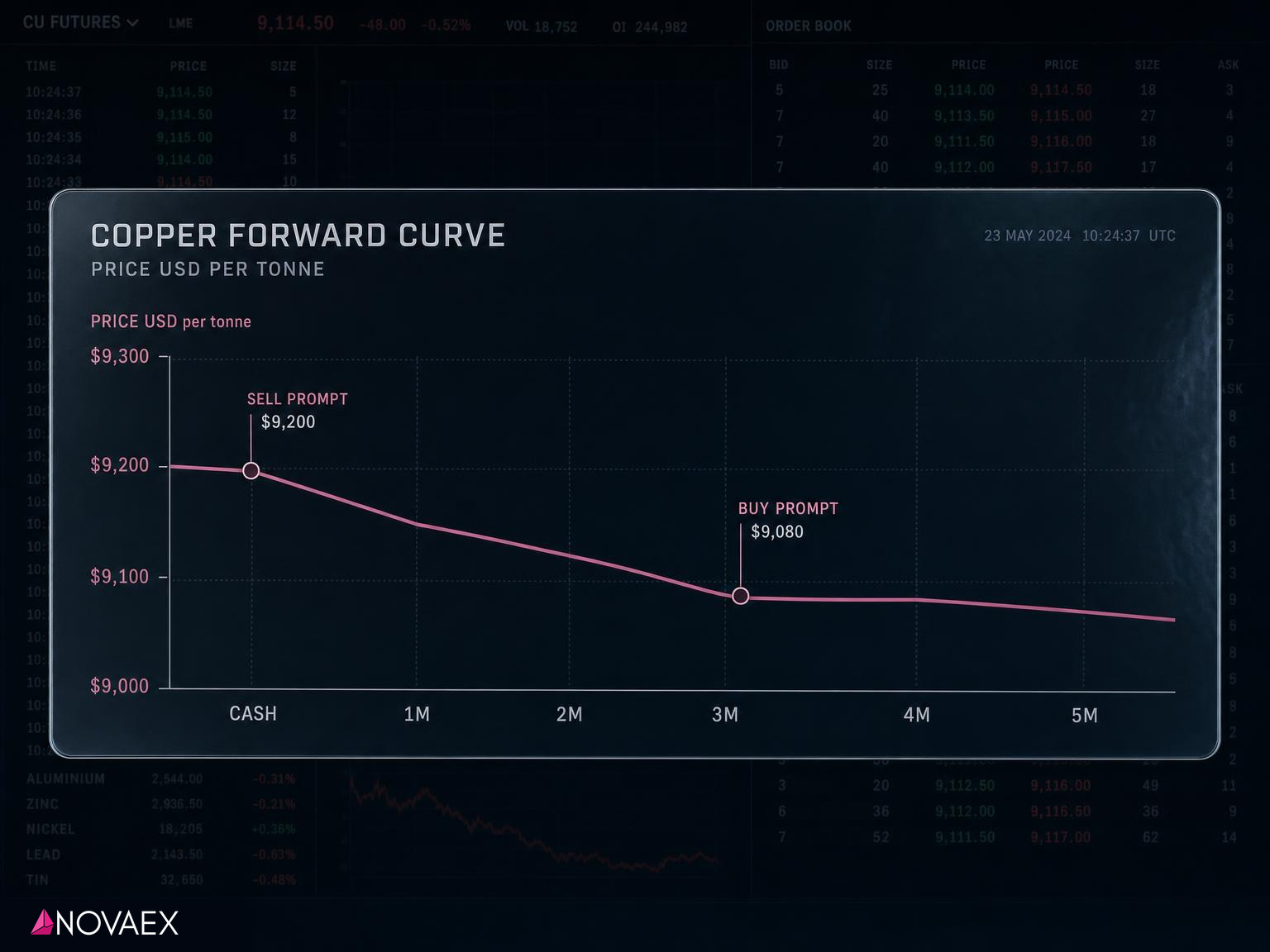
Backwardation: what changes when you are long vs short physical
Long physical sells prompt. Short physical covers prompt. The carry arithmetic behind both calls.
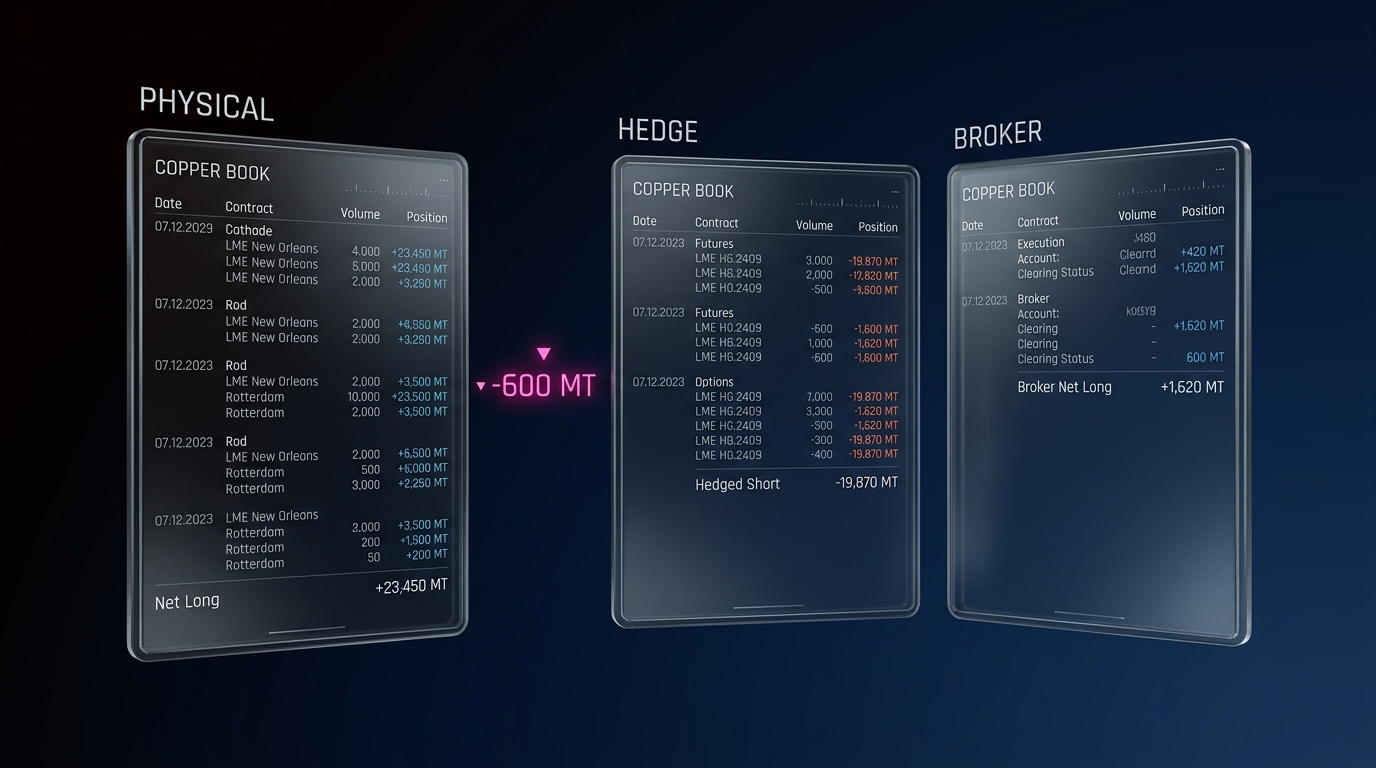
Why don't risk, accounting and trading P&L agree at month-end?
Three P&L numbers, one book, nobody mistyped anything. The physical clock and the financial clock run at different speeds, and the break lives between them.
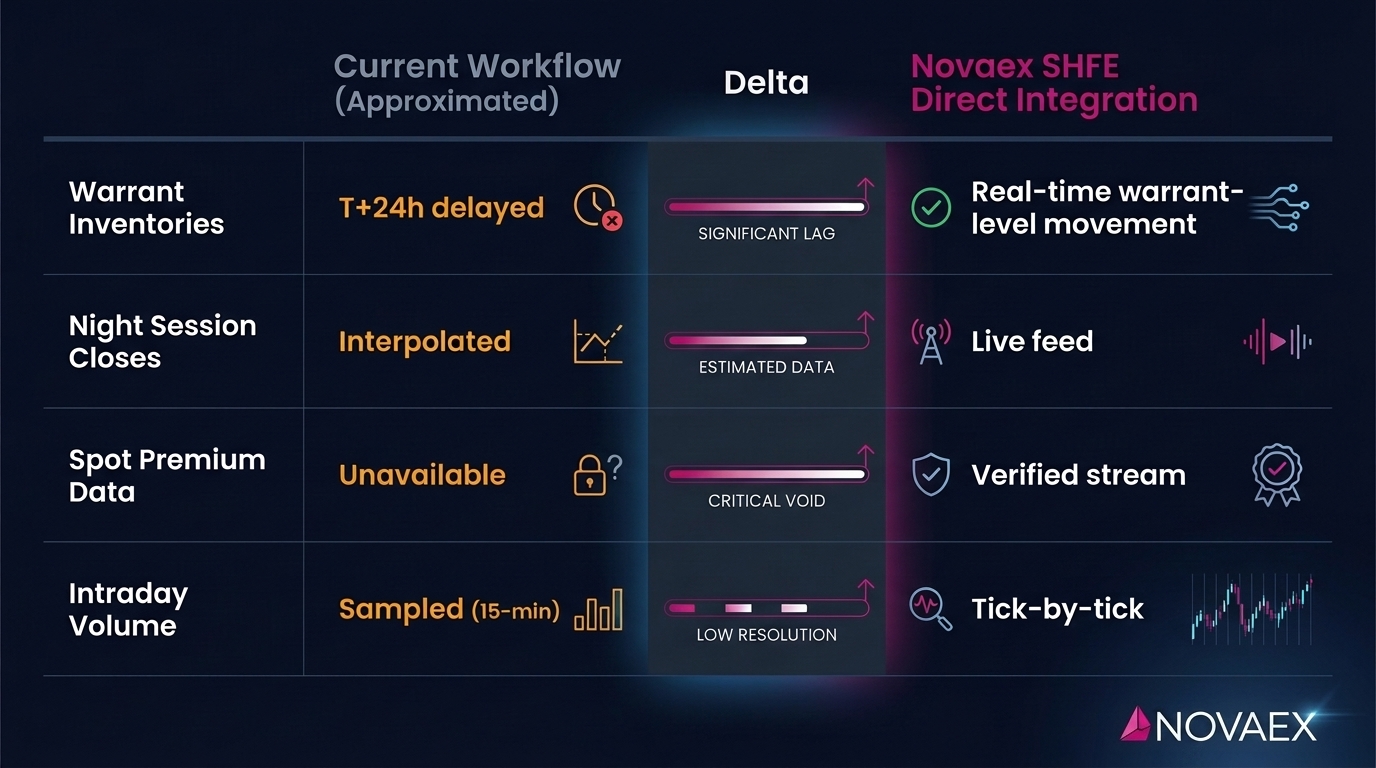
SHFE Data Points: Direct Integration vs. Approximated Feeds
China accounts for approximately **57% of global refined copper consumption** [LINK: ICSG global copper consumption data], according to the International Copper Study Group (ICSG). That concentration makes SHFE not a secondary venue but the primary price discovery mechanism for industrial base metal
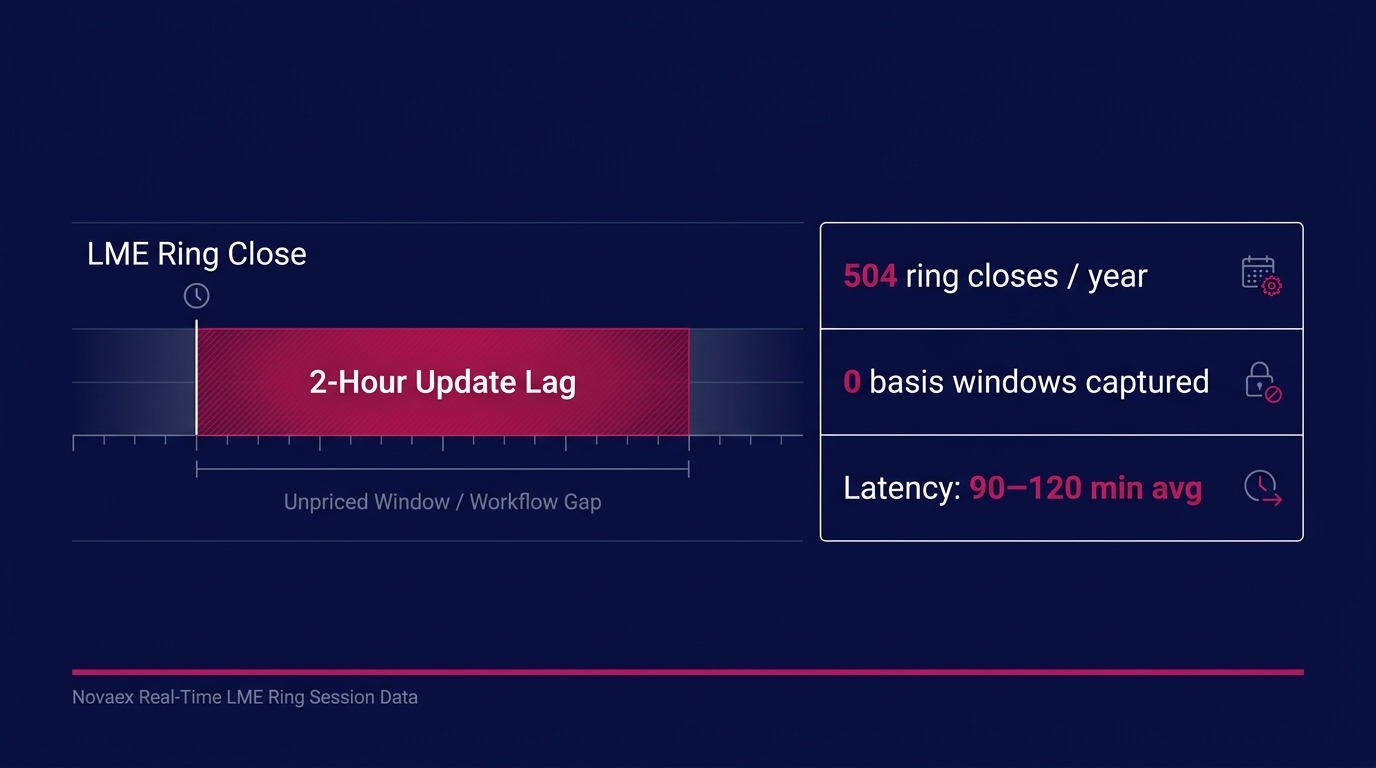
Real-Time LME Ring Session Data Ends Two-Hour Hedge Lag
Most metals trading operations treat the post-session lag as a workflow constant. The ring closes, back-office processes run, the system is updated, and the decision is made, sometimes 30 minutes later, often two hours. The LME's session architecture, however, does not pause while that reconciliatio
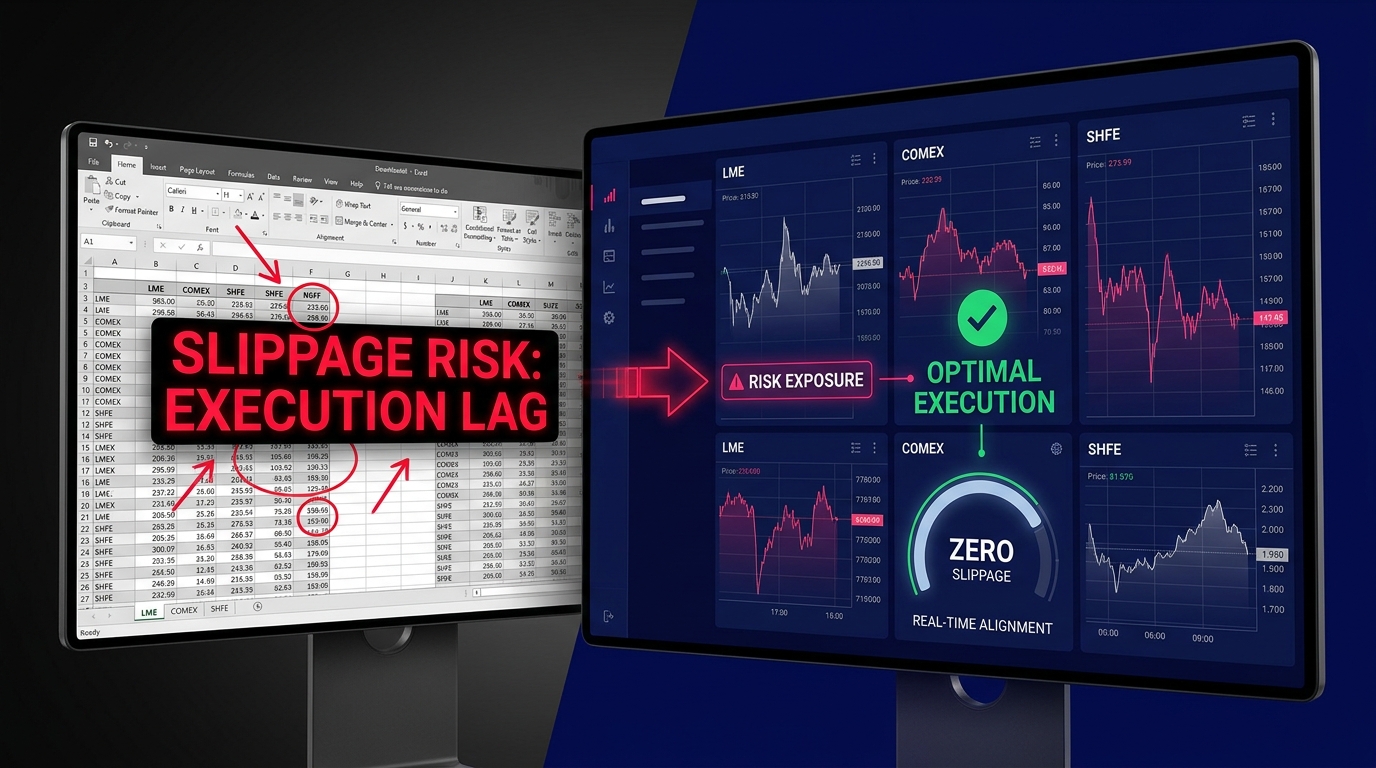
Cross-Exchange Execution Slippage: The Compounding Risk
Hedging a metals position without simultaneous LME, COMEX, and SHFE pricing context does not simply create execution slippage. It compounds it. **Cross-exchange execution slippage** ranges from **$5 to $30 per metric ton** on a single copper execution under normal market conditions and accumulates i
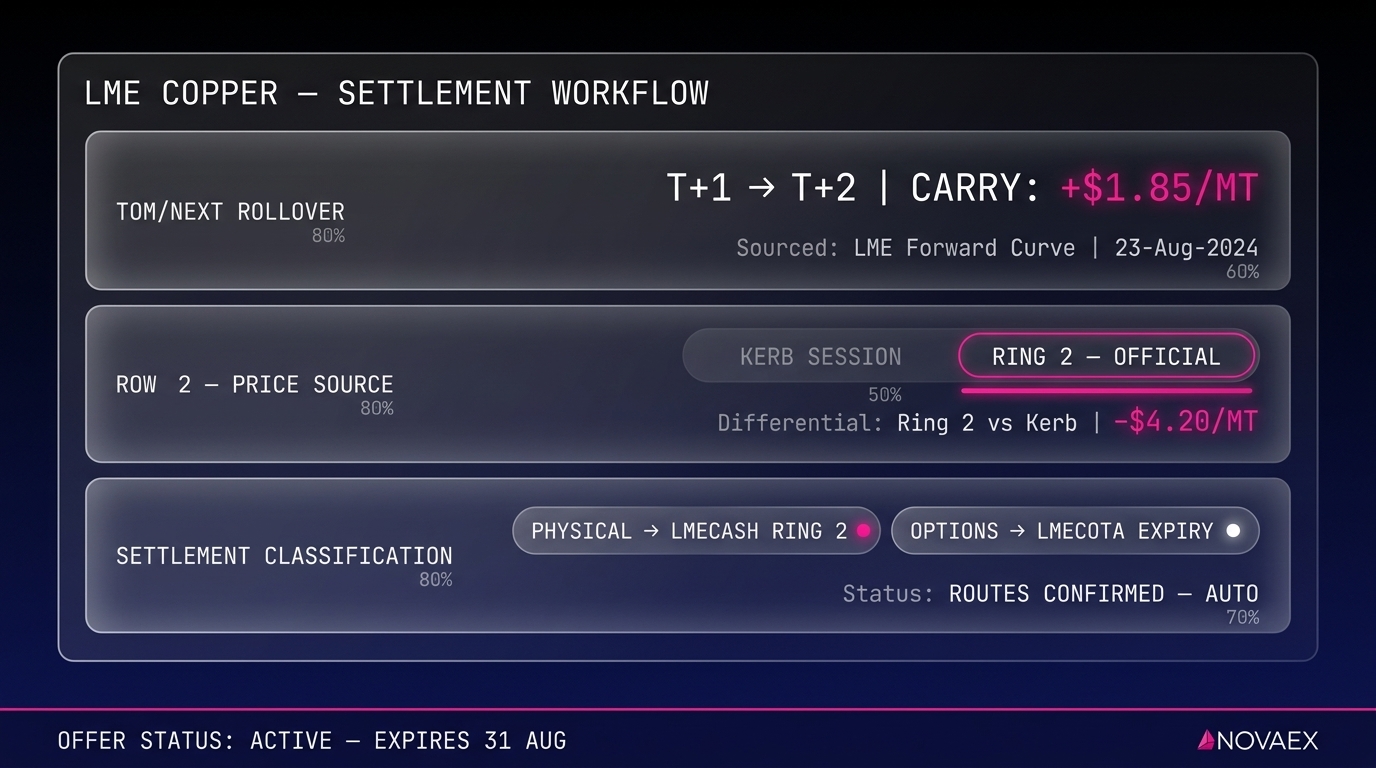
LME Copper Settlement Workflow: Where Generic Platforms Fail
The **LME copper settlement workflow** exposes platform depth faster than any feature comparison. Three mechanics (tom/next rollovers, kerb-session price classification, and the official price versus cash settlement distinction) are daily operational requirements for any active LME copper book. Gene
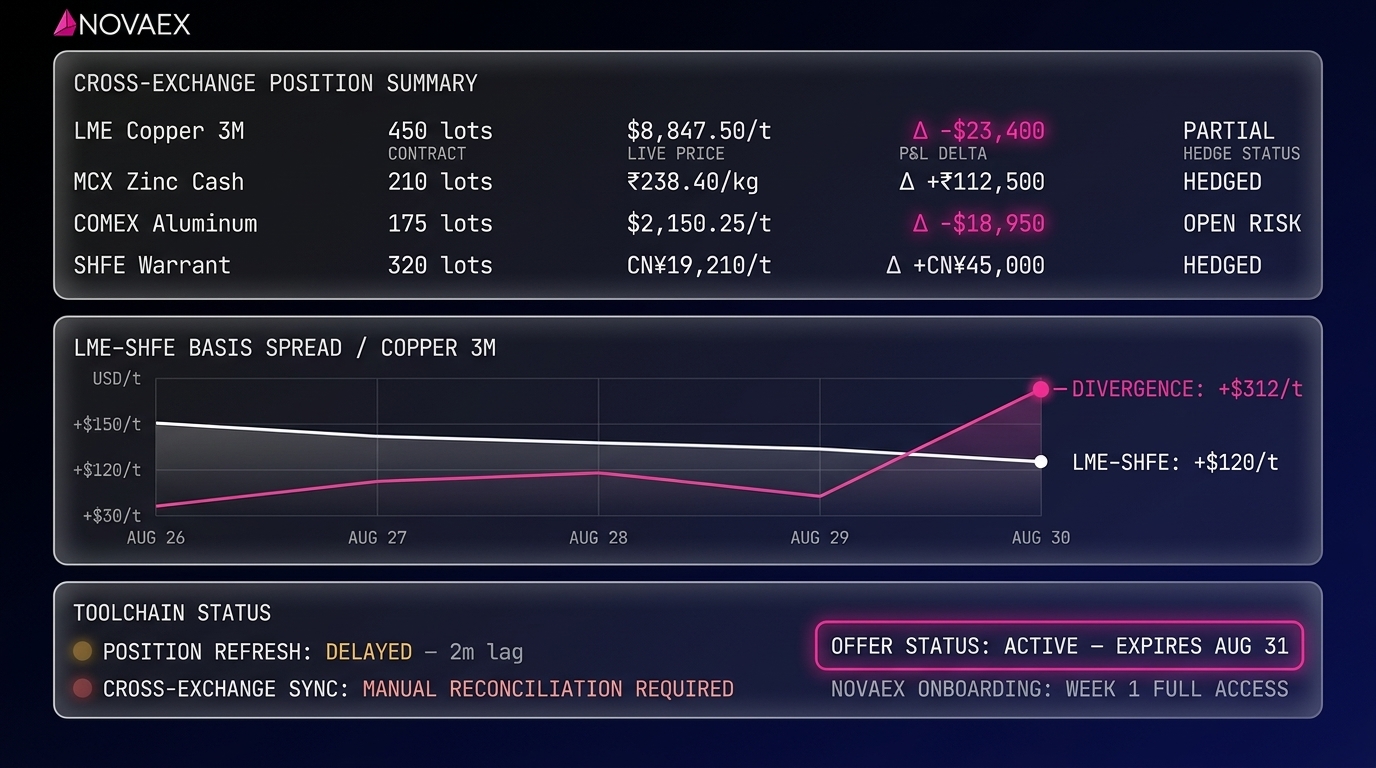
What Your Metals Trading Platform Gap Means This September
The metals trader reading this post has already made the diagnosis. The platform lags when the market moves fastest. The position data requires manual reconciliation. The workaround spreadsheet exists because the toolchain does not close the gap on its own.
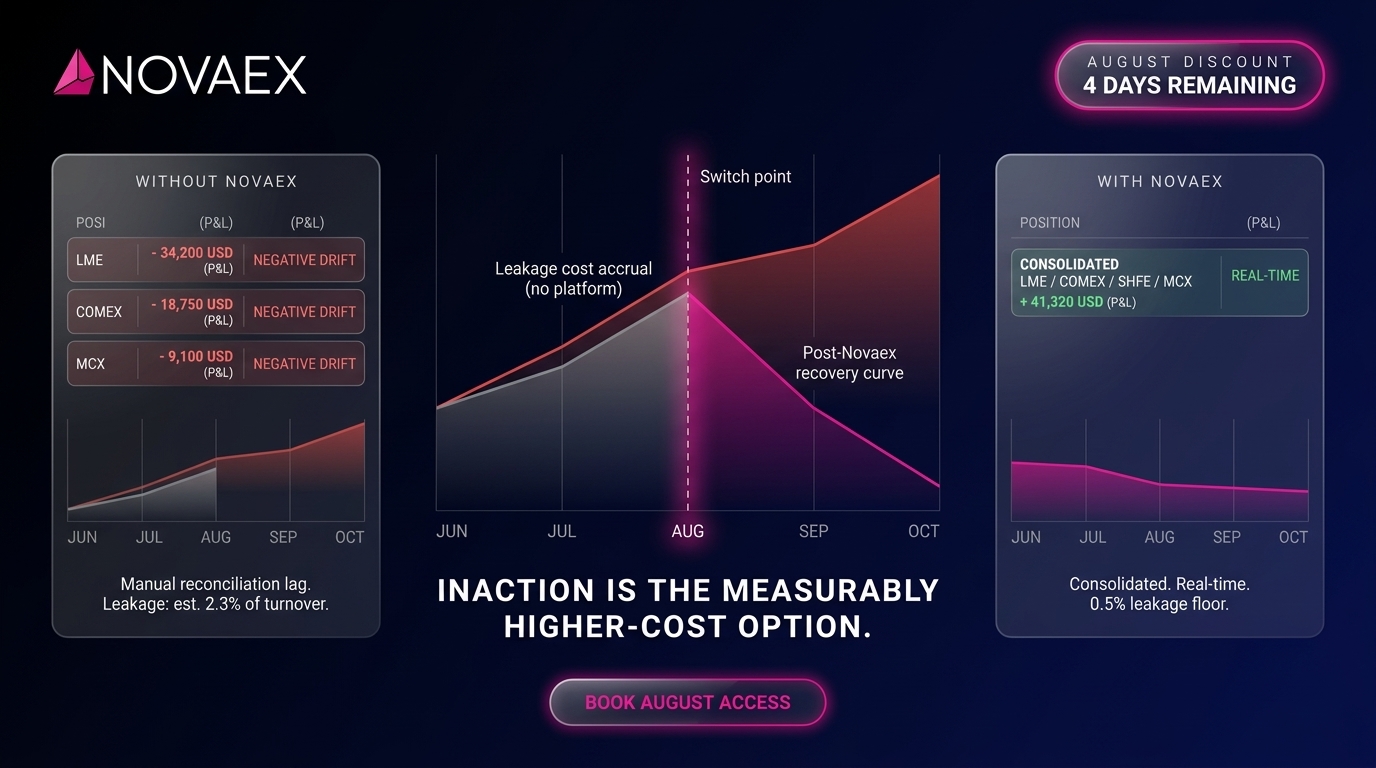
Commodity Trading Platform: What Delay Is Costing Your Desk
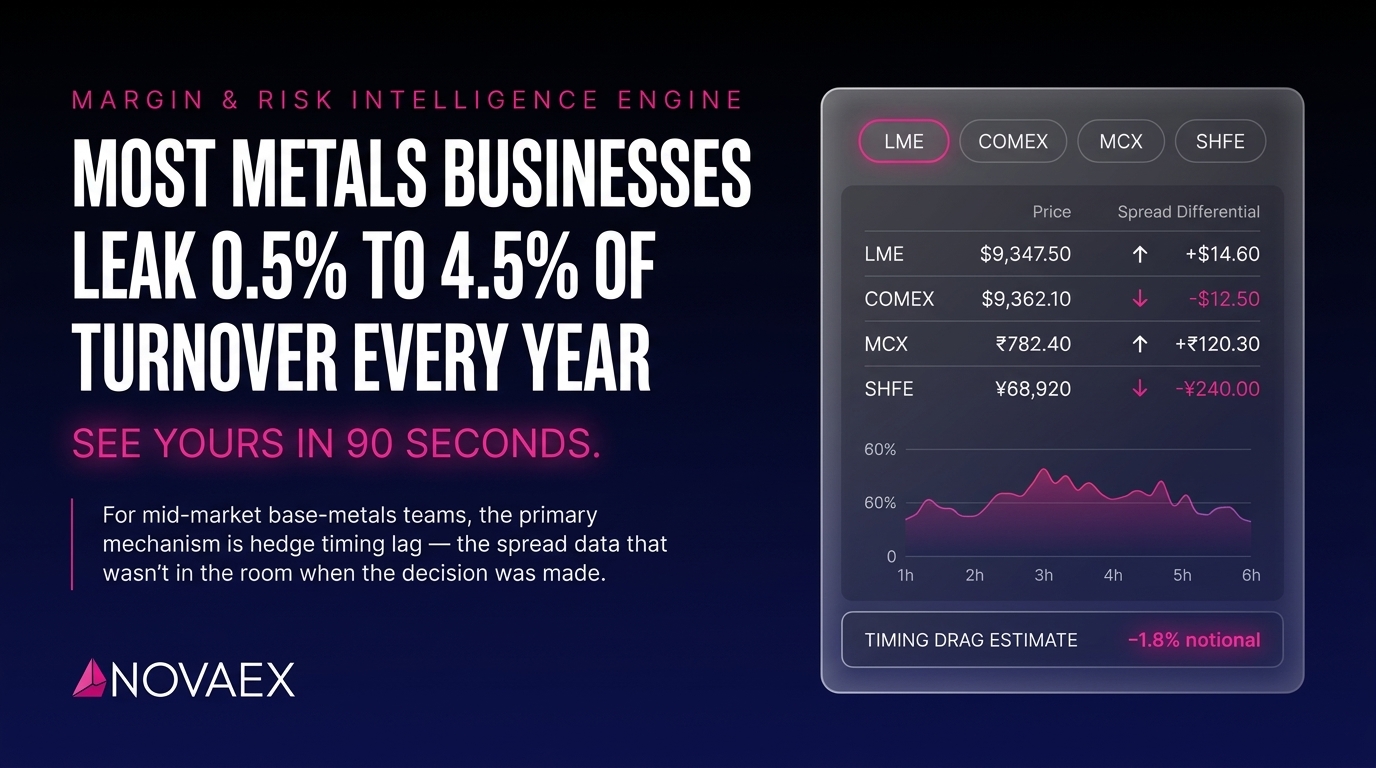
Every week a platform decision is postponed, the leakage continues. **Documented evidence places commodity trading workflow inefficiency between 0.5% and 4.5% of annual turnover**. This range is specific enough to budget against and wide enough to require desk-level calibration. For metals operation
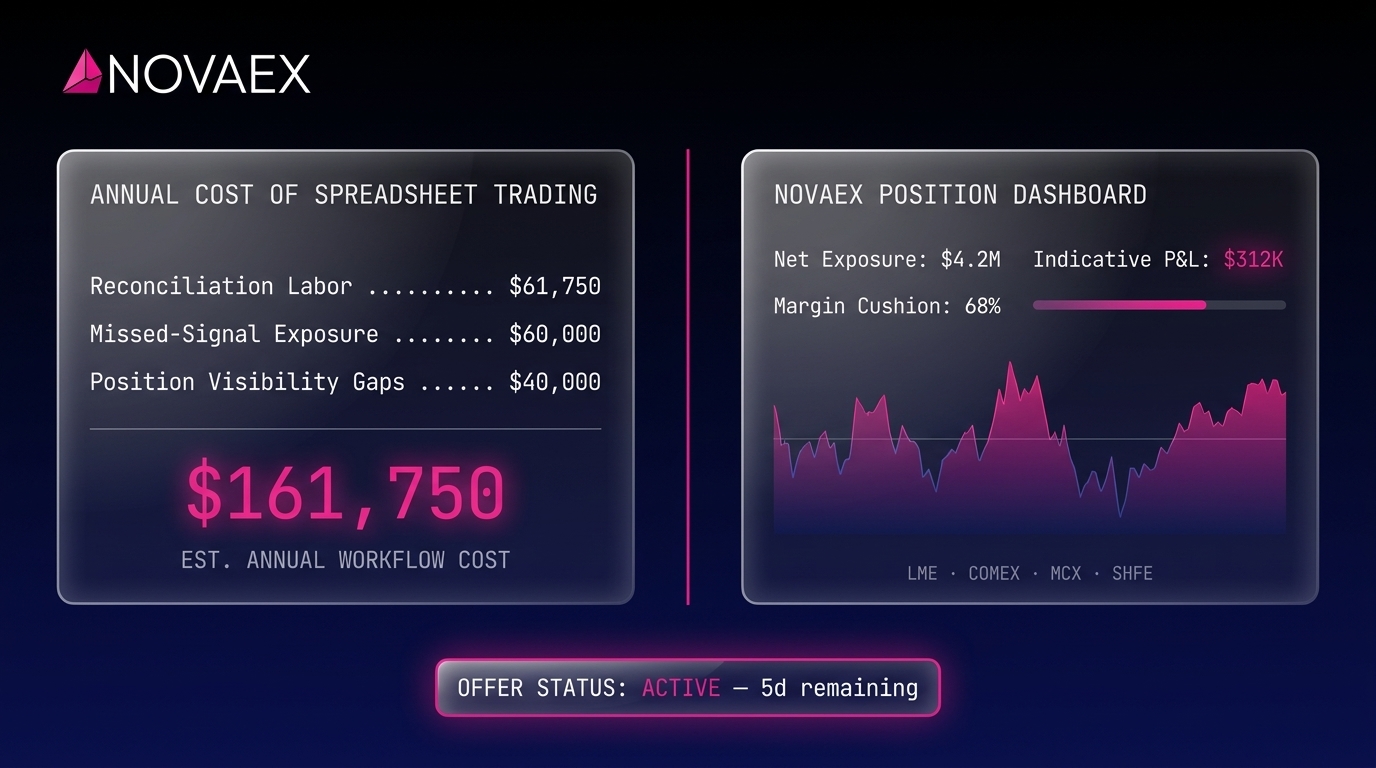
What Spreadsheet Commodity Trading Really Costs
Most commodity trading desks know their spreadsheet workflows are imperfect. Few have ever sat down and priced them.
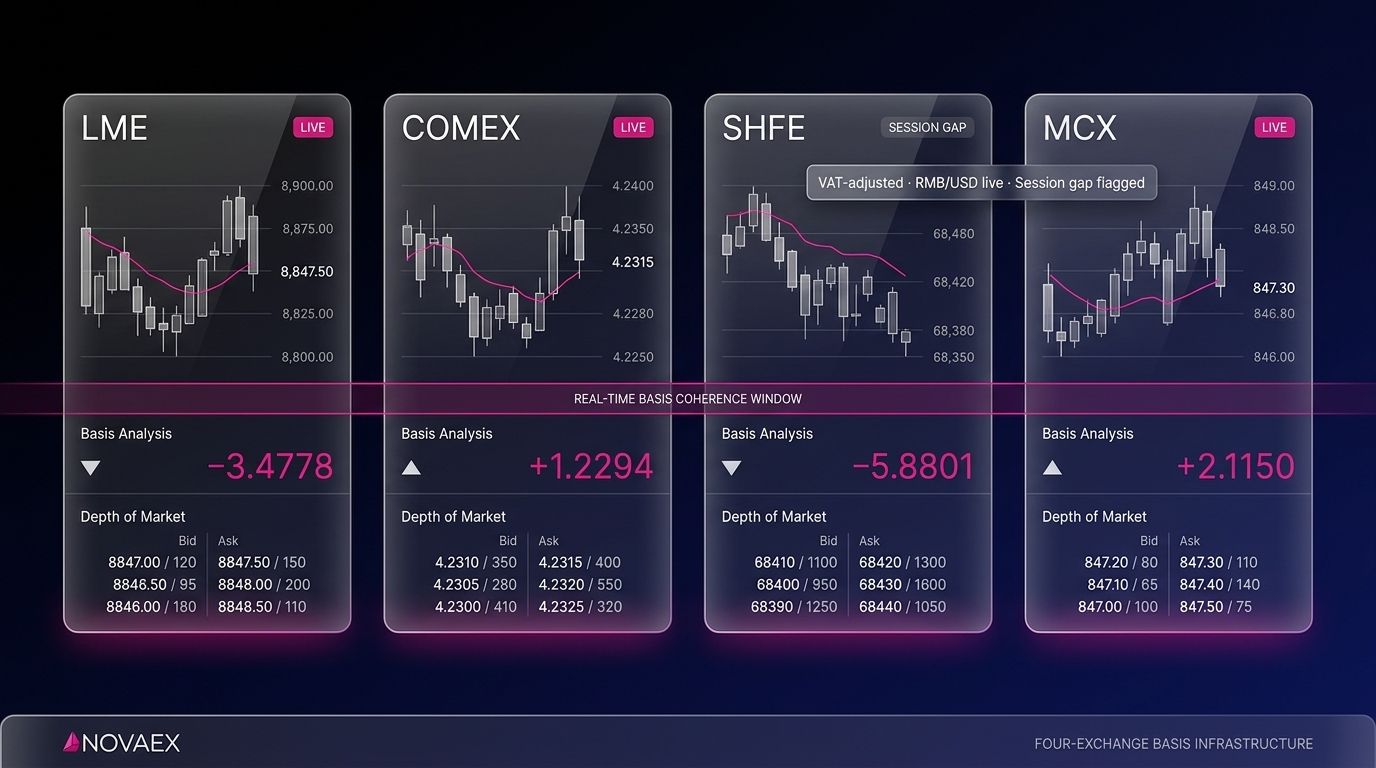
Real-Time Basis Analysis: Audit Your Four-Exchange Stack
Basis analysis demands a specific intersection of depth, speed, and cross-venue coherence that general-purpose data infrastructure was not architected to deliver, even when current tools provide adequate data. When copper moves on SHFE at 02:00 London time, your platform must have a price that is co
Exchange-Specific Metals Intelligence: Your Entry Point
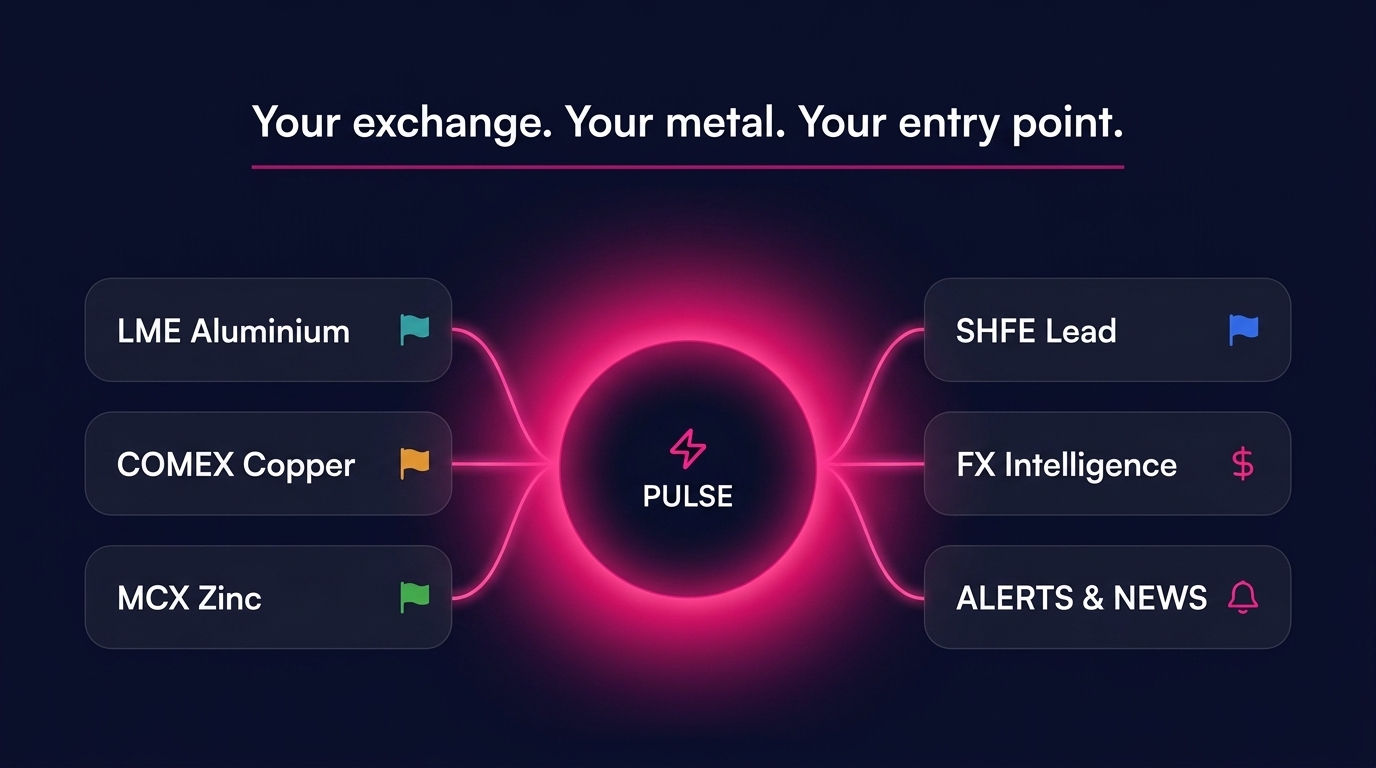
Novaex covers four distinct exchange-metal combinations (**LME aluminum, COMEX copper, MCX zinc, and SHFE lead**), each structured as a dedicated analytical territory built from the exchange's own mechanics outward. Your book determines which one is operationally relevant. This post maps the analyti
Cross-Exchange Spread Gaps: Why Metals Hedge Timing Fails
This represents a data infrastructure failure rather than a trader error.
Copper Hedge Ratios: LME, COMEX, and SHFE Simultaneously
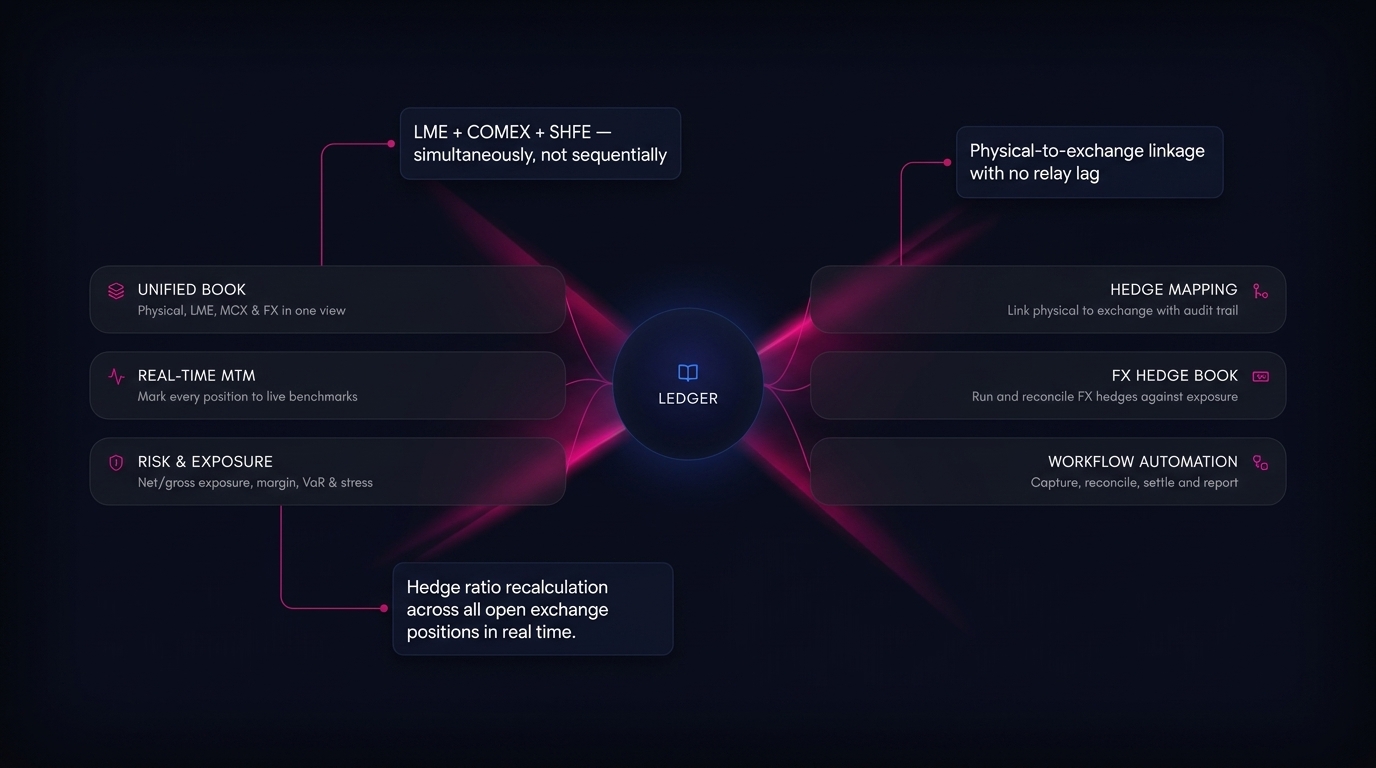
Copper hedging looks disciplined from the outside. A physical position is booked, an exchange is consulted, and a hedge ratio is set. That sequence feels rigorous, until you examine what the ratio was actually built on.
SHFE Warrant System: The Price Signals LME Arb Misses
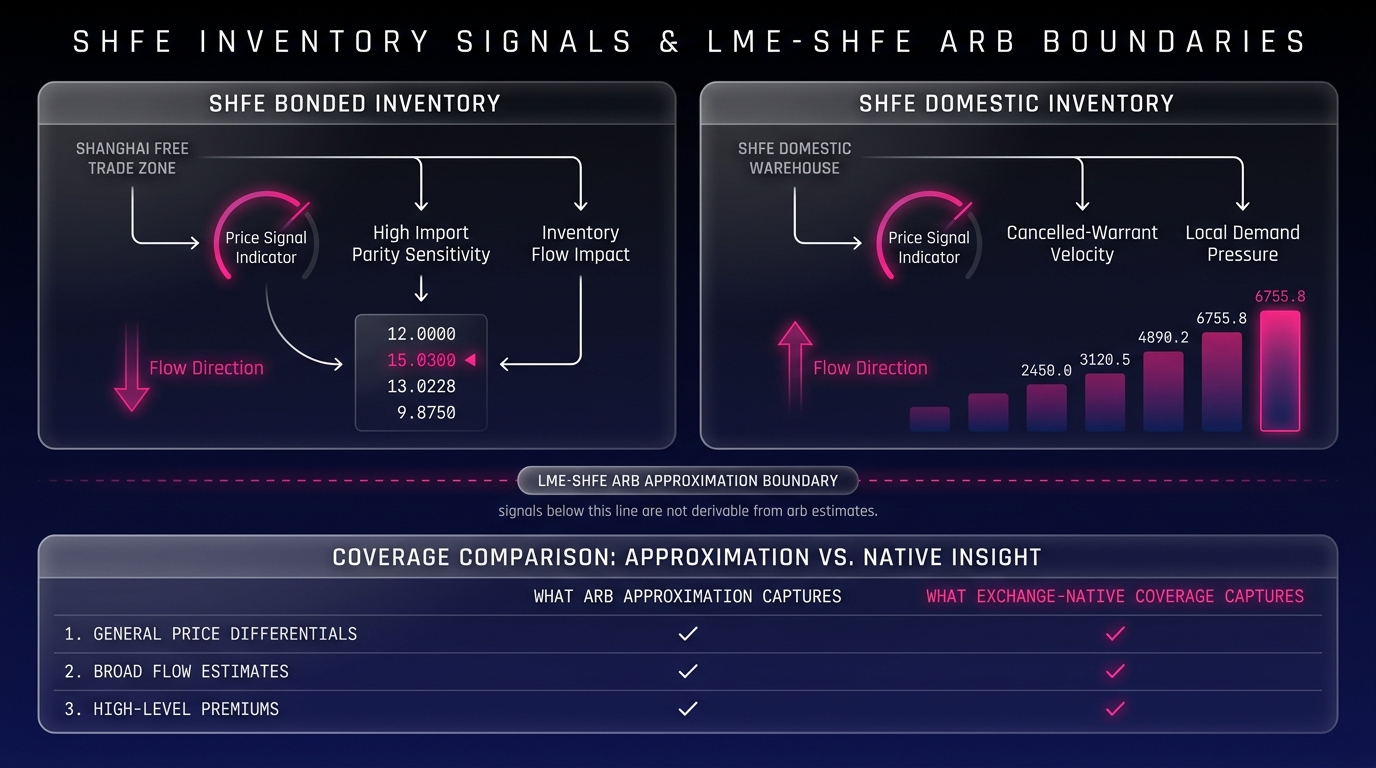
The **SHFE warehouse warrant system** generates independent price signals that LME-SHFE arbitrage approximations structurally cannot capture. The specific mechanism is **cancelled warrant velocity**, the rate at which SHFE warehouse warrants are cancelled ahead of physical delivery. To read these si
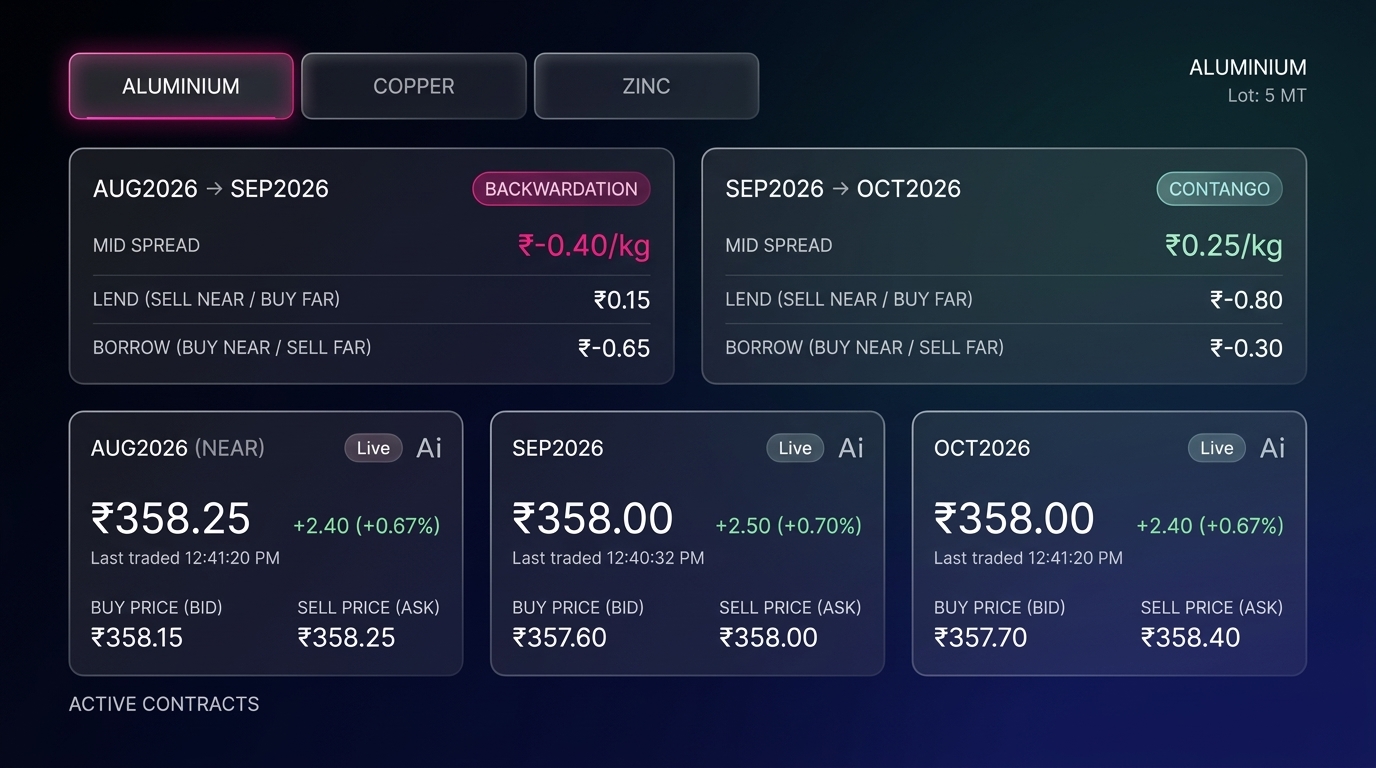
MCX Aluminum and Copper: Why LME Inputs Cause Hedge Lag
MCX aluminum and copper contracts function as independent pricing environments during Indian market hours—they aren't just LME proxies. When traders use LME benchmarks as primary inputs for MCX hedges, the input sequence introduces systematic hedge lag. This is a structural issue caused by misidenti
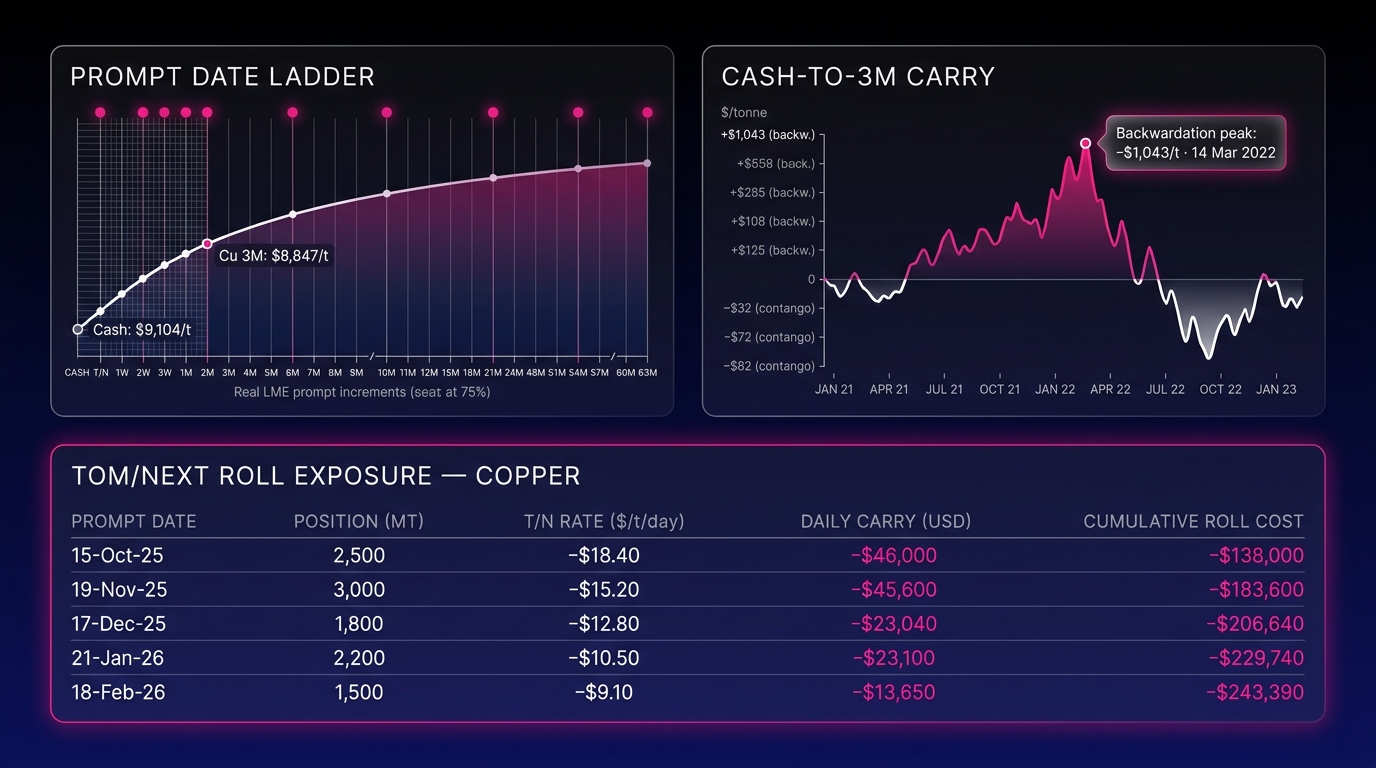
LME Prompt Date Structure: Where Hedges Actually Break
The LME does not work like other commodity exchanges. Its **LME prompt date structure** (a continuous ladder of daily, weekly, and monthly settlement points stretching 63 months forward) creates hedge timing exposures that are structurally invisible to platforms built around standard futures contrac
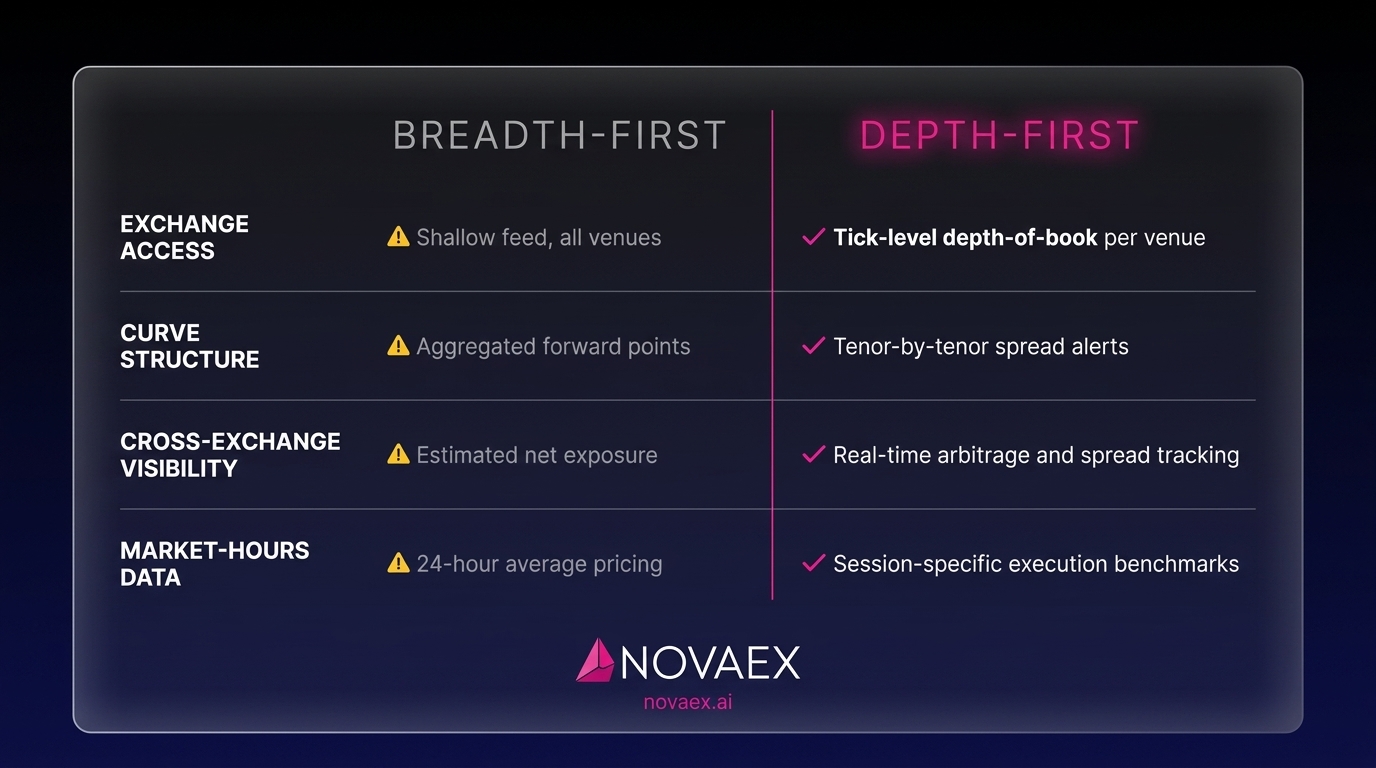
The Breadth-vs-Depth Tradeoff in Base Metals Intelligence
Every metals trading desk has had the same internal conversation. The platform covers dozens of commodities. The data technically exists. But when copper prompt dates roll, when an intraday LME move triggers a margin call, or when a cross-venue basis spread opens faster than the feed refreshes, the
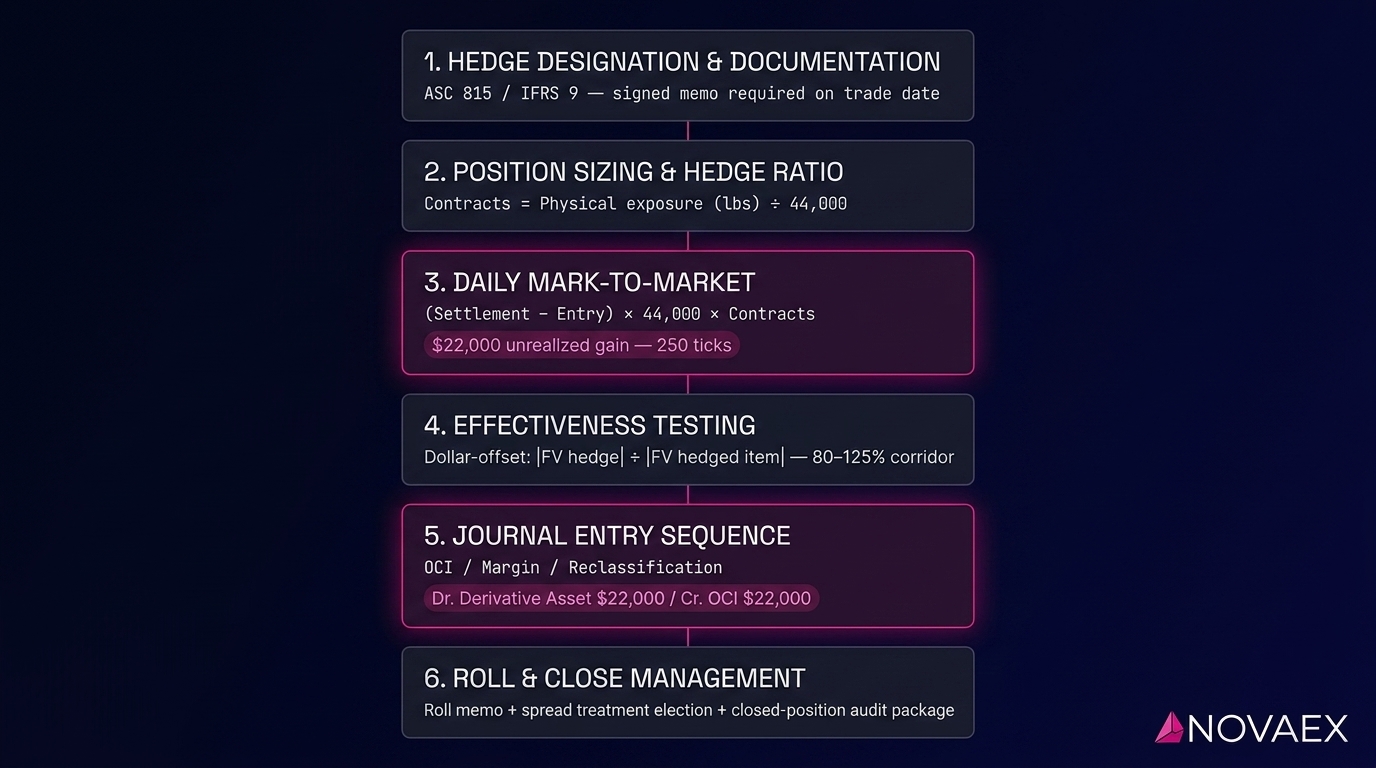
COMEX Aluminum Hedge Accounting Workflow Reference
Standard hedge accounting guidance frequently treats aluminum as a generic commodity. Applied to COMEX positions, this approach produces systematic errors: incorrect fair values, disqualified hedging relationships, and adverse audit findings.
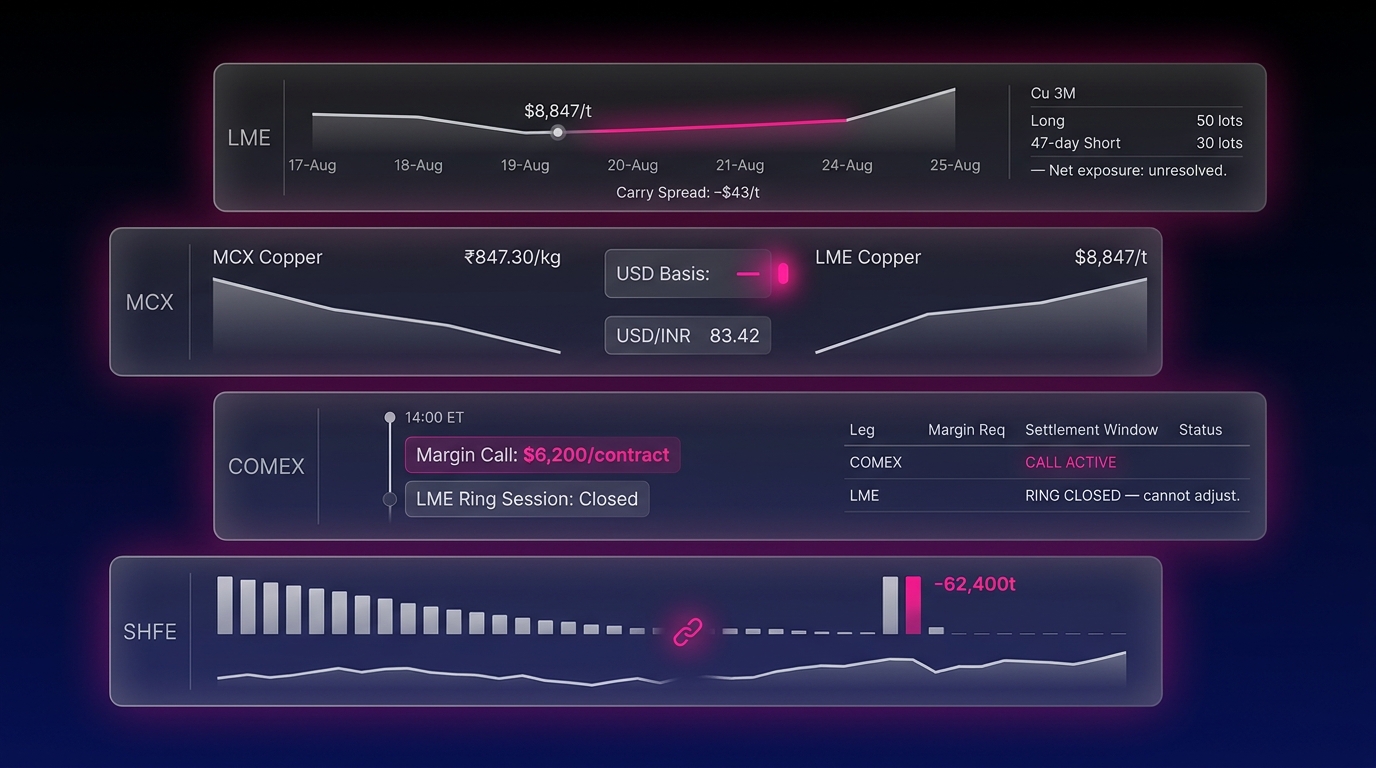
Metals Trading Platforms Have a Documented Gap Problem
Multi-commodity platforms treat metals coverage as a checkbox: one market listed among many. **The result is a specific, documented set of analytical failures**: an inability to reconcile MCX backwardation structure against LME forward curves within the same position window, COMEX margin exposure th
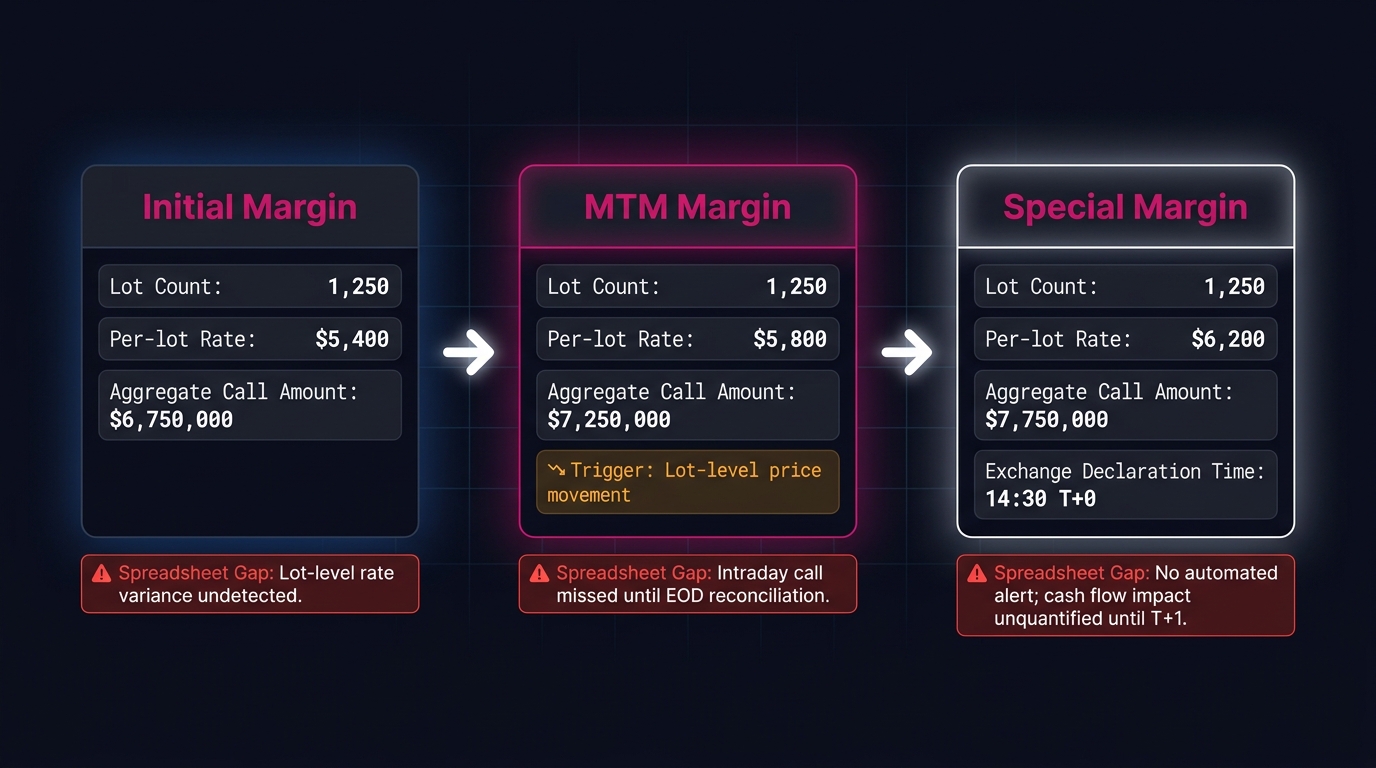
MCX Zinc Margin Calls: The Three-Stage Cash Flow Sequence
MCX zinc futures generate three distinct margin events: **initial margin, MTM margin, and special margin**. Each has its own trigger mechanic, calculation logic, and collection timeline. Each stage produces a specific cash flow discrepancy when lot-level tracking is absent. This is not a risk manage
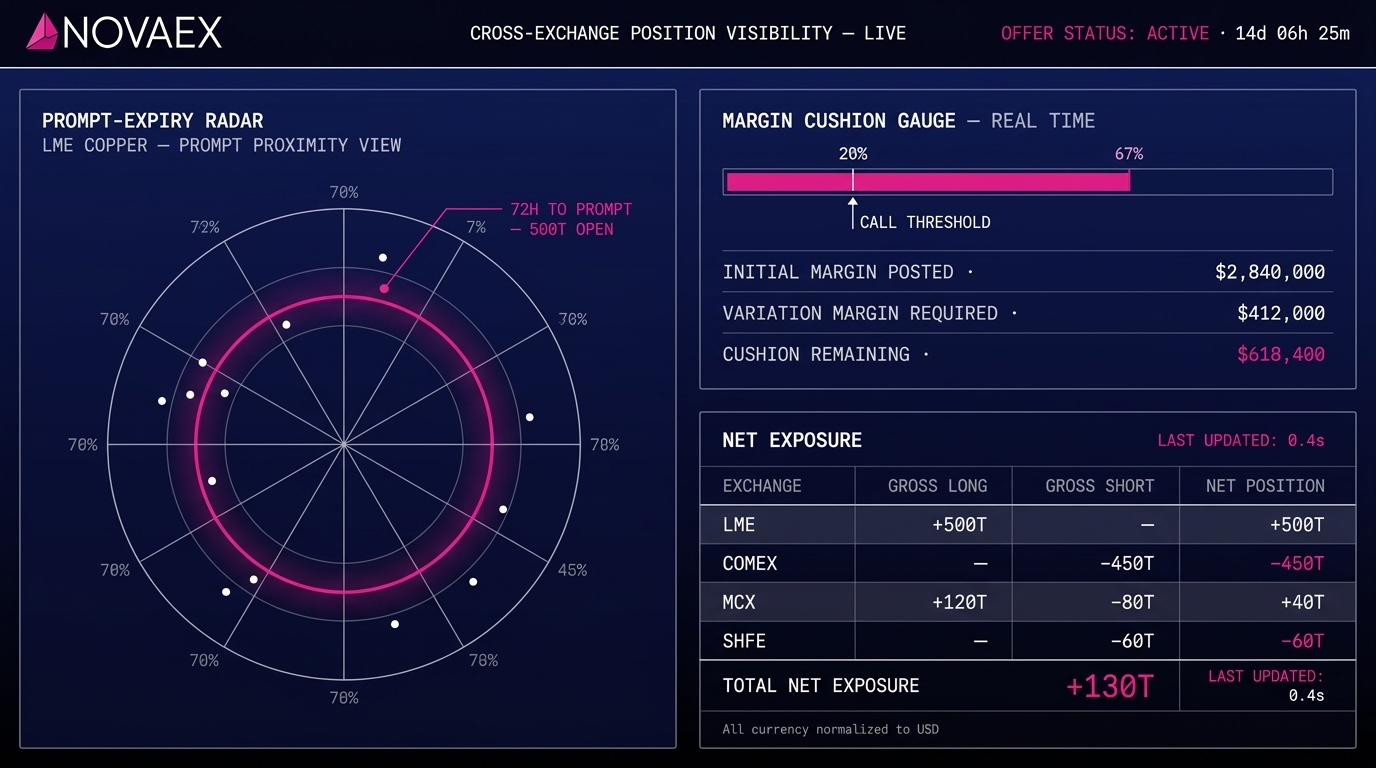
Cross-Exchange Position Visibility for Metals Traders
That gap serves as a structural failure that turns risk management into a historical record of decisions made without complete information.
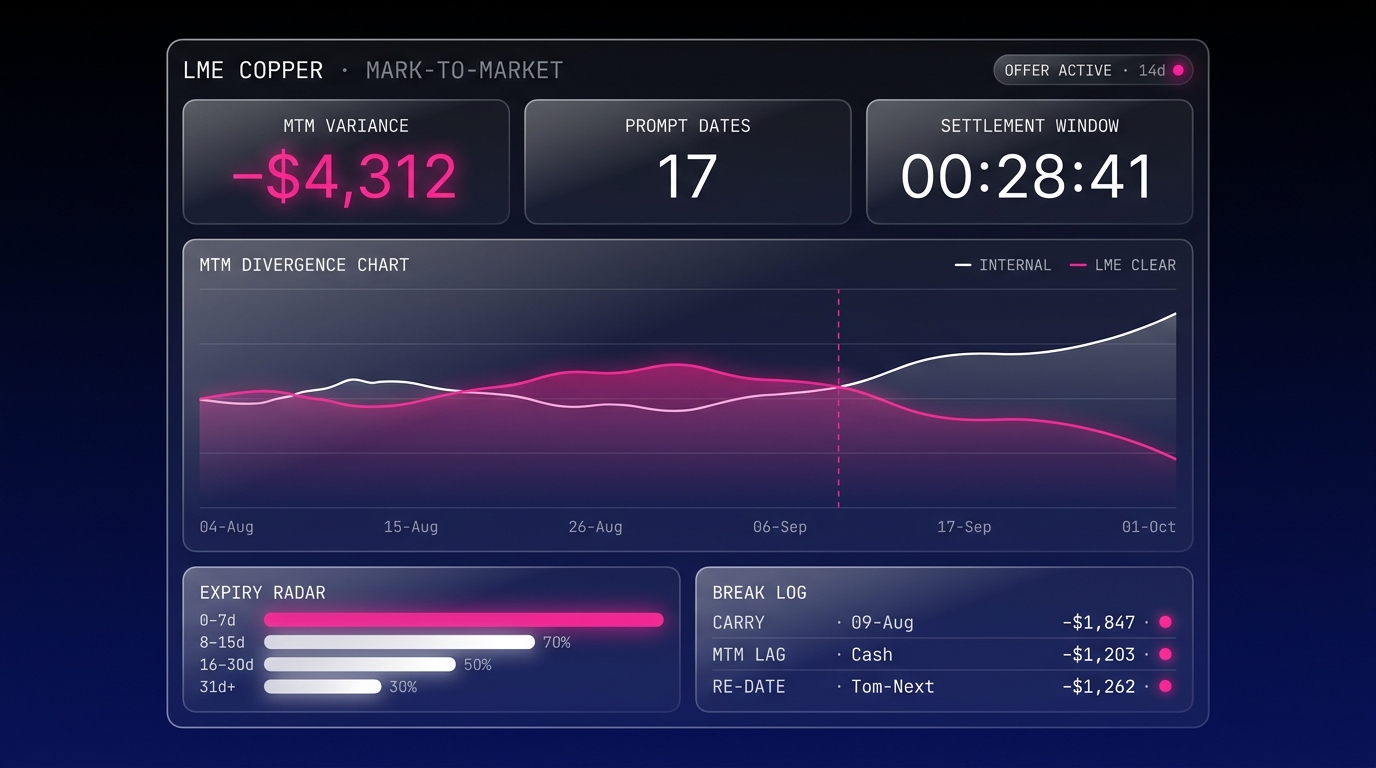
LME Copper Mark-to-Market: Why EOD Reconciliation Fails
When the LME publishes official copper prices at approximately 12:30 GMT, the conditions for tomorrow's morning position mismatch are already in place. **LME copper mark-to-market reconciliation breaks in the gap between official price ingestion and prompt date application, not at the trade level.**
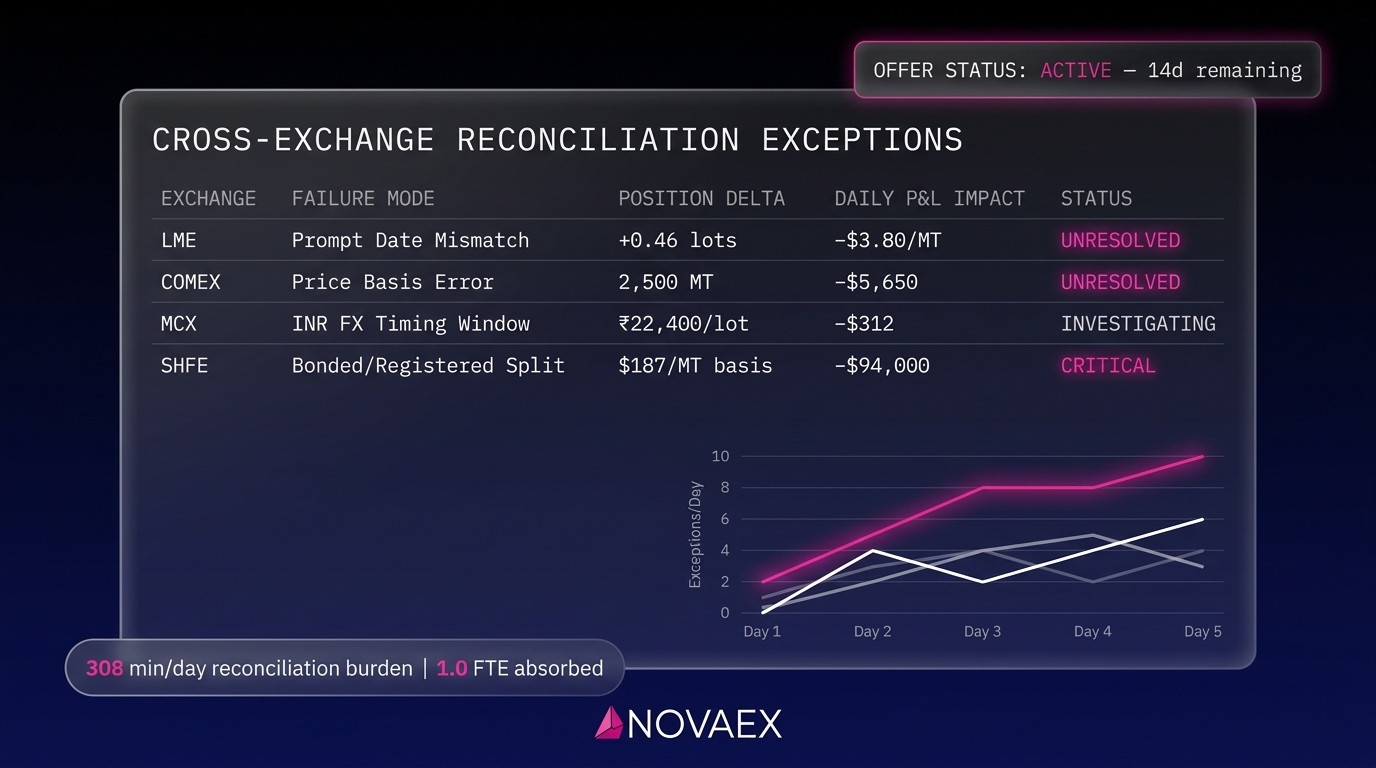
Cross-Exchange Reconciliation Failures in Metals Trading
Every metals desk running cross-exchange hedges absorbs a daily reconciliation tax. Position breaks between LME, MCX, COMEX, and SHFE persist because four exchanges operate on fundamentally incompatible data standards, and most CTRM platforms normalize those differences incorrectly rather than resol
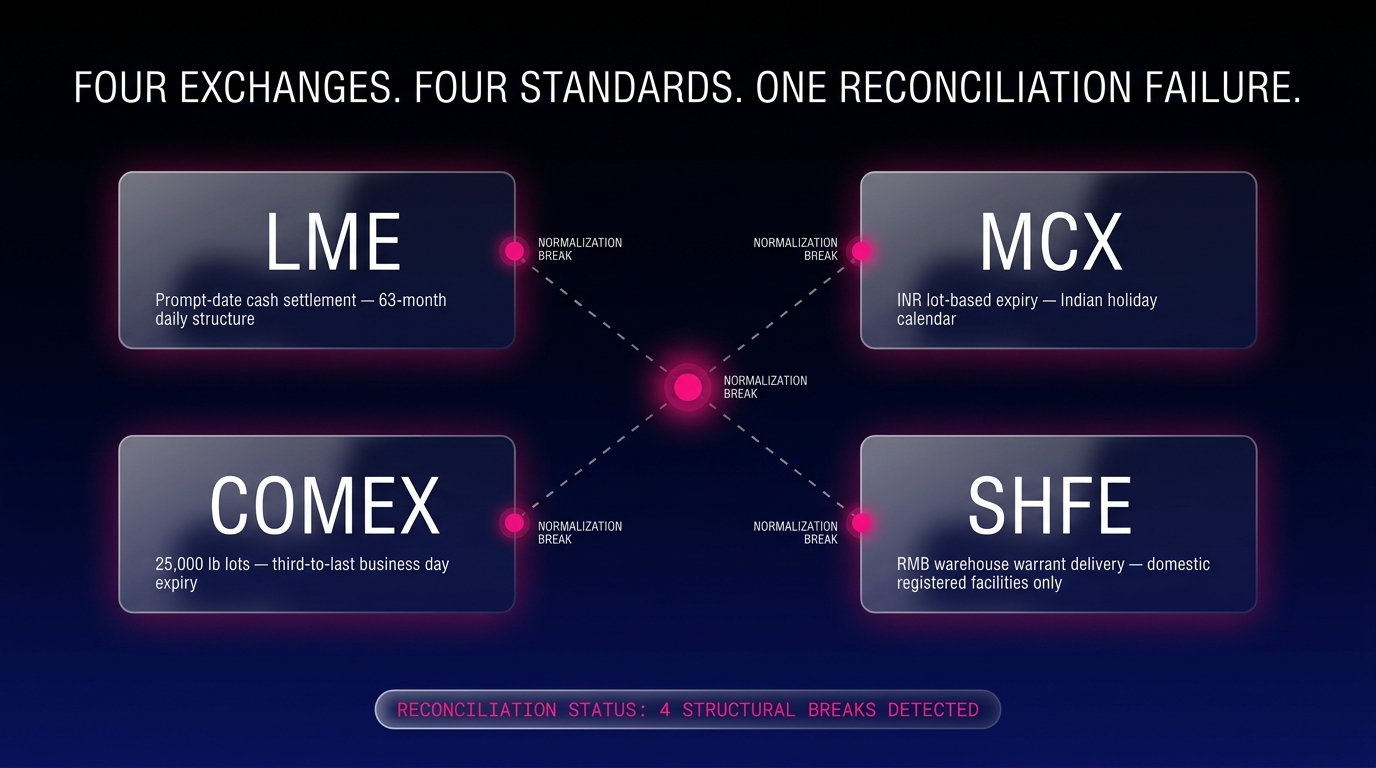
Why Cross-Exchange Reconciliation Fails in Metals Trading
Cross-exchange reconciliation failures are not workflow problems. They are **structural outputs of a specific architectural decision**: applying a single normalization layer to exchanges that operate on fundamentally different native conventions. The failure begins in data ingestion, not in the reco
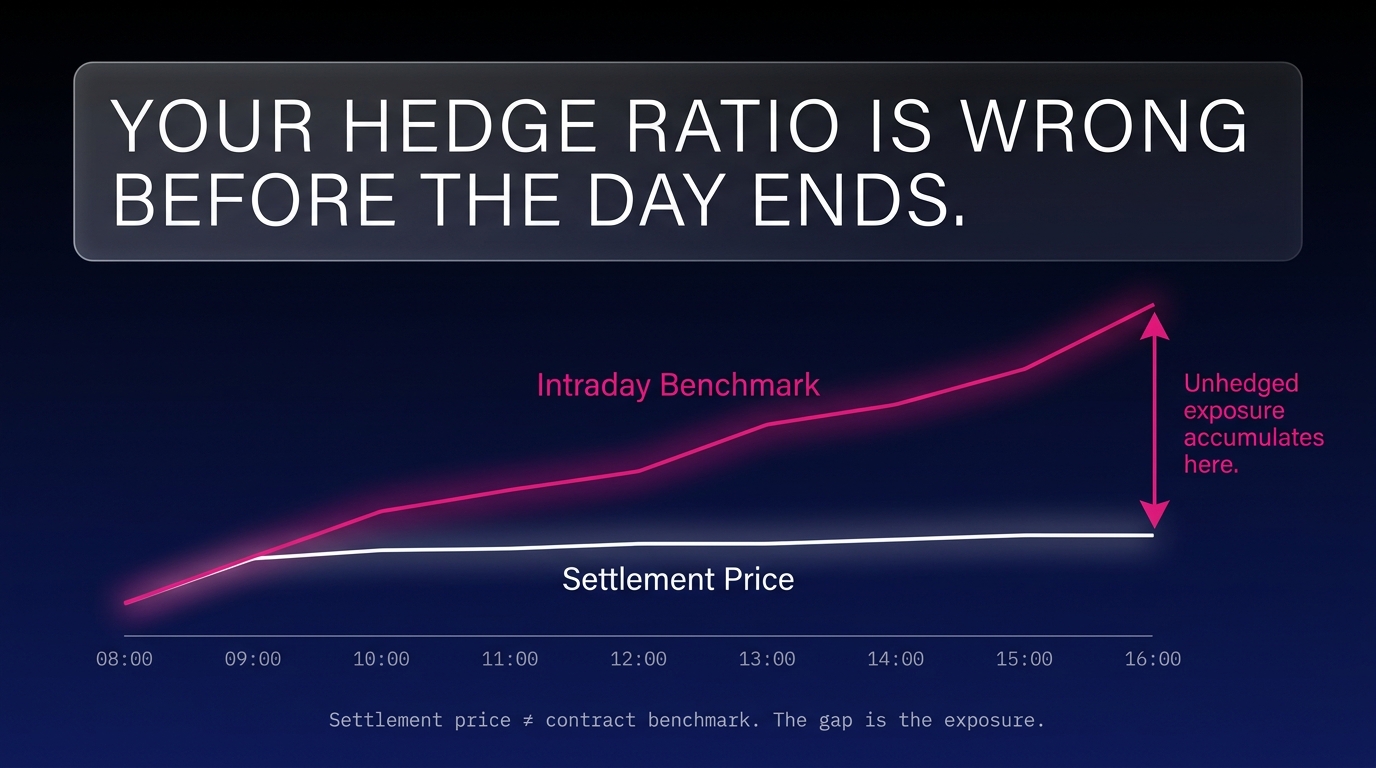
The Silent Hedge Ratio Gap Settlement Prices Create
When hedge ratios are calculated using end-of-day LME settlement prices rather than the intraday benchmark at which a physical contract was priced, partial exposure accumulates without detection. No alert fires. No flag appears on the position screen. The gap widens and compounds with every contract
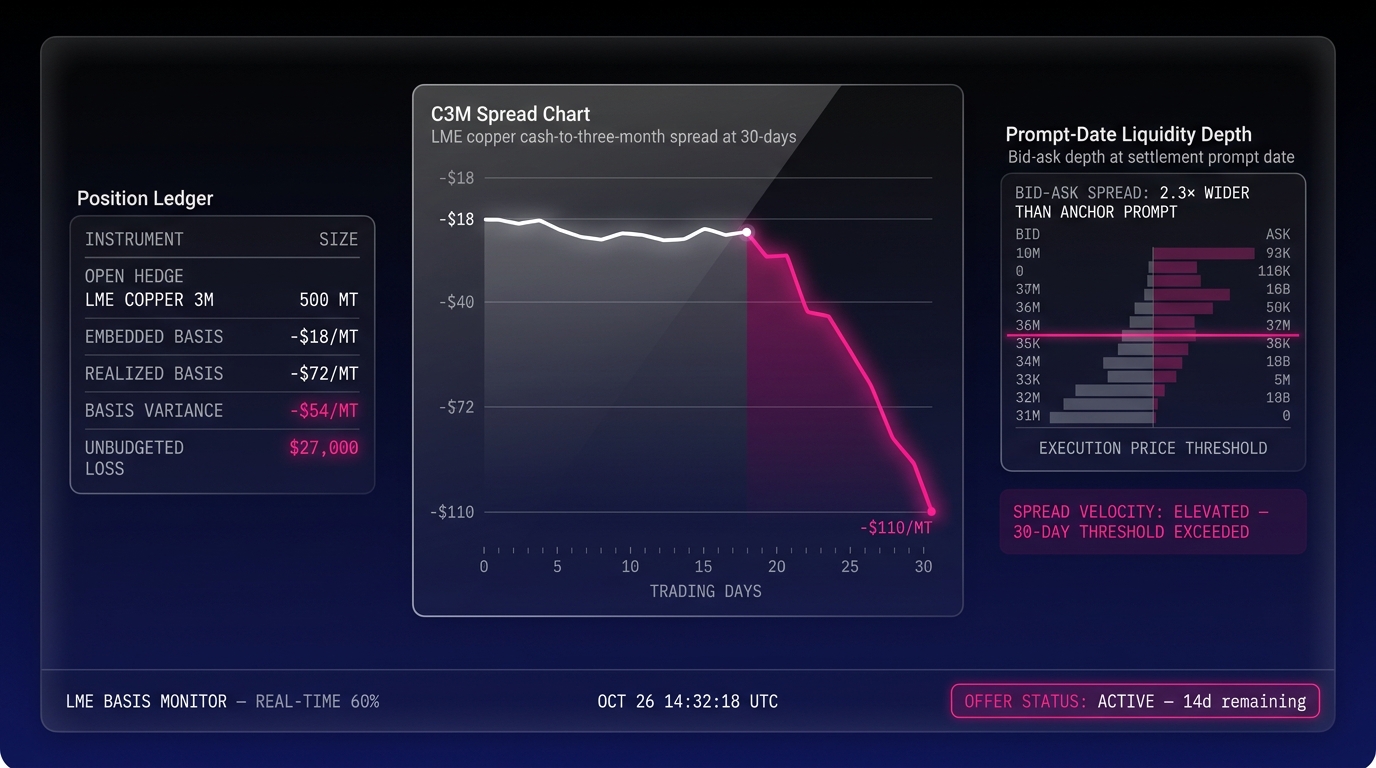
Why LME Basis Blowouts Are a Predictable System Failure
LME basis blowouts during cash-to-three-month spread widening are not random market noise. They are the documented, reproducible output of position management tools that cannot track prompt-date liquidity in real time. The data gap is specific, the failure mode is diagnosable, and the blowout is pre
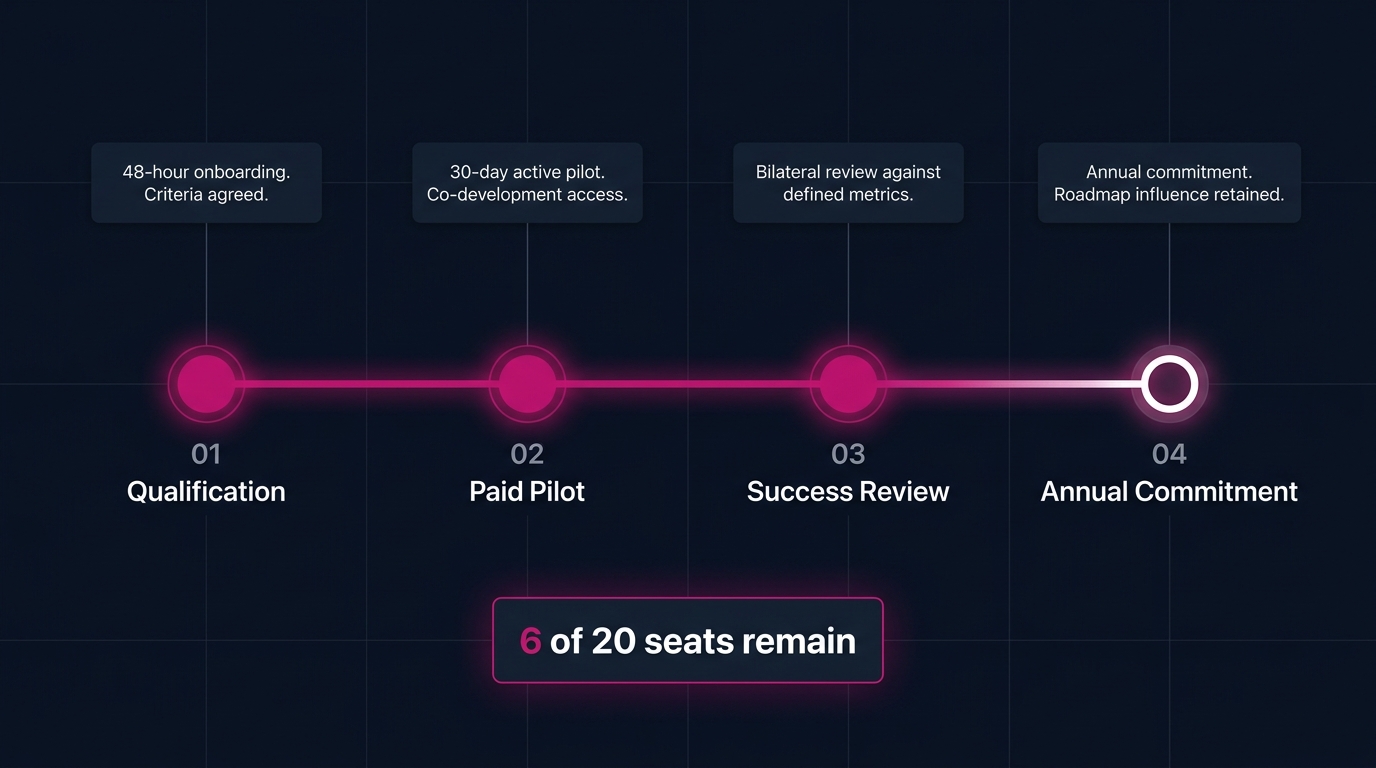
Metals Trading Platform Pilot: The Novaex Graduation Path
The Novaex Depth-First Pilot Sprint is a structured 90-day engagement for base metals trading desks. **Twenty cohort seats exist. Several are already allocated.** The pathway below maps every stage (qualification, pilot sprint, criteria review, and annual commitment) with concrete deliverables at ea
CTRM Vendor Risk: Signals That Outweigh Any Sales Pitch
In base metals trading, **CTRM vendor risk** carries operational and financial consequences that generic software evaluation frameworks do not fully account for. The wrong platform does not simply slow operations down. It creates direct exposure when the LME moves against your position and the syste
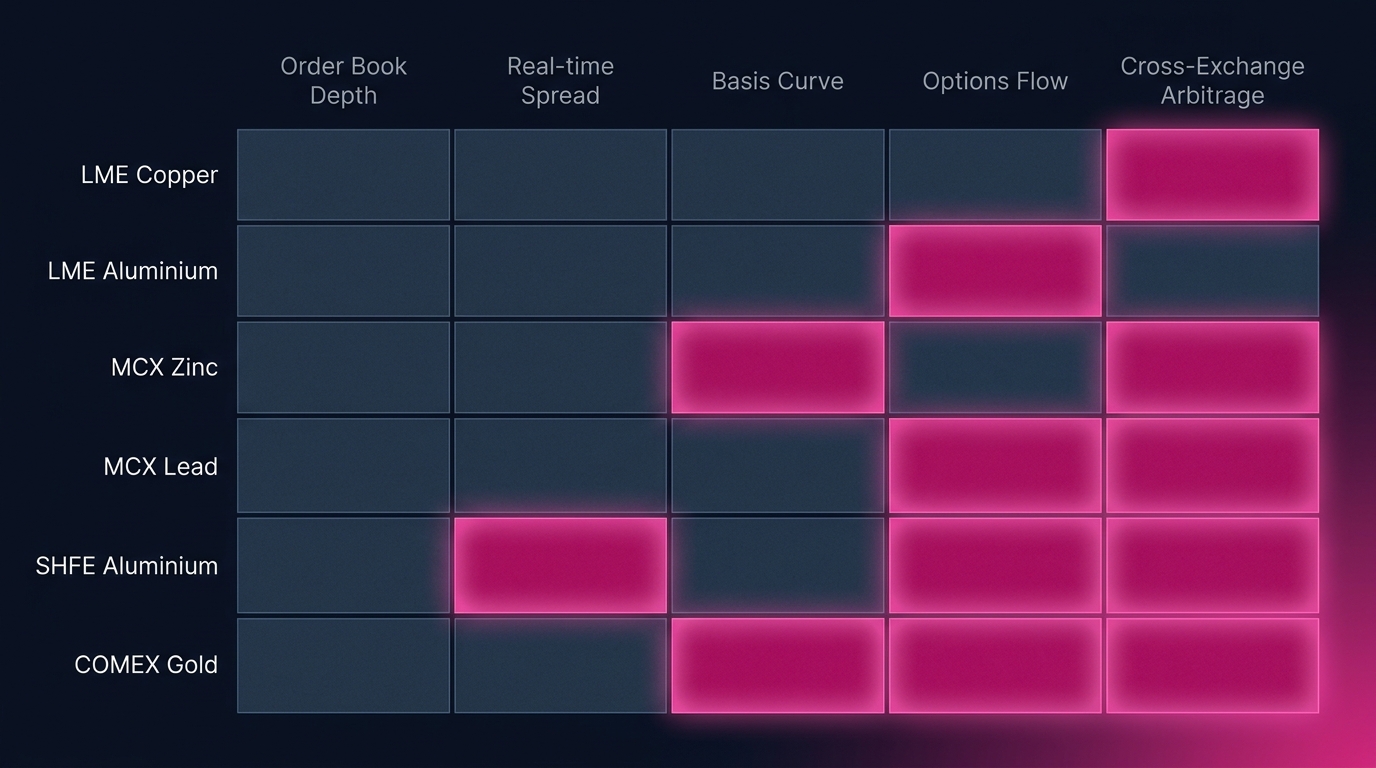
Base Metals Exchange Coverage: Run Your Platform Audit
A systematic gap exists between what most metals intelligence platforms claim to deliver and what base metals hedging decisions actually require. Most platforms ingest data from the correct exchanges, or document that they do. Between the headline quote and an executable hedging decision, however, a
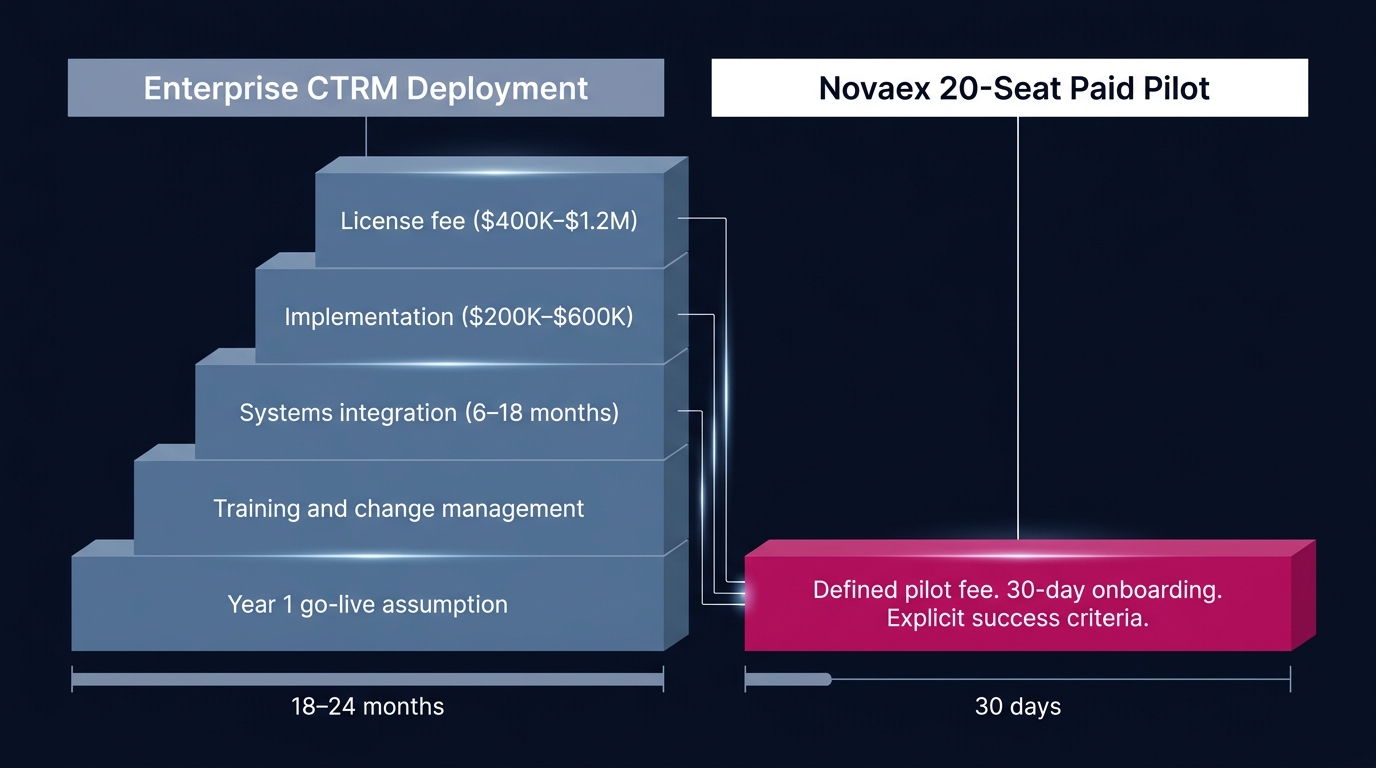
Enterprise CTRM Implementation Cost: The Full Picture
A commodities trading desk evaluating a new CTRM platform faces two structurally distinct commitment categories. The first requires multi-year budget allocation, organizational mobilization, and a technology dependency that takes 12, 24 months to become operational. The second produces verifiable pl
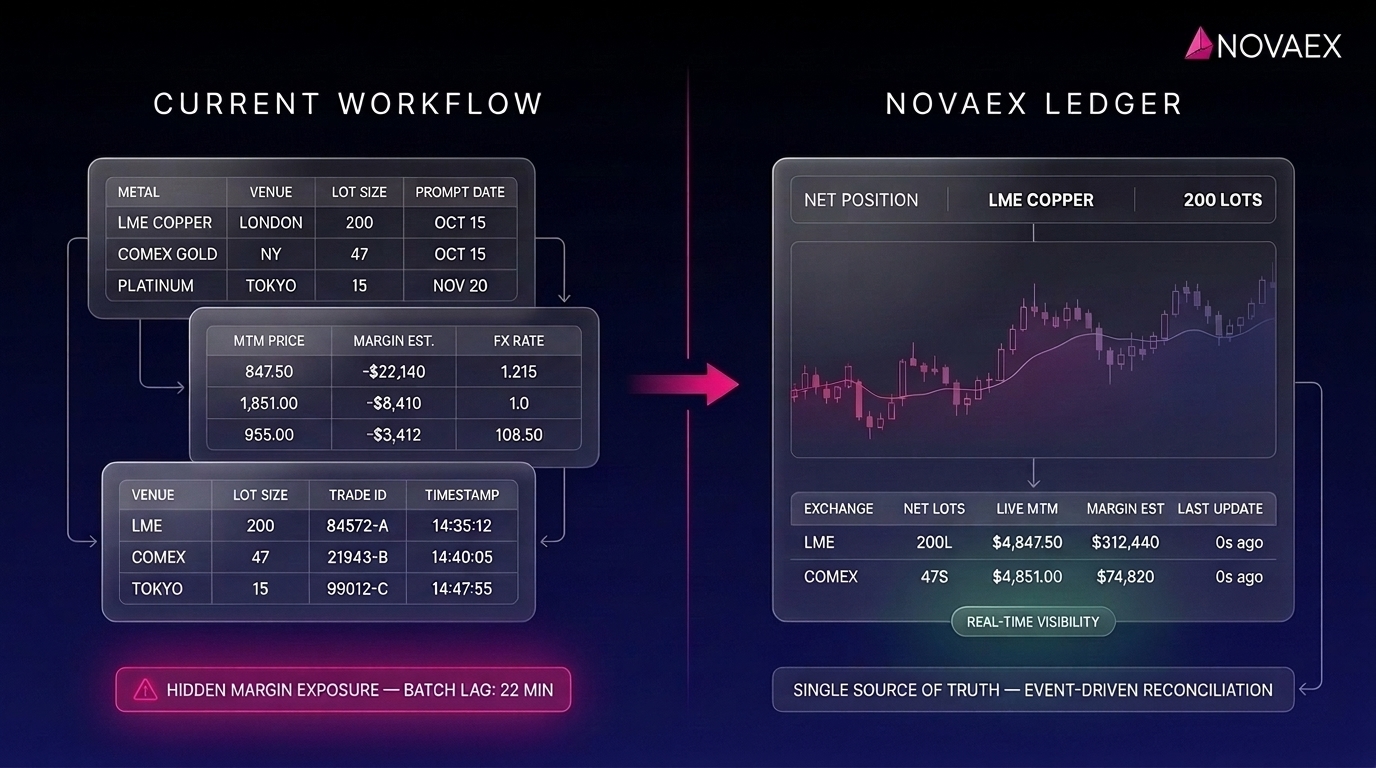
Intraday Margin Exposure: A Metals Trading Workflow Audit
Most metals trading operations carry at least one **intraday margin exposure** they cannot measure in real time. The gap is architectural. It is built into how trade capture, exchange feeds, and the position ledger synchronize, rather than how carefully the desk is managed. This audit maps a standar
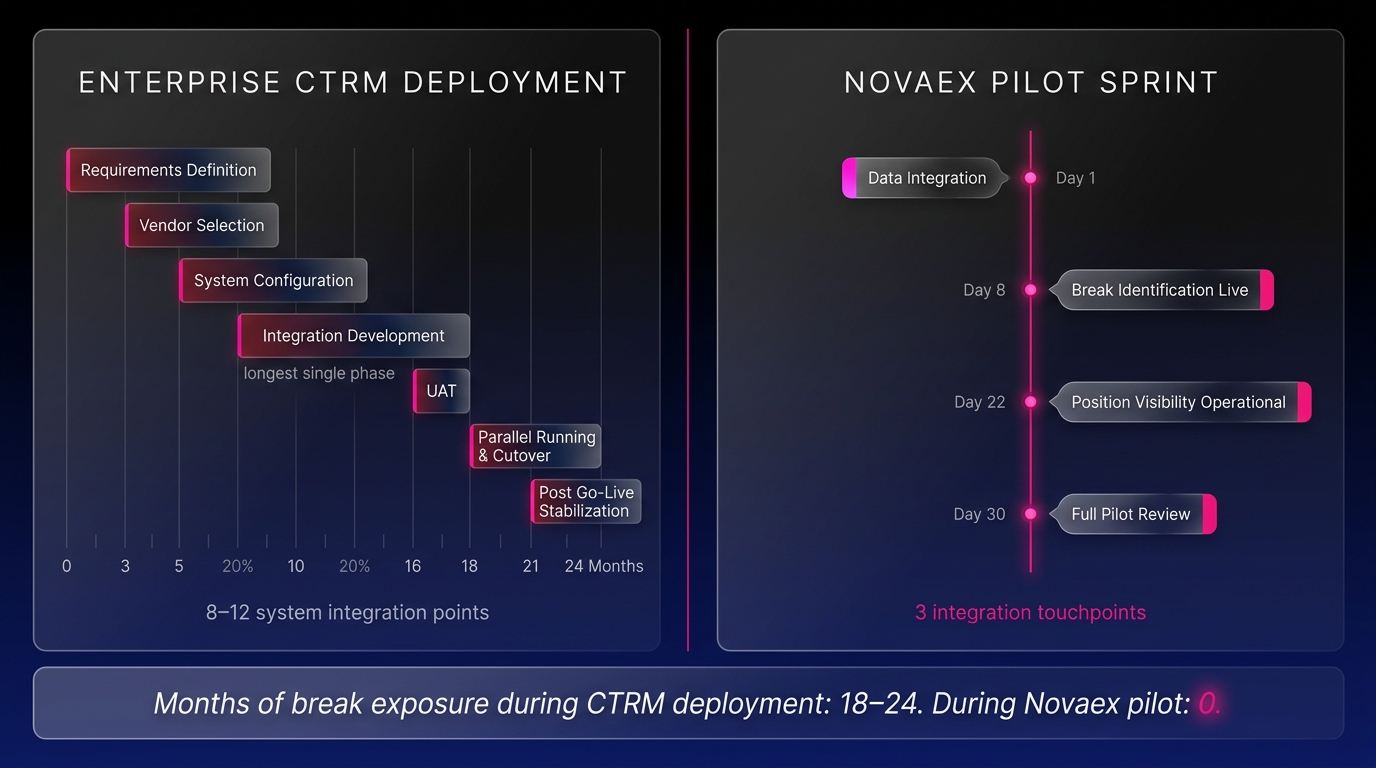
CTRM Implementation Timeline vs. Pilot Sprint Reality
Most metals trading desks operate under a default assumption: the logical progression from spreadsheets or a legacy platform is a full CTRM deployment. That assumption merits rigorous examination, not because enterprise CTRM platforms lack capability, but because the **CTRM implementation timeline**
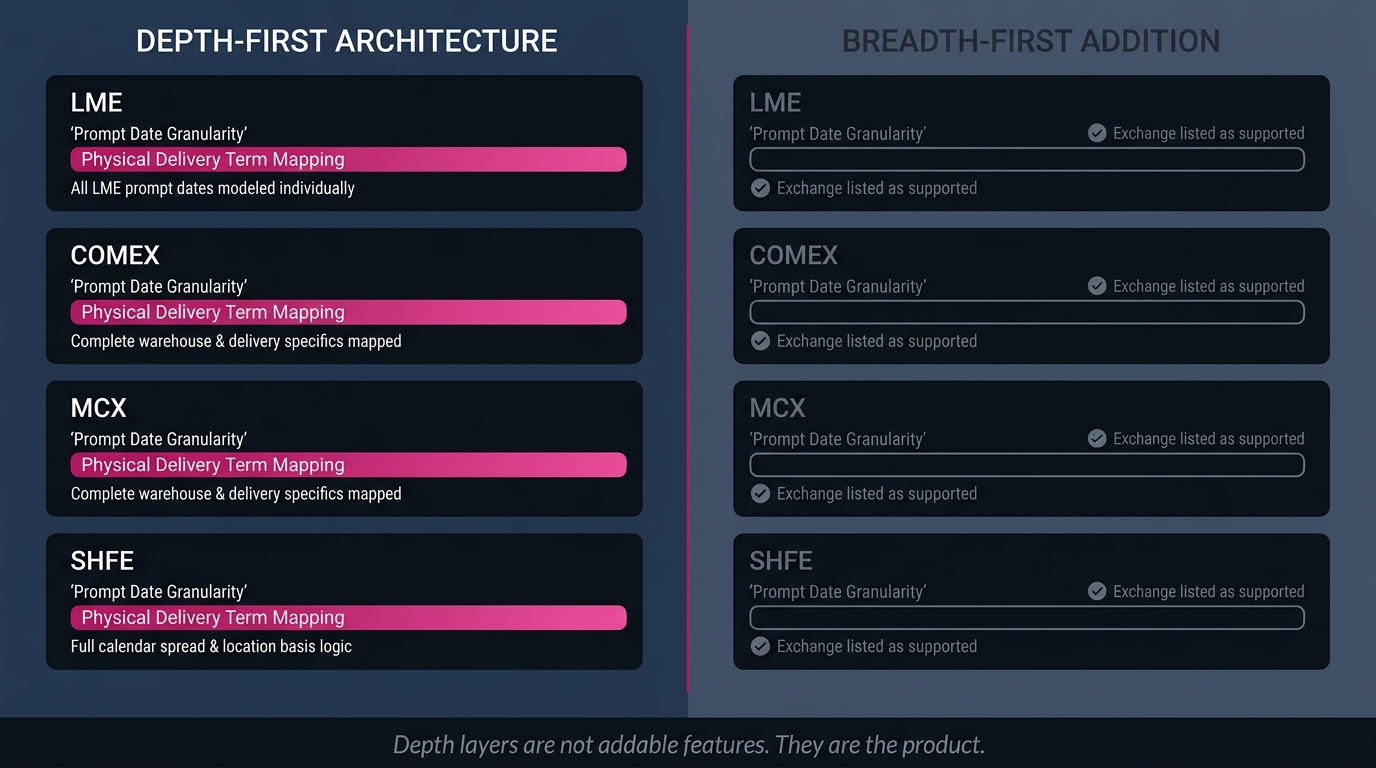
Why Depth Makes a Base Metals Trading Platform Irreplaceable
A front-office copper trader managing positions across London, New York, Mumbai, and Shanghai operates across four completely different markets. Each exchange operates with a distinct contract architecture, settlement logic, delivery mechanism, and data structure that demands modeling on its own ter
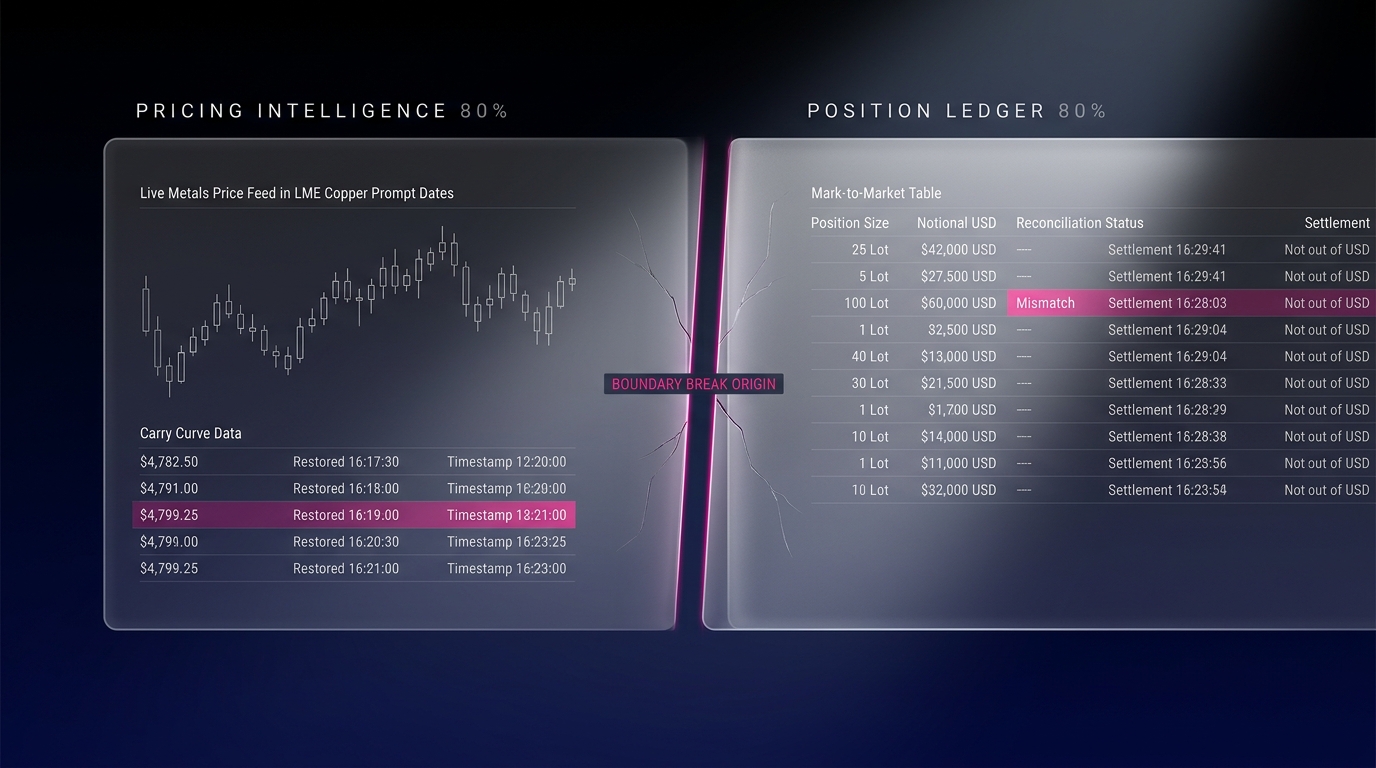
The Reconciliation Breaks No Metals Integration Can Prevent
The best-of-breed approach is defensible on its face. Select the most capable pricing intelligence tool, connect it to the most capable position management system, and build an integration layer between them. On paper, coverage is complete. In practice, the space between those two systems functions
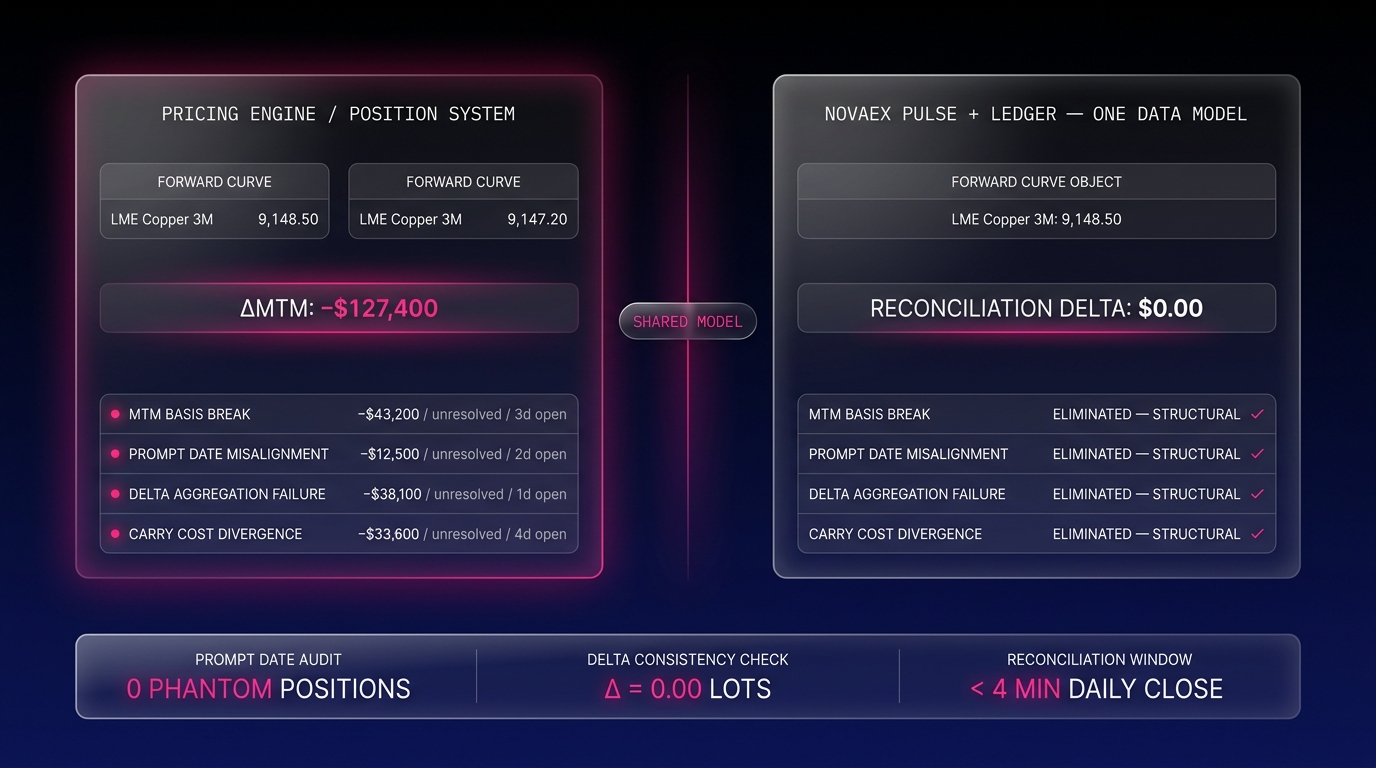
Why Pricing and Position Must Share One Data Model
The reconciliation breaks that erode desk confidence in CTRM output originate in a structural gap: two systems modeling the same physical and financial reality using independent representations. The **pricing-position gap in CTRM** cannot be closed by integration. Only a shared data model eliminates
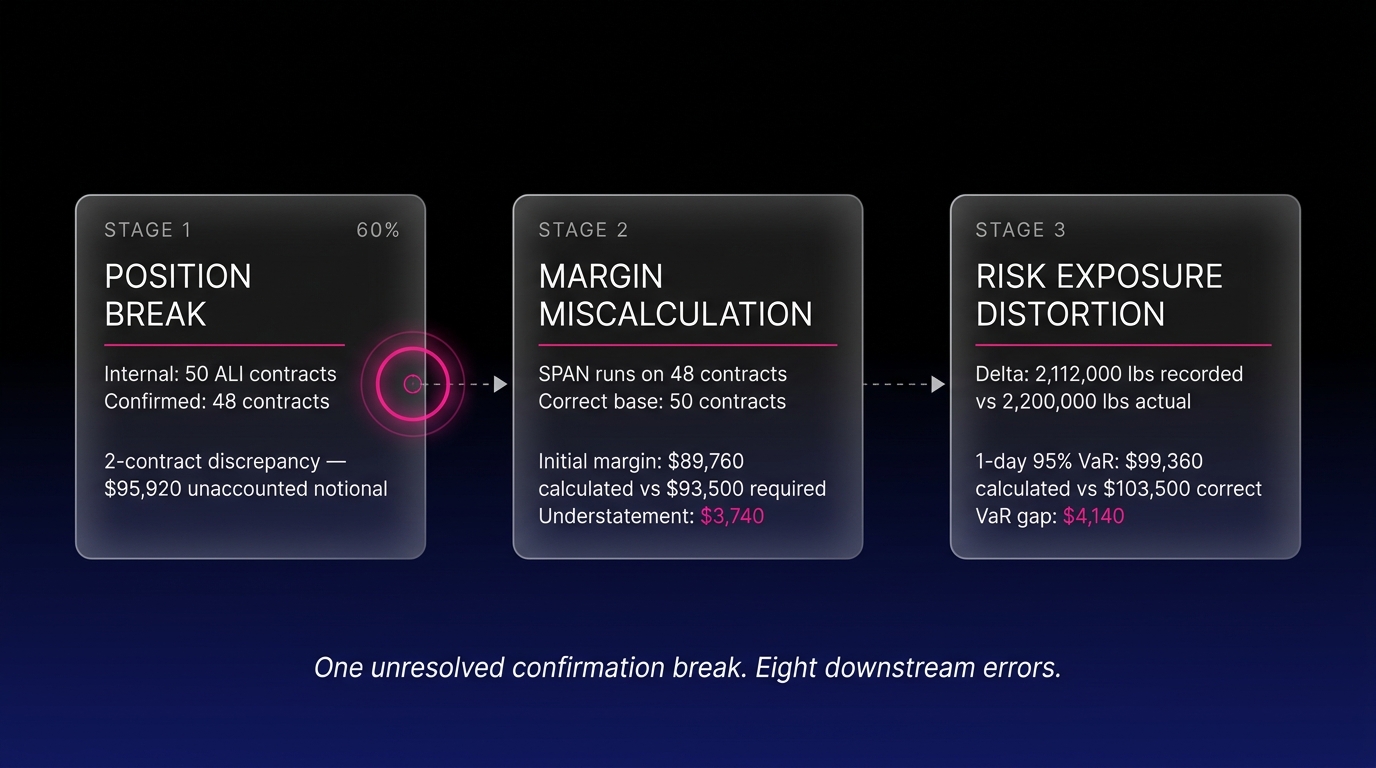
COMEX Aluminum Position Break: How It Corrupts Margin Calculations
A single unresolved COMEX aluminum position break propagates deterministically through four downstream systems (position ledger, initial margin engine, variation margin reconciliation, and VaR model) producing a materially incorrect margin figure before end-of-day processing completes. The mechanism
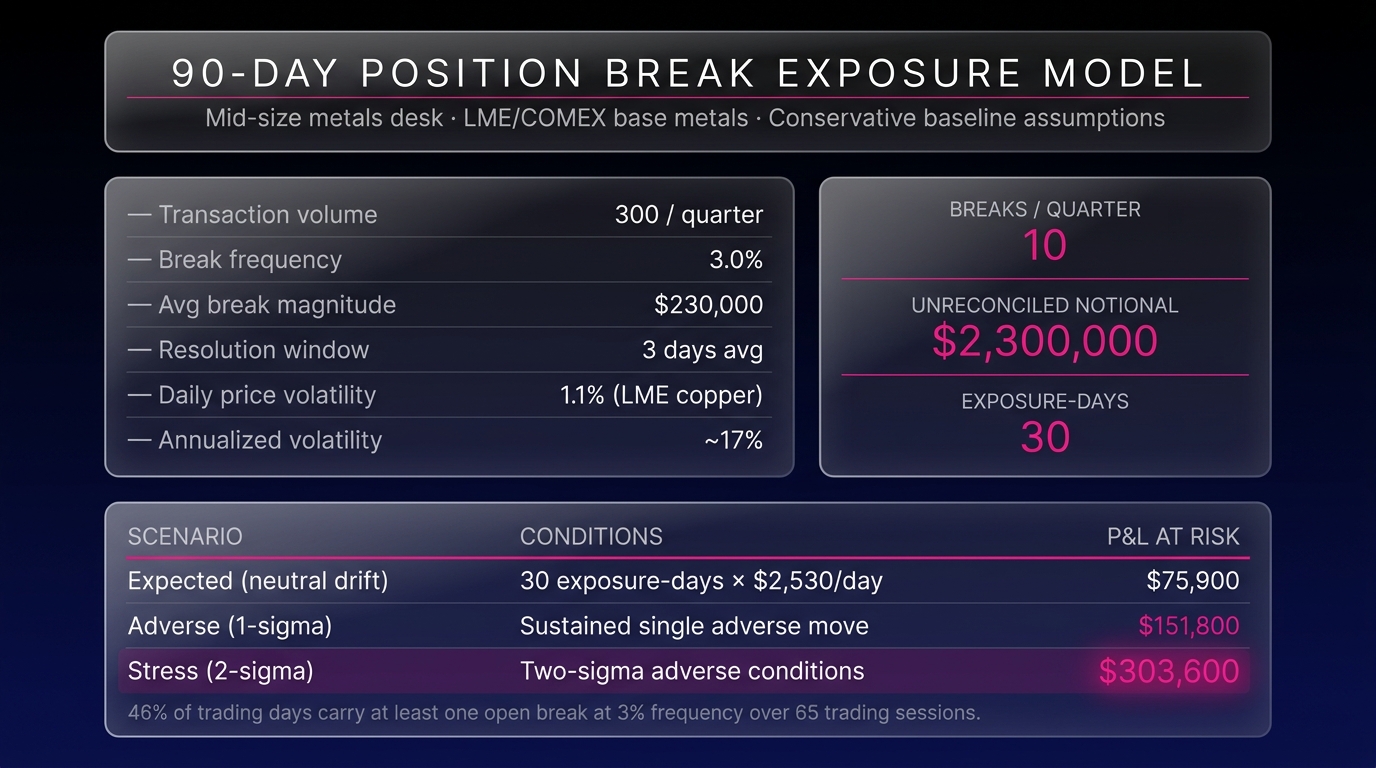
Modeling 90-Day Position Break Exposure: Metals Desk
A position break serves as an exposure window that opens the moment a discrepancy appears and closes only when reconciliation is confirmed. On a metals desk running manual workflows, that window averages three to four business days [metals desk reconciliation workflows]. Firms must evaluate ho
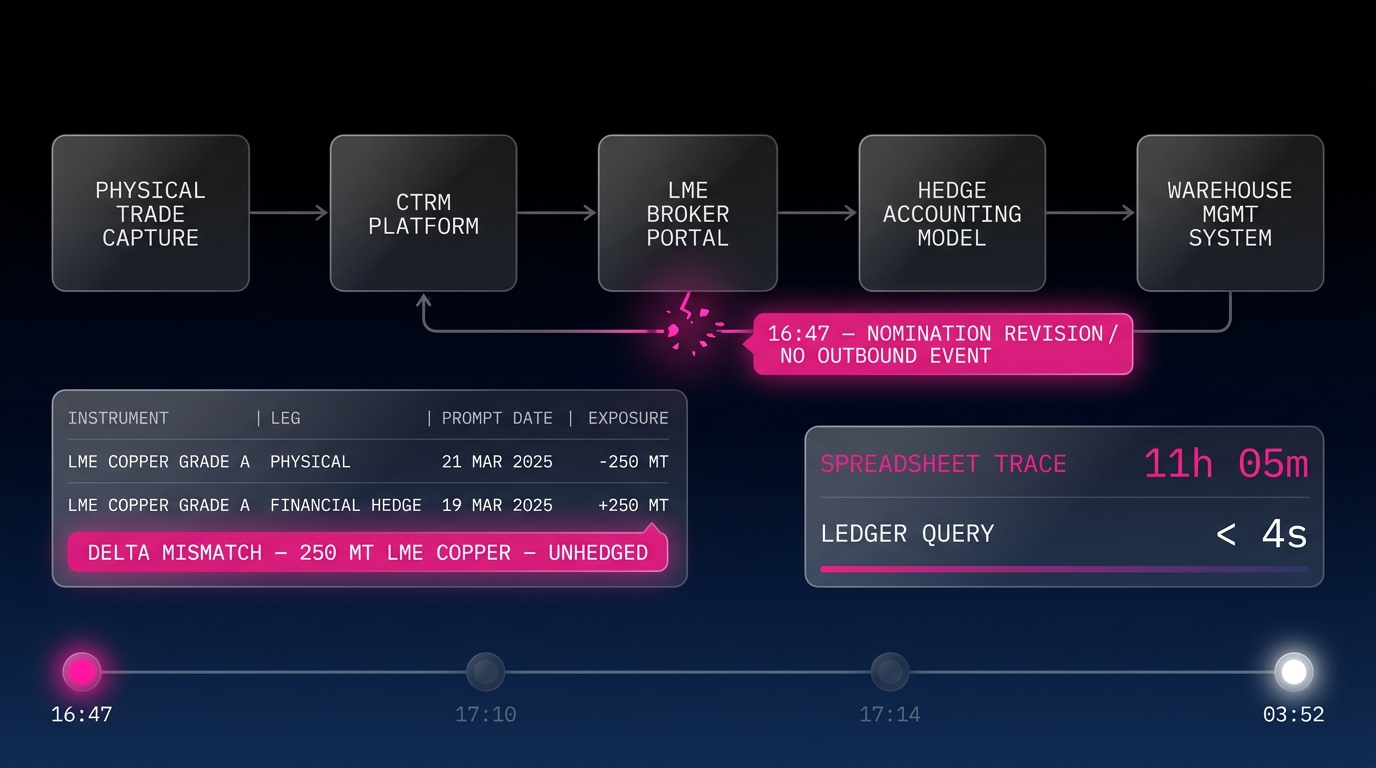
Why Spreadsheet Reconciliation Creates a Structural Audit Gap
That eleven-hour trace represents the operational baseline for any physical-financial book managed through spreadsheet reconciliation, rather than an exceptional failure.
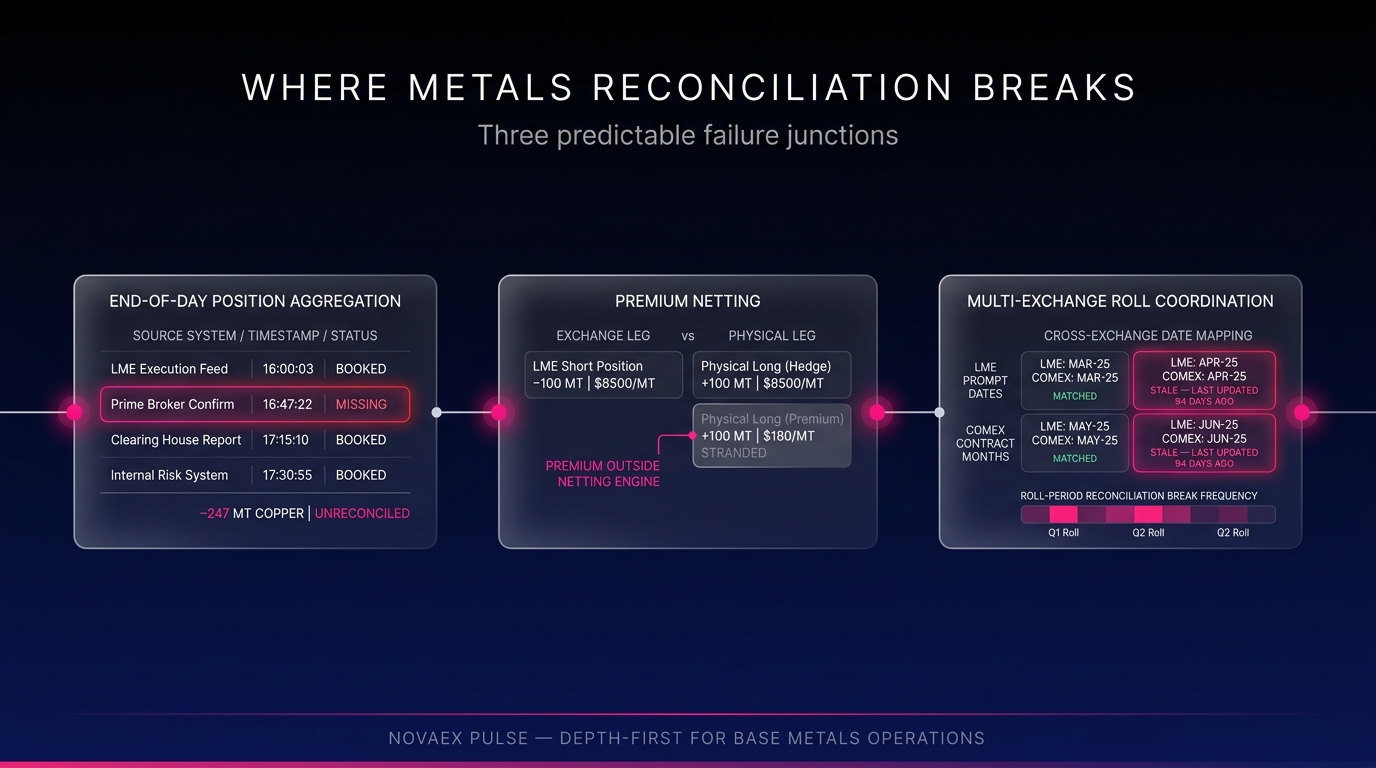
Why Metals Trading Reconciliation Breaks Happen
If you have opened a morning P&L report and found your books out of sync with the exchange, you have experienced this pattern directly. The instinct is to locate the incorrectly entered trade. The data points elsewhere.
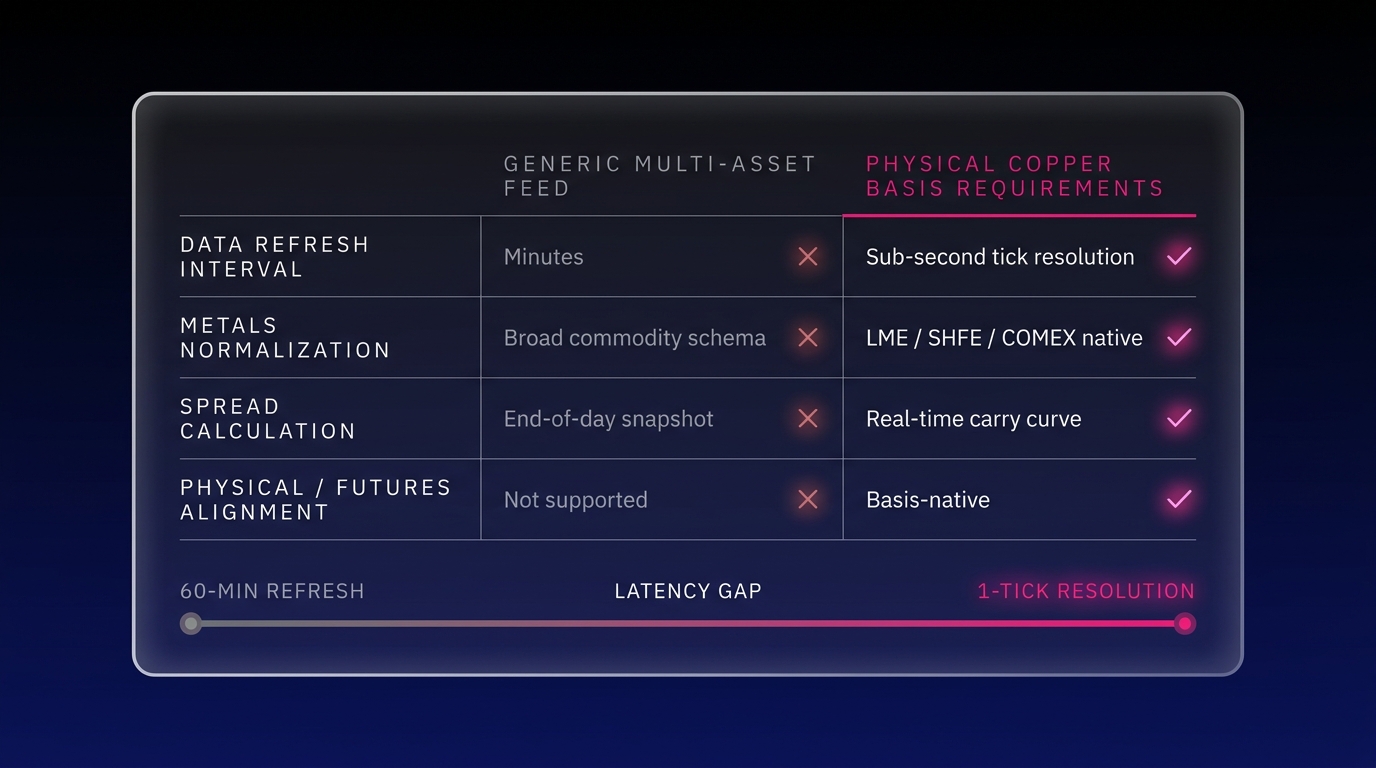
Physical Copper Basis Trading: Is Your Data Fast Enough?
Physical copper is priced against the LME. While this sentence appears simple, the underlying calculation is complex.
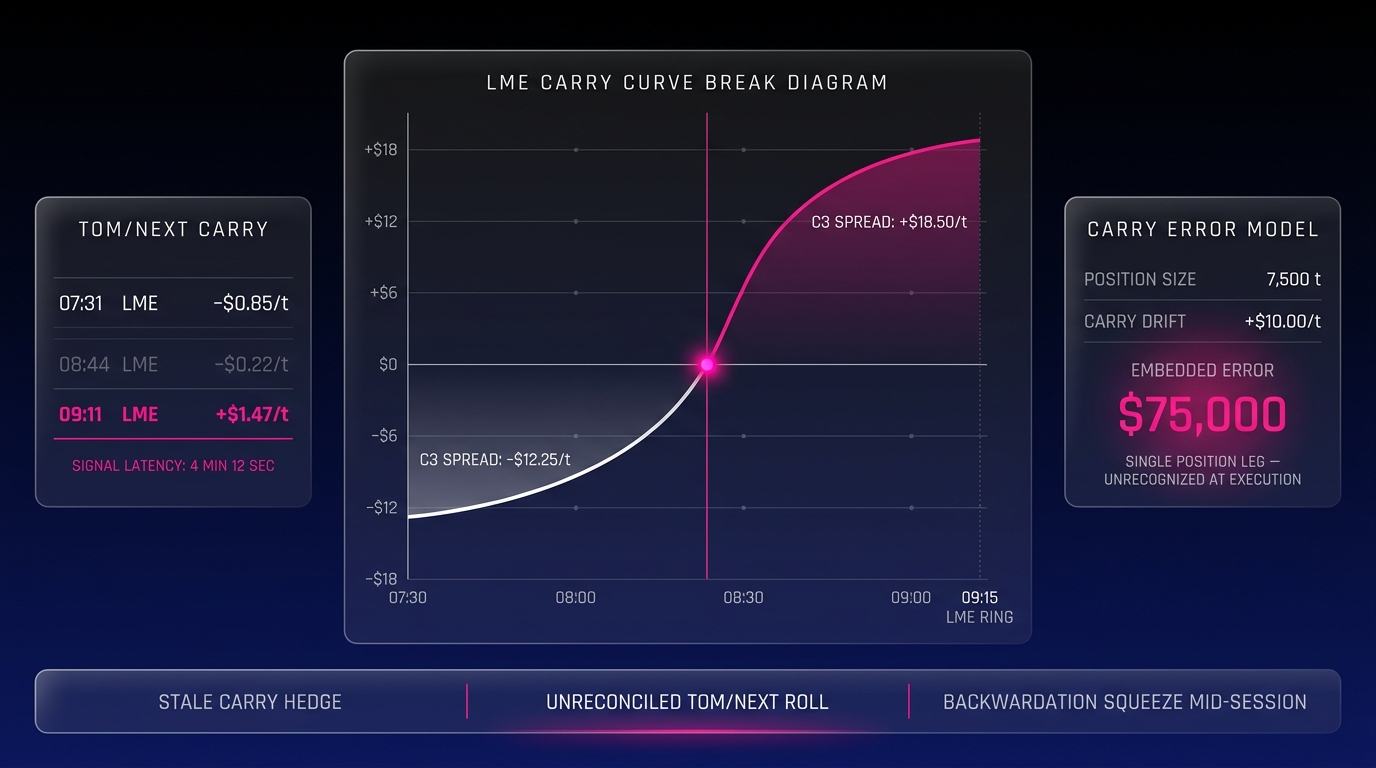
LME Carry Curve Pricing Breaks: Contango vs. Backwardation
When the LME carry curve transitions from contango to backwardation mid-session, any team pricing against a signal refreshed in the last 90 seconds is already operating on stale data. That gap (between what the market structure is and what your system says it is) is where **LME carry curve pricing b
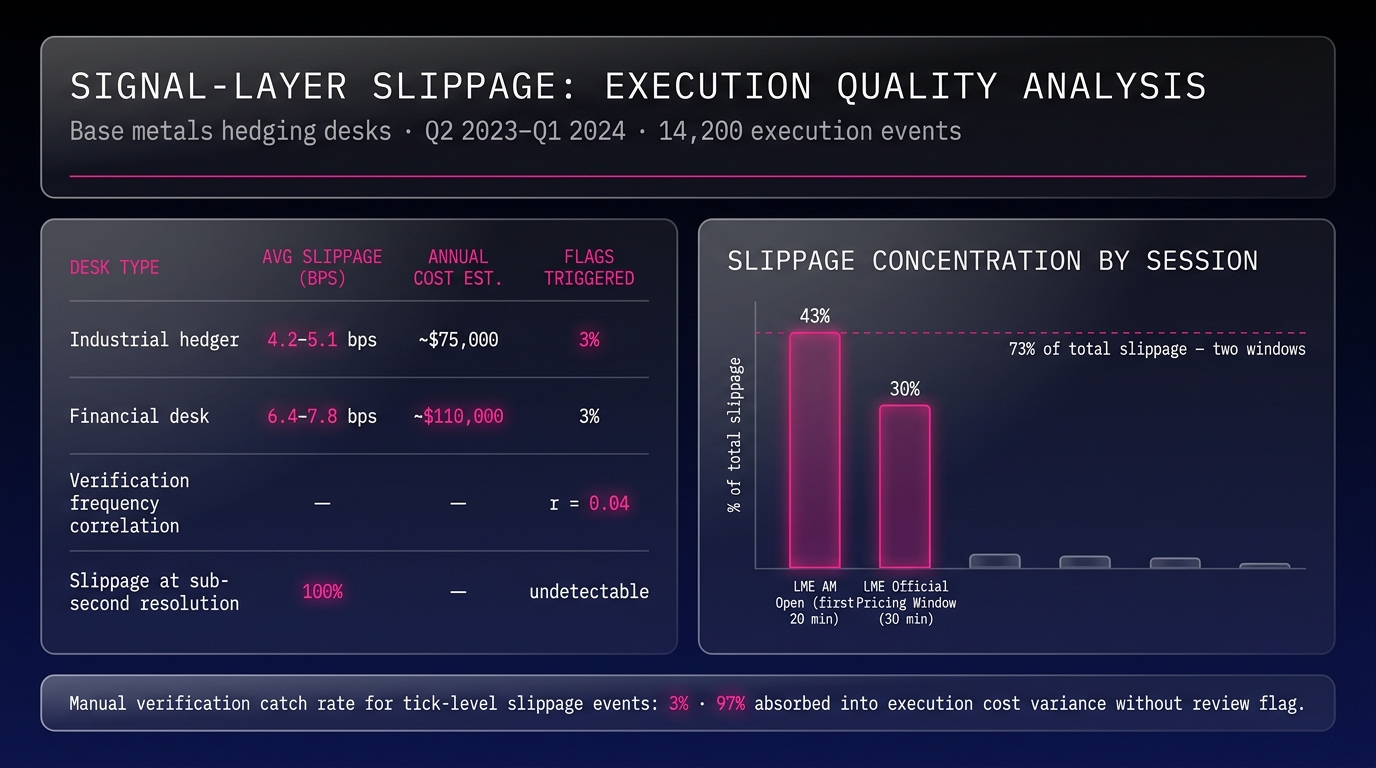
The Slippage Manual Price Verification Cannot Detect
Manual price verification is not a flawed control. It is a misaligned one. When applied to signal-layer errors in base metals trading, it consistently fails to capture slippage that accumulates below its detection threshold. Execution quality reviews of base metals desks (covering LME copper, alumin
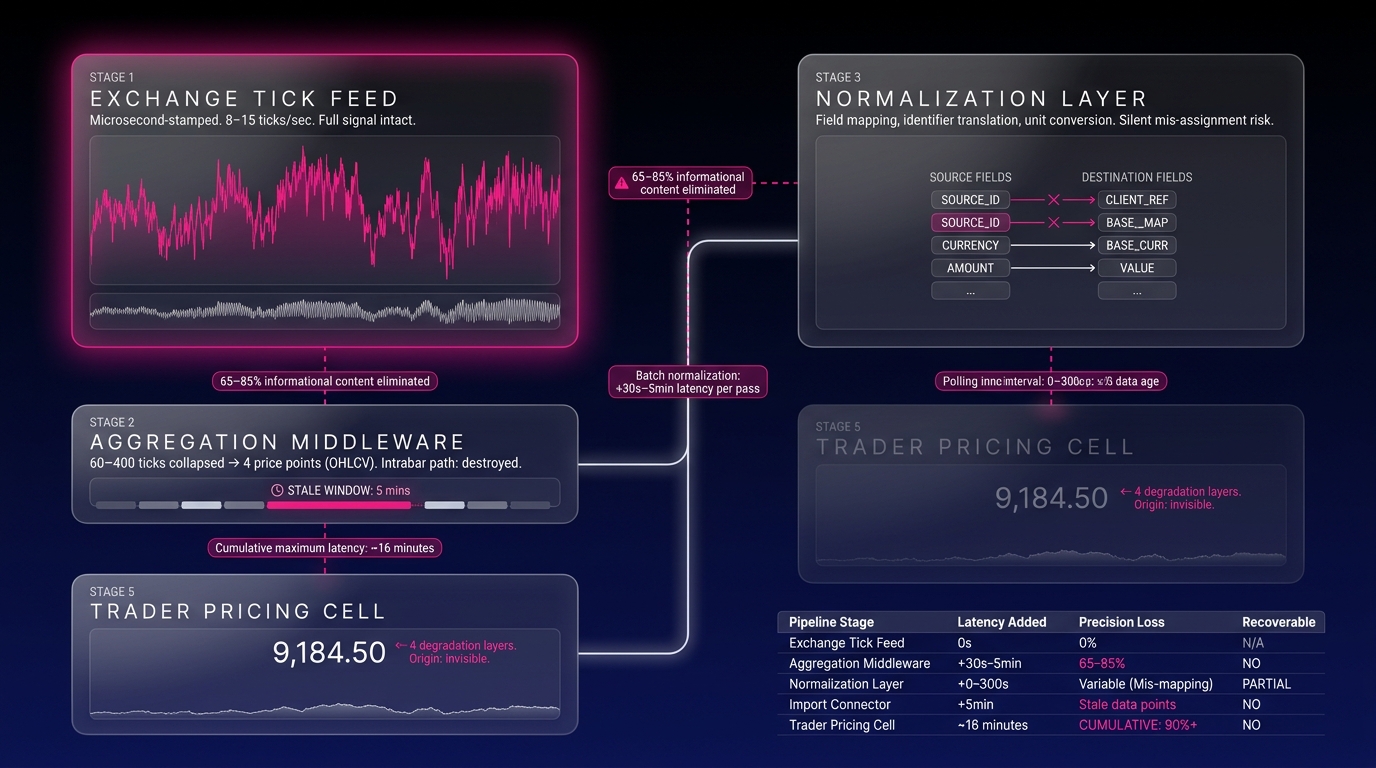
How Exchange Tick Data Degrades in the Metals Pipeline
Physical metals pricing breaks originate at the exchange tick feed, not the trader's spreadsheet. By the time LME or COMEX data reaches a position management system, it has passed through four distinct degradation stages, each discarding a measurable portion of the precision the original signal cont
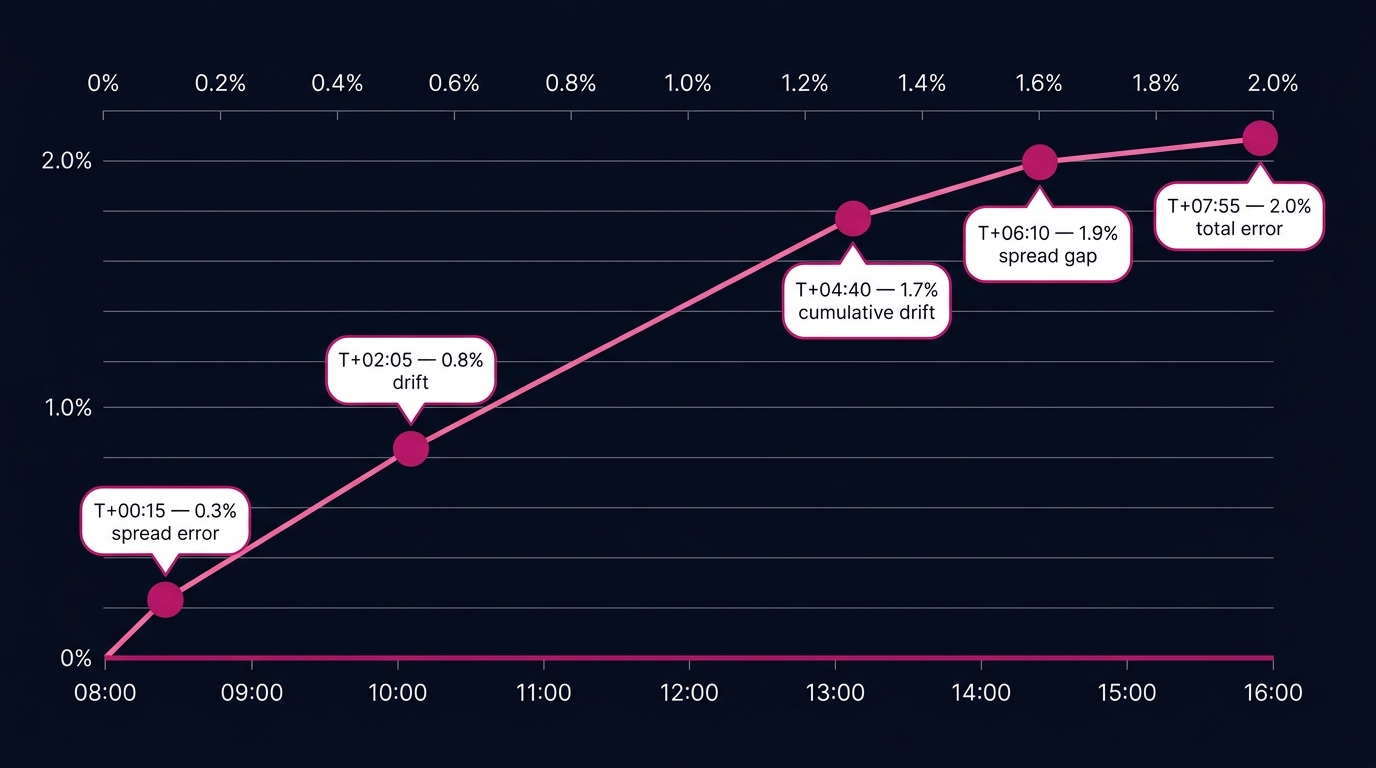
LME Cash/3-Month Spread Pricing Errors: A Session Audit
LME cash/3-month spread miscalculations represent **systematic workflow errors** rather than random data anomalies. A single trading session produces multiple compounding miscalculation events (embedded across hedging, position valuation, and margin estimation) before the Ring even closes. This case
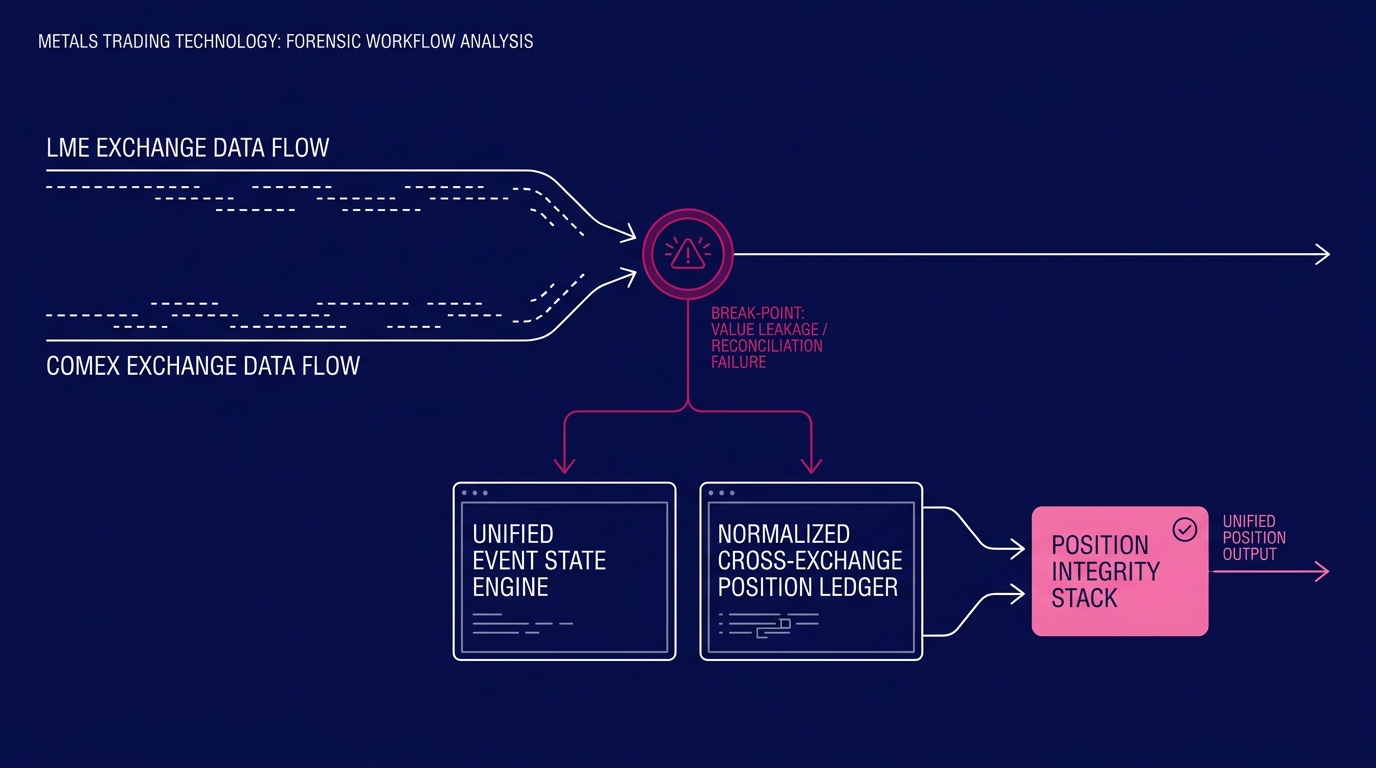
Metals Trading Position Visibility: Mapping Breaks to Architecture
Every metals trading desk operates with breaks. The two categories that generate the most operational and financial exposure are **ledger reconciliation failures** and **cross-exchange position visibility gaps**. These represent structural deficiencies built into how most platforms are designed, rat
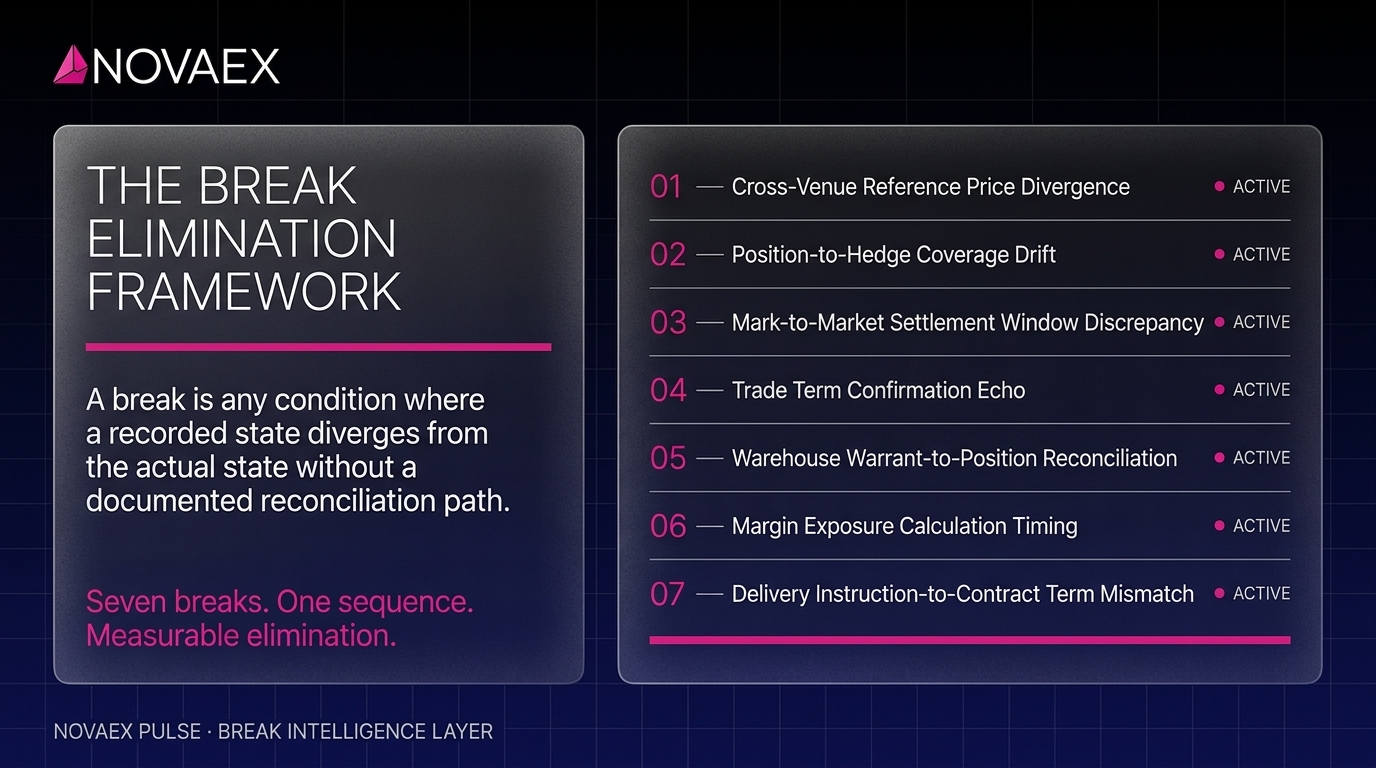
The Break Elimination Framework for Physical Metals Trading
Physical metals trading desks lose measurable margin to seven recurring operational breaks. These are predictable failures with specific mechanisms, documentable costs, and a defined elimination sequence. The **break elimination framework** names, sequences, and measures each break by margin impact,
Cross-Exchange Basis Management for Metals Traders
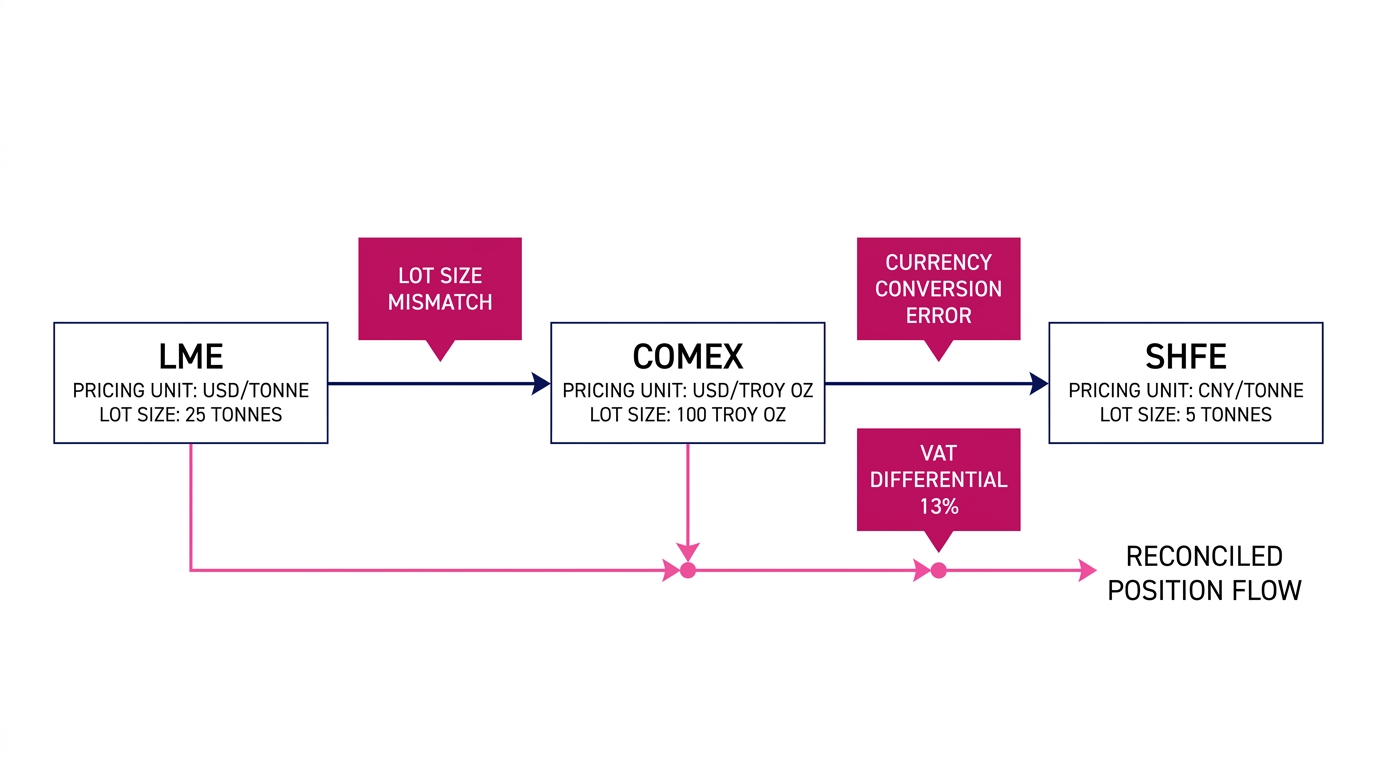
Cross-exchange basis management in physical metals trading means tracking the price differential between correlated contracts on different exchanges (LME, COMEX, SHFE, MCX) while accounting for contract size mismatches, currency exposures, and delivery specification differences simultaneously. Get t
Metals CTRM Implementation Complexity Is a Vendor Choice
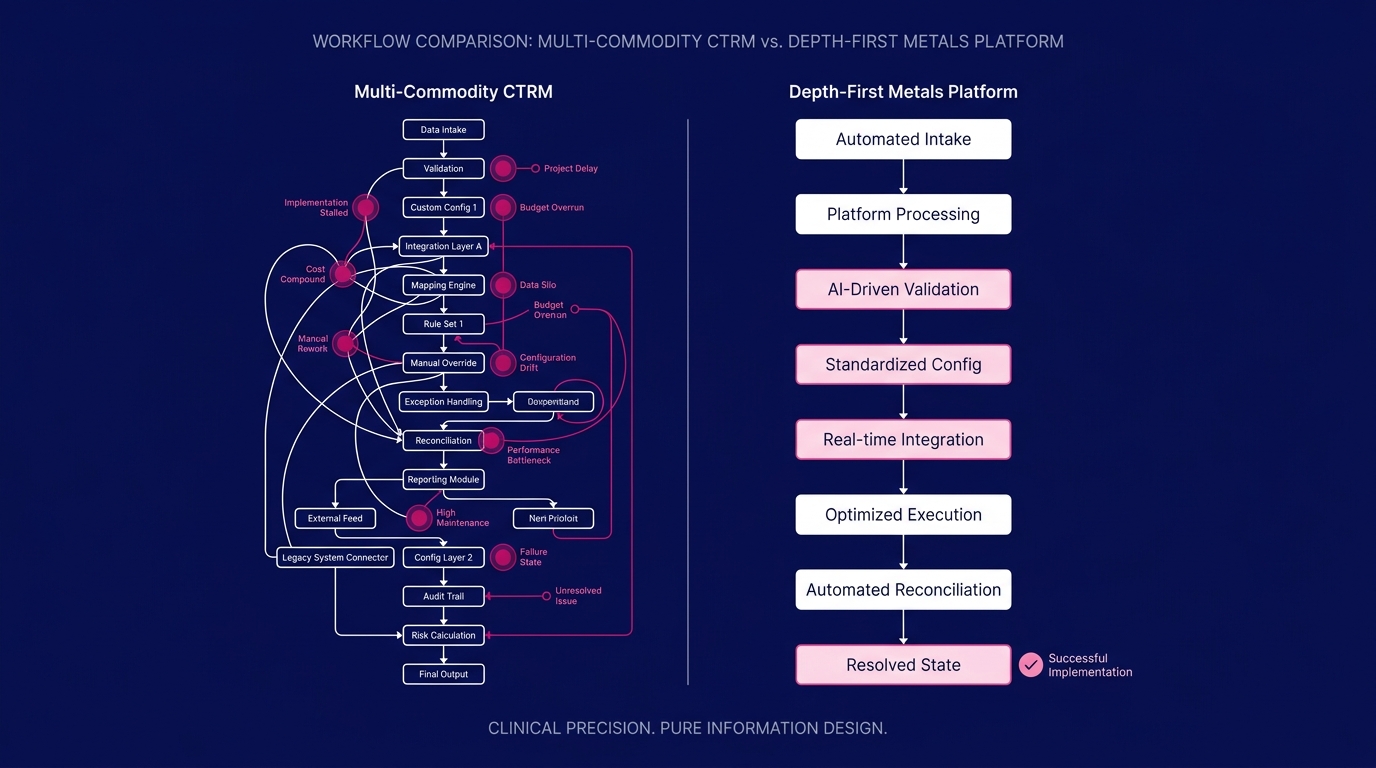
Front-office metals traders have absorbed this complexity as an accepted cost of doing business. The evidence examined here demonstrates that assumption is not technically justified.
Metals Trading Breaks: The Margin Loss You're Not Tracking
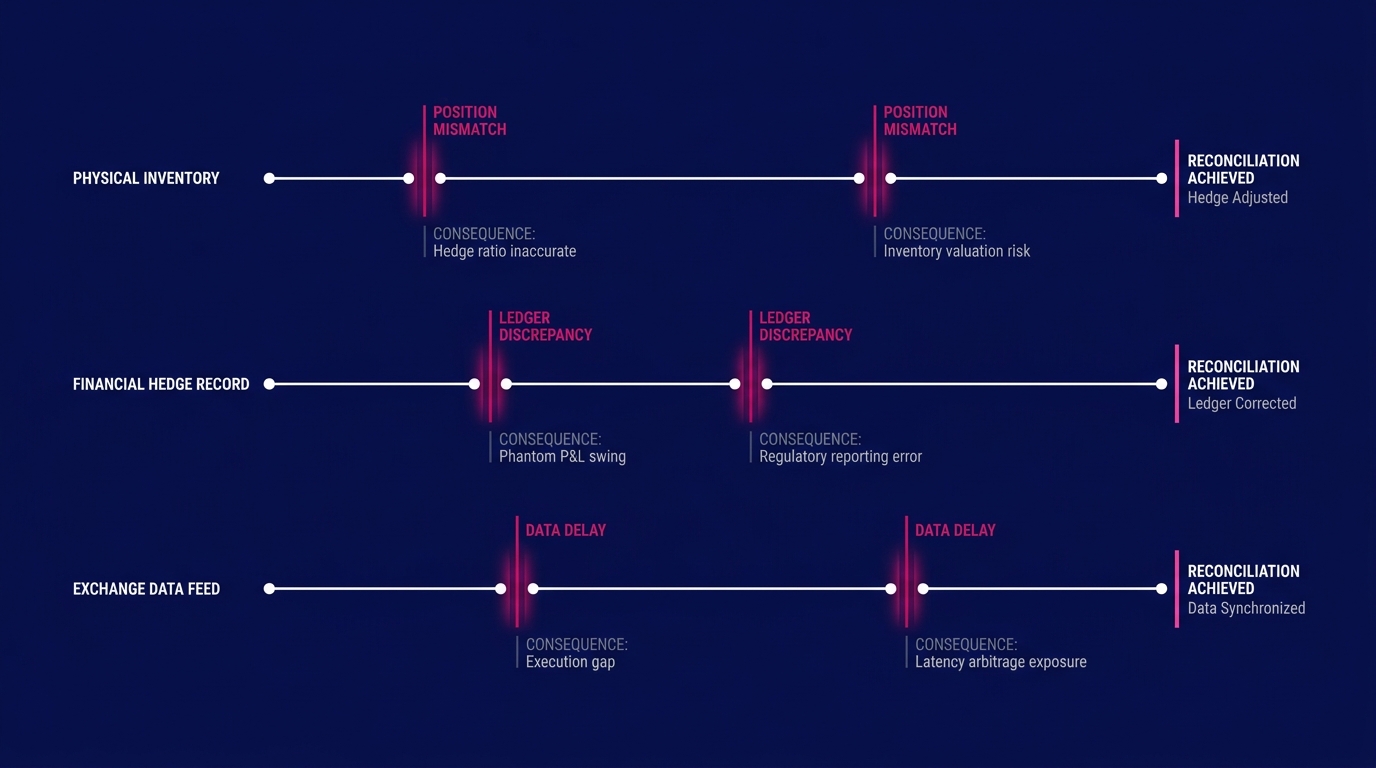
In physical metals trading, every P&L conversation starts with price. Discussions focus on whether copper closed above the hedge level or if aluminum rallied before the LME fix. Price exposure is visible, auditable, and discussed in every morning brief.
Depth-First Intelligence: LME Data Breadth Platforms Miss
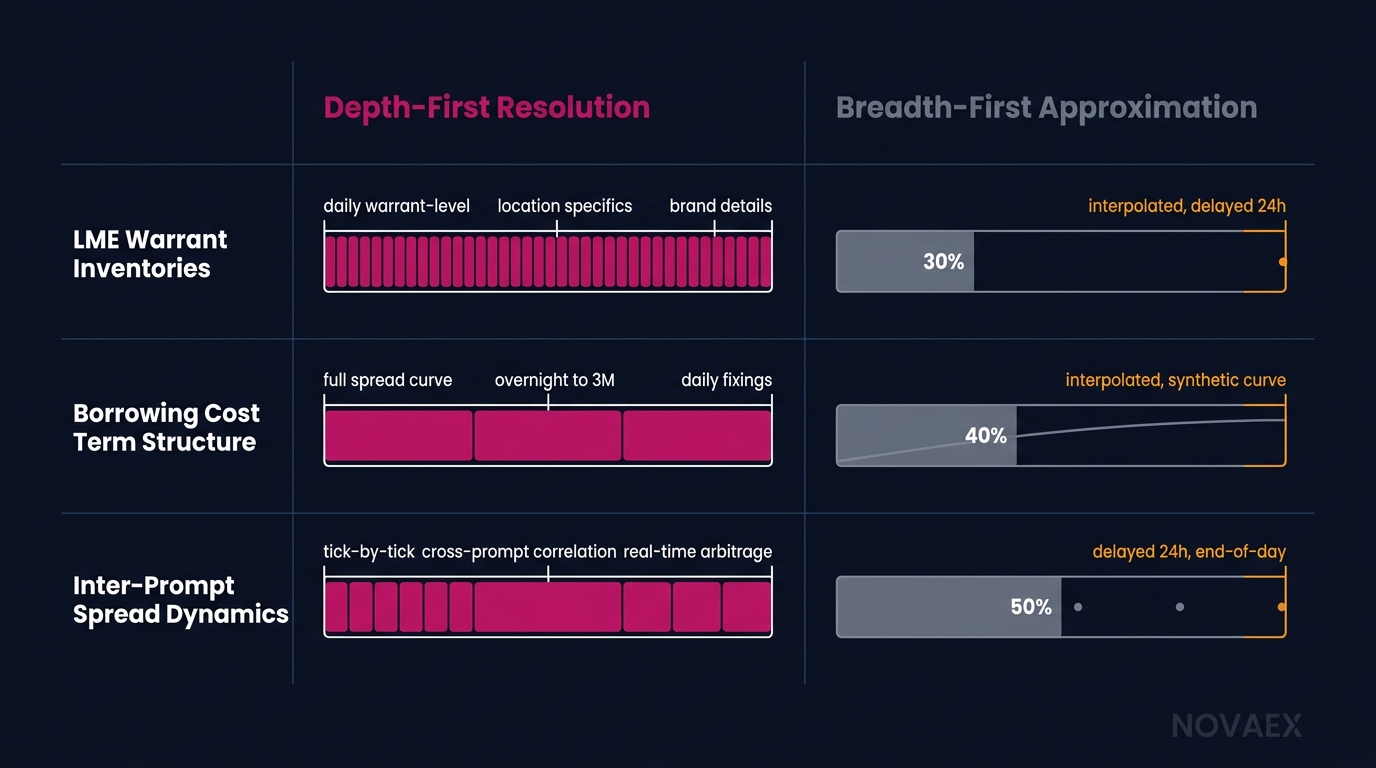
Depth-first commodity intelligence means owning every layer of exchange-native data for a specific market before claiming competency in it. For base metals, that begins with three non-negotiable constructs: LME warrant inventories, borrowing cost term structures, and inter-prompt spread pricing. Bre
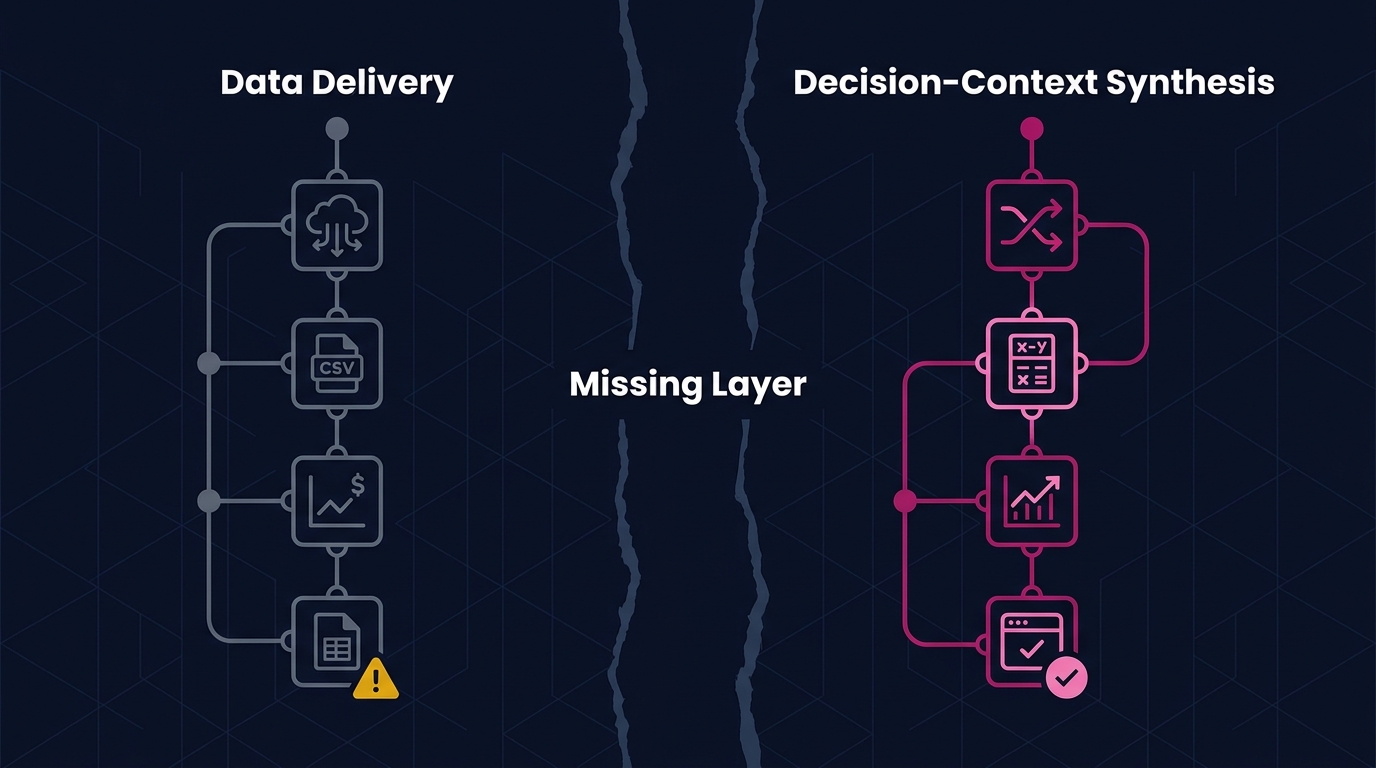
Commodity Data vs. Trading Intelligence: The Gap
Your data vendor and your trading intelligence platform are not the same system. This is true even when trading infrastructure treats them as equivalent. A data vendor delivers prices, settlement values, and exchange feeds. A trading intelligence platform synthesizes that data into **decision-contex
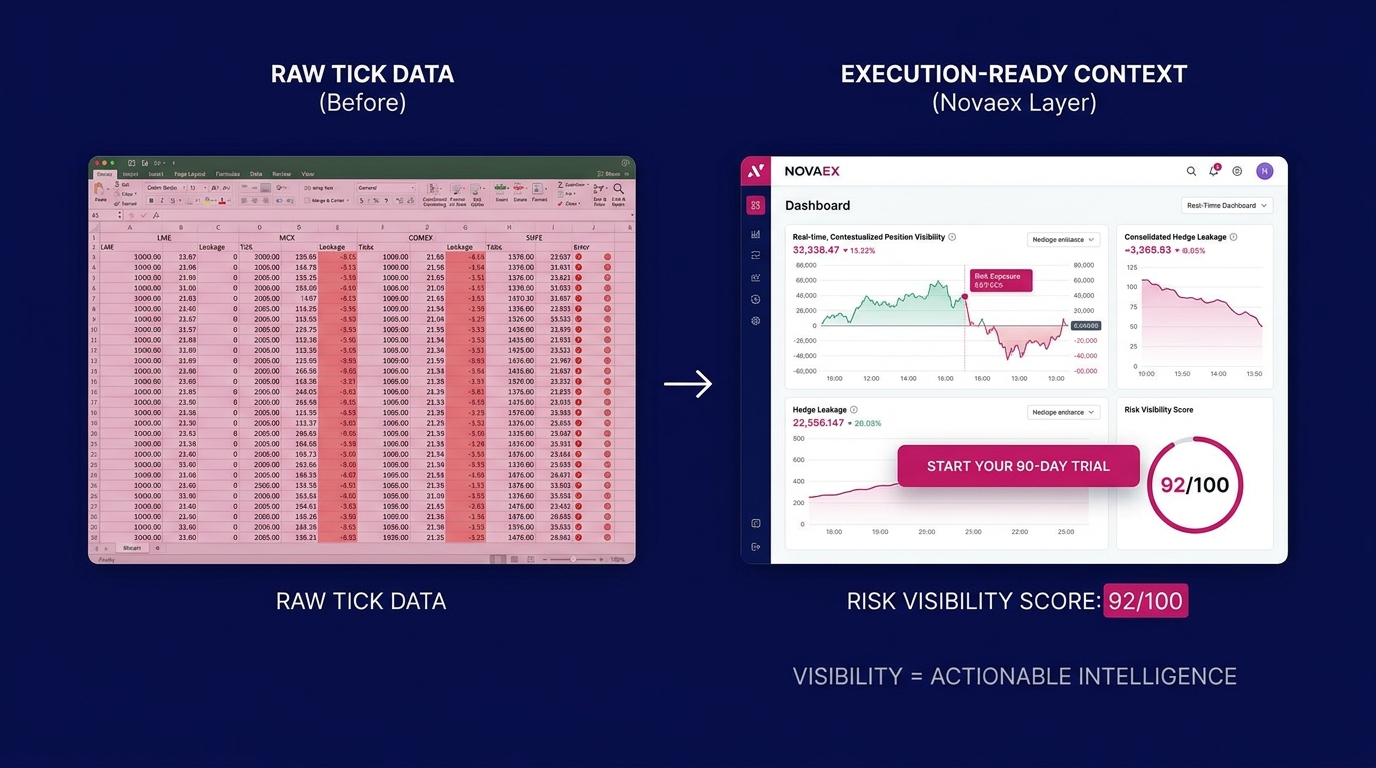
Metals Trading Position Visibility: Raw Tick to Ready Signal
Most platforms terminate the process at stage one, delivering data but failing to provide decision context.
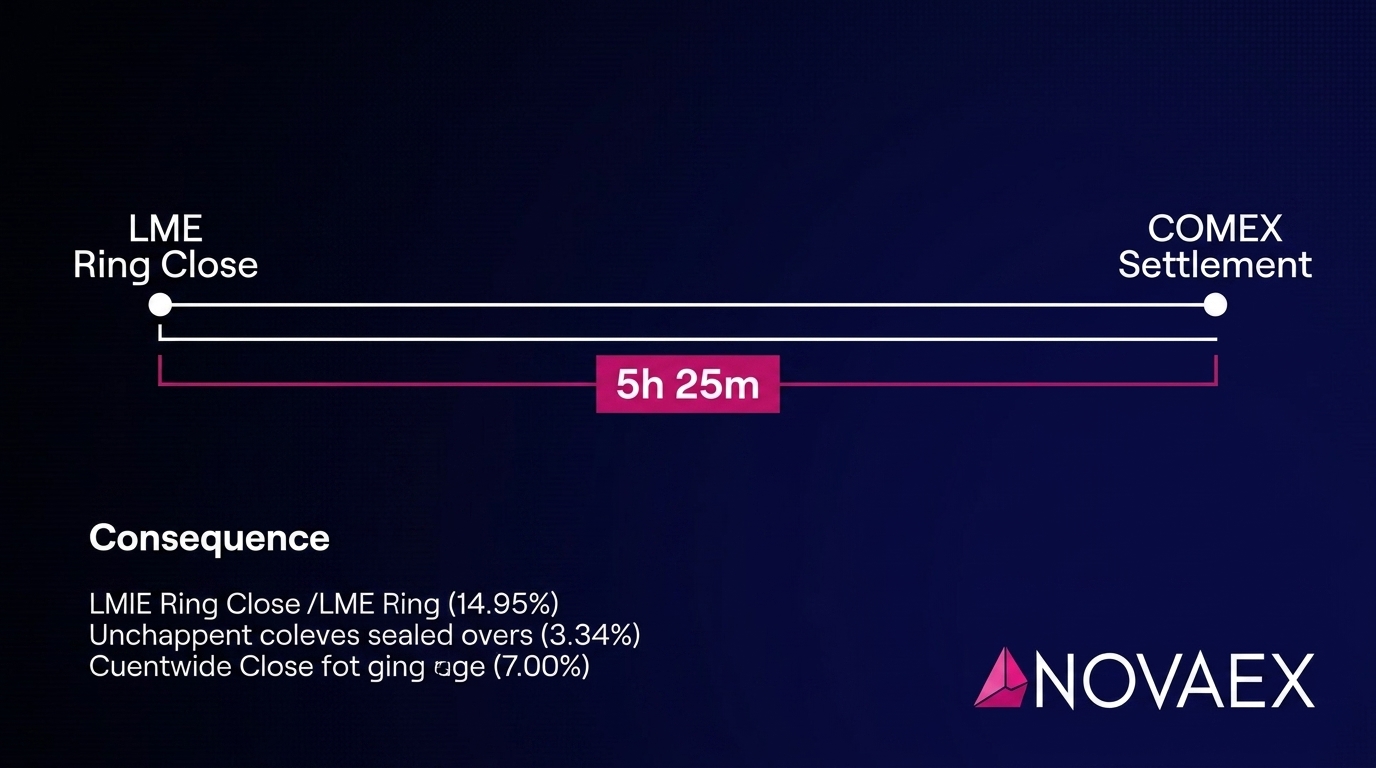
Your Hedge Ratio Calculation Has a Timestamp Problem
A hedge ratio built on LME and COMEX prices captured at different times is not a complete hedge ratio. It is an approximation with an embedded timing error. This error is one that is fully calculable from the session structure of both exchanges.
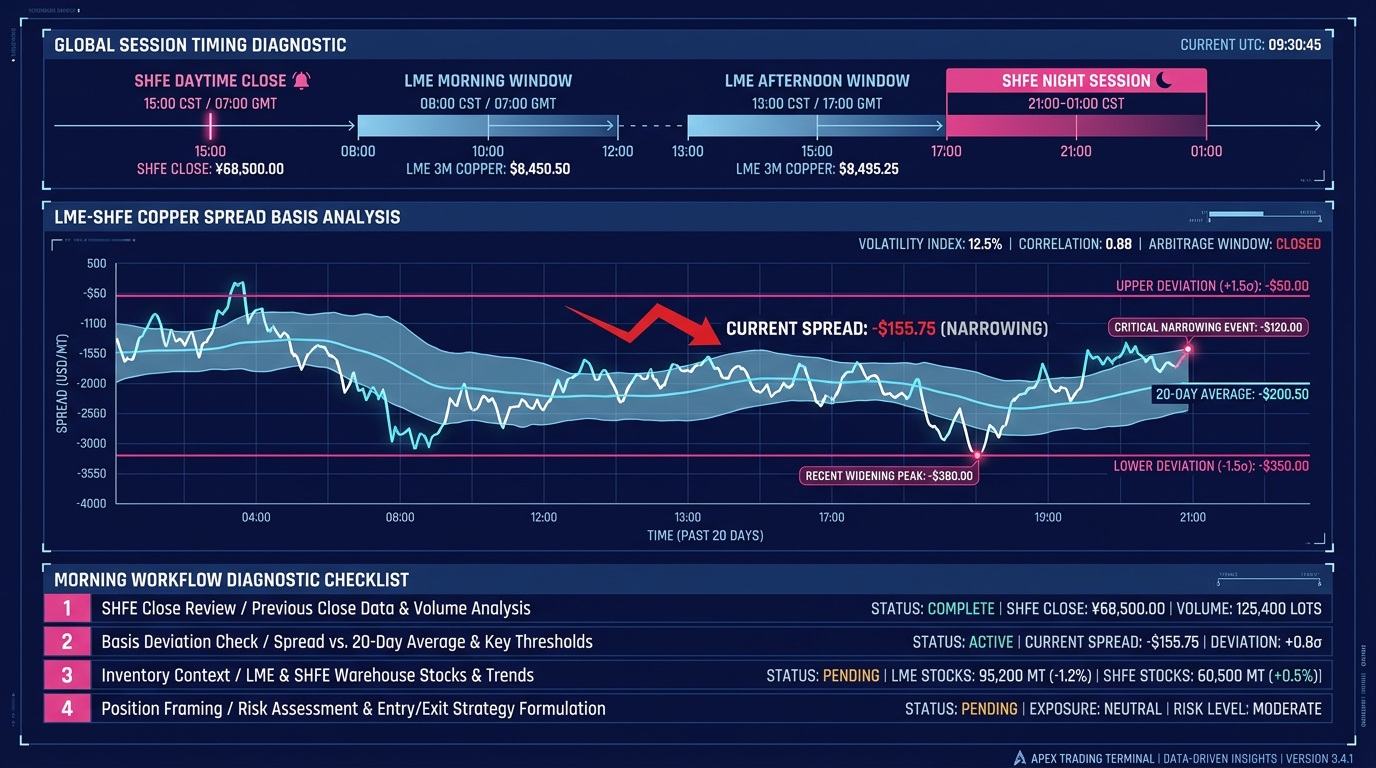
SHFE Pricing in Your Intraday Workflow: No Analyst Needed
SHFE pricing context belongs in every base metals trader's intraday decision cycle. The mechanism is direct: SHFE's daytime session closes at 15:00 Beijing time, 07:00 GMT in winter, before LME electronic trading reaches peak liquidity. That close delivers a confirmed Chinese price signal, a calcula
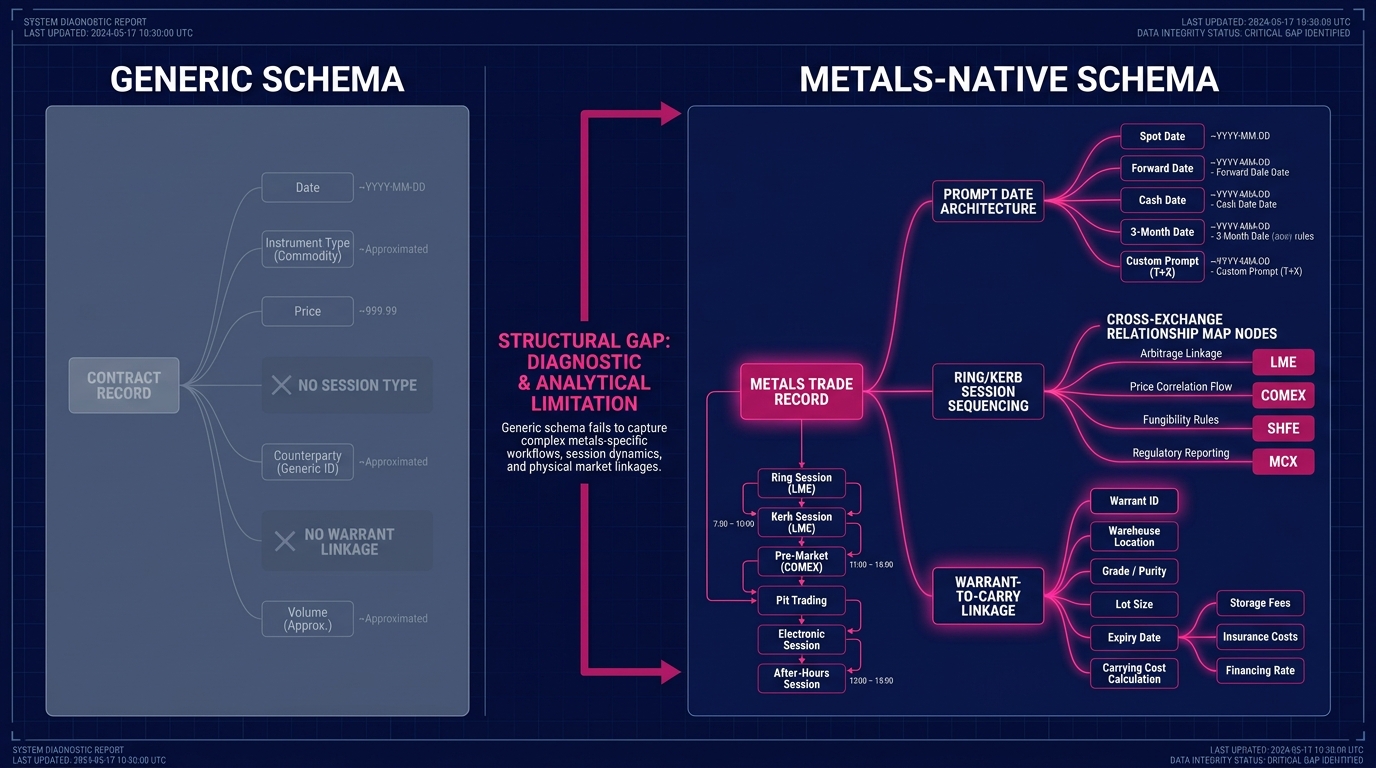
Why Base Metals Data Quality Starts at Architecture
The front-office trader running LME copper positions against COMEX exposure has a specific problem: data arriving in their platform may be technically present and yet structurally inadequate. Prices exist, timestamps are populated, volumes are accurate, yet still the spread relationship misfires or
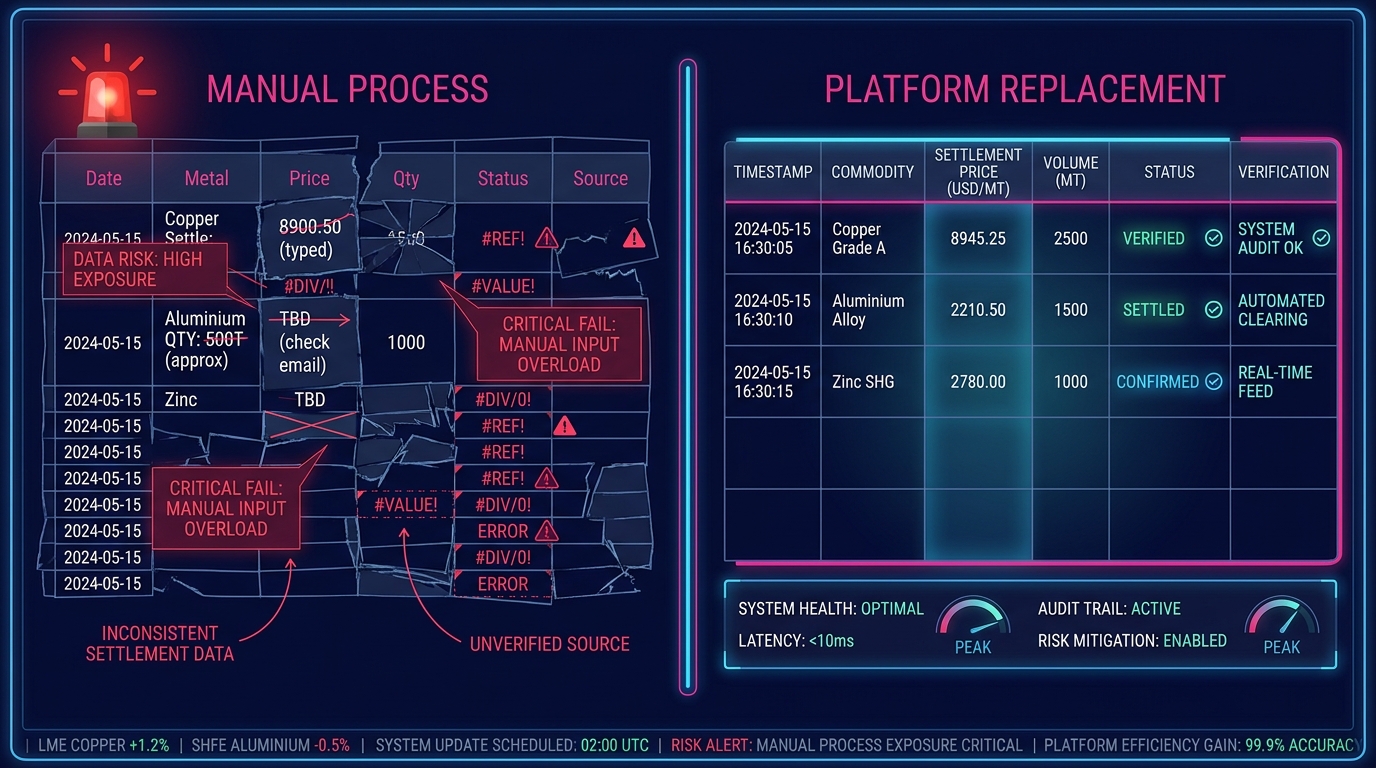
Daily Price Sheet: 9 Metals Trading Workflows Replaced
A metals trading **daily price sheet workflow** consists of nine discrete manual tasks, from exchange settlement price collection to team distribution, each with a defined input, trigger, and output. This document maps each task to its exact platform replacement function. Each replacement maps to a
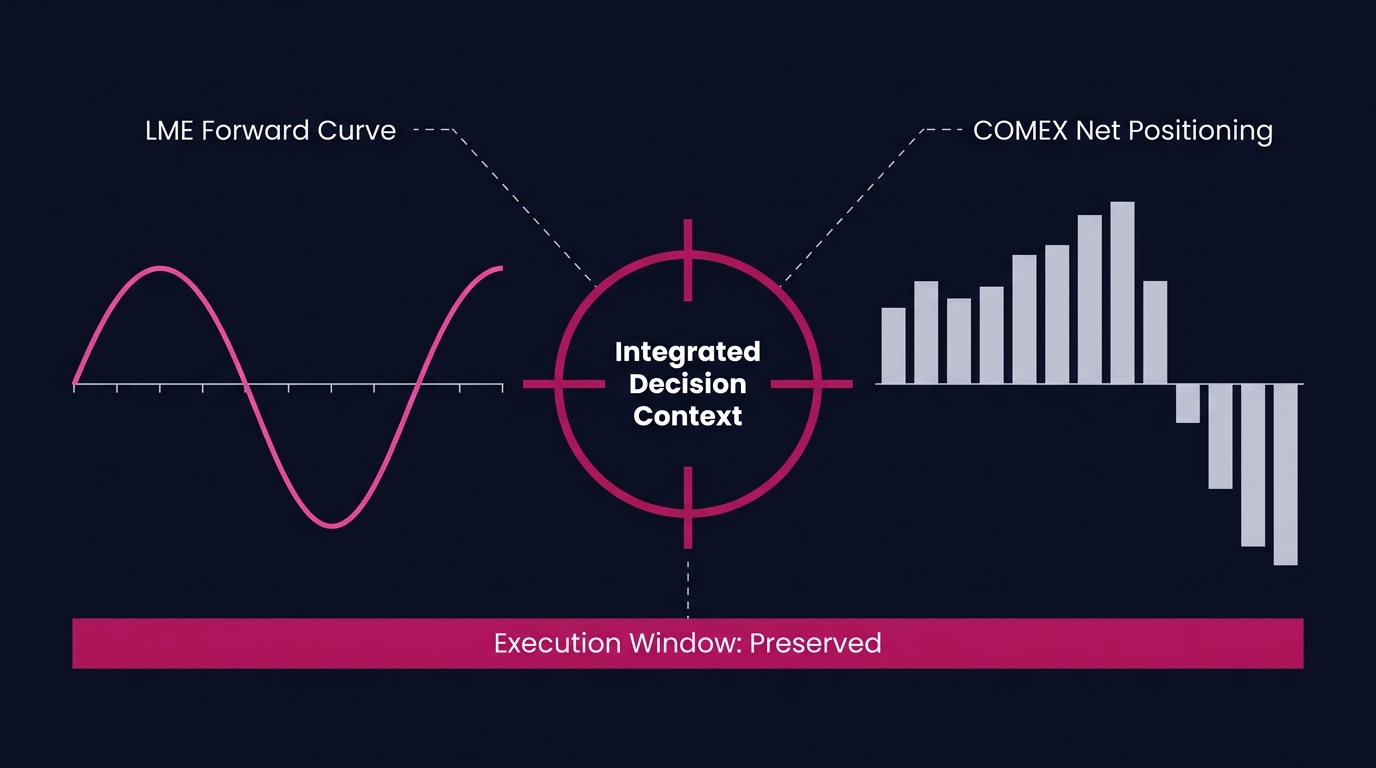
COMEX-LME Integration for Copper Hedging Decisions
Every copper hedging decision is a timing problem nested inside a confidence problem. Traders must determine exactly how precisely a signal can be verified before committing to a hedge at a specific prompt date.
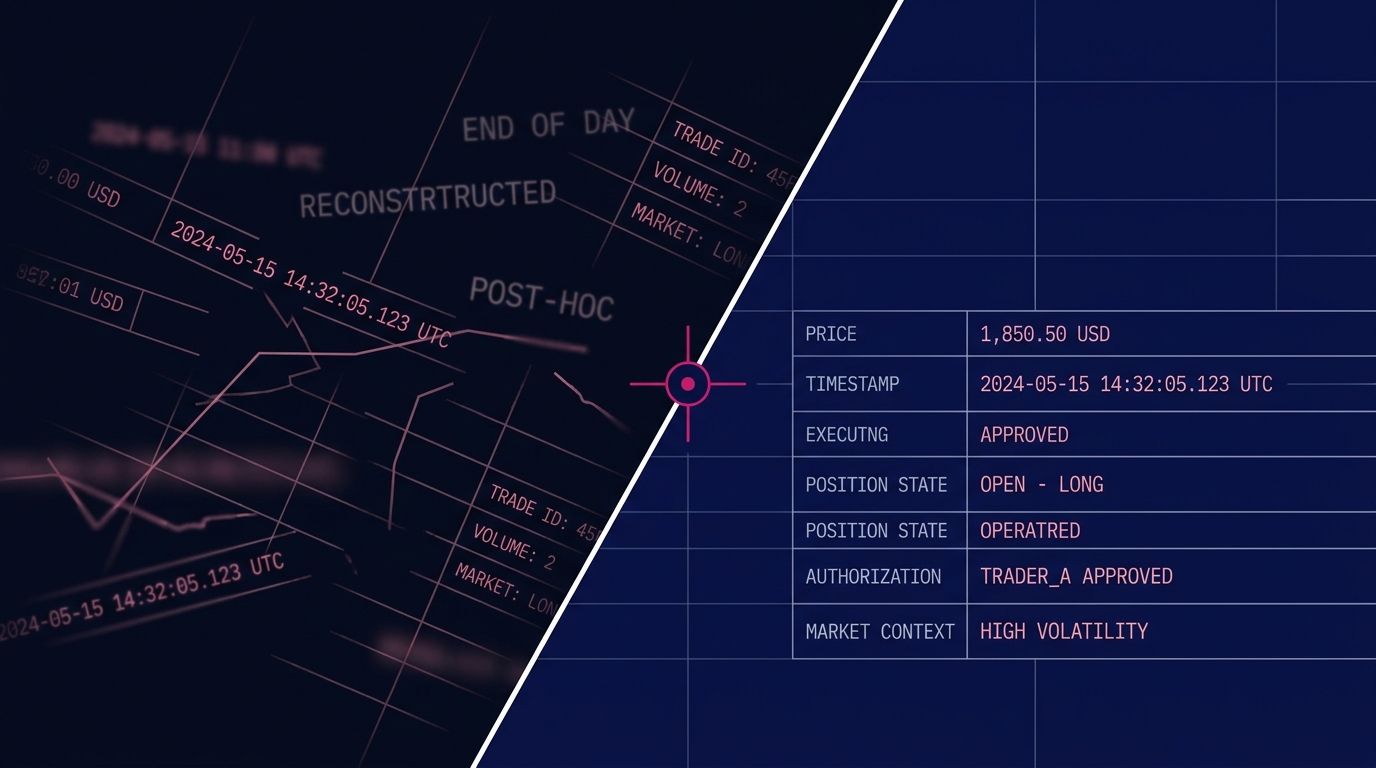
Defensible Execution Documentation Starts at Trade Time
Post-hoc reconstruction of trade rationale is the single most common reason execution documentation fails under scrutiny. **Defensible execution documentation** is achieved by capturing decision rationale, market context, and authorization logic at the exact moment of trade. When real-time capture i
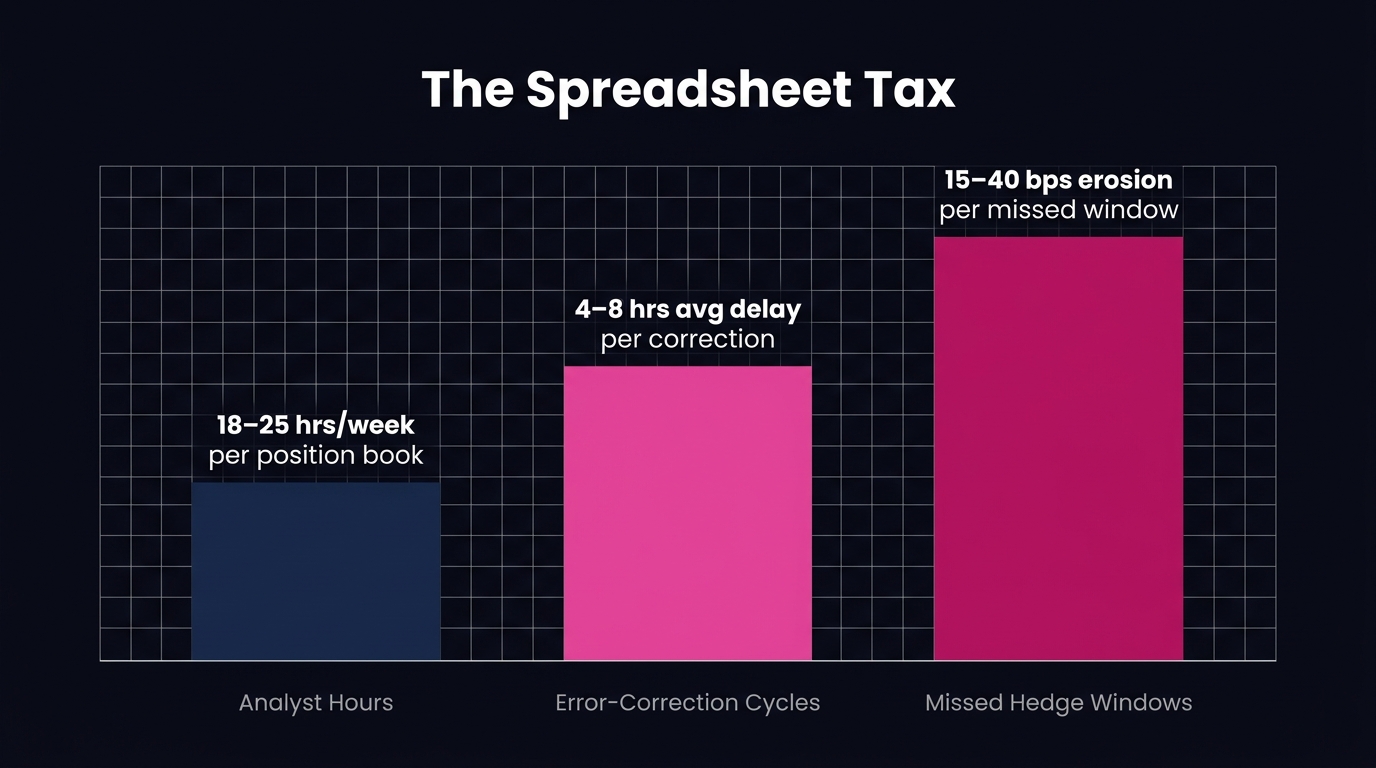
The Total Cost of Spreadsheet Hedging Workflows
Spreadsheet-based hedging workflows carry three distinct cost layers, not one. The full total cost of ownership includes analyst labor hours consumed by manual data management, rework cycles generated by formula errors and version conflicts, and quantifiable opportunity cost from missed hedge window
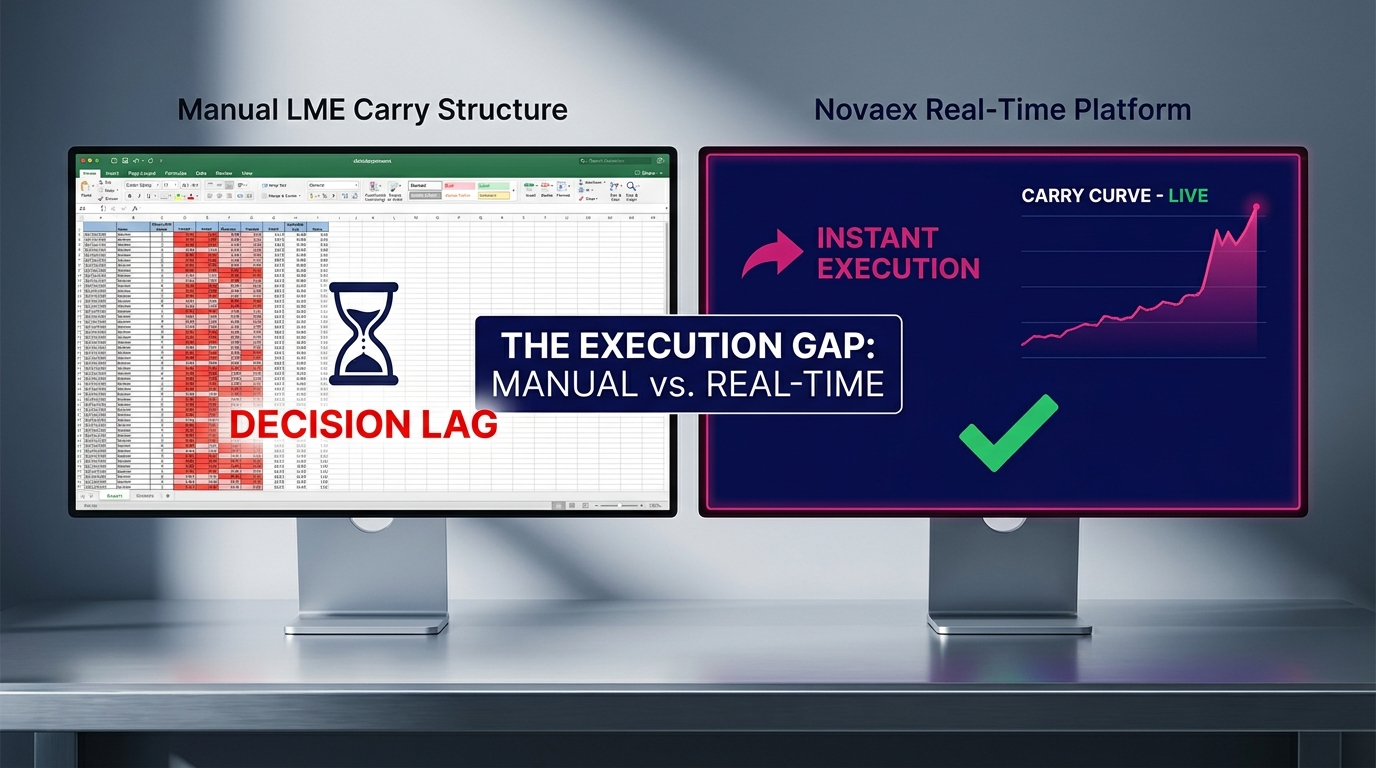
Why Manual LME Carry Recalculation Costs Execution
The LME ring session closes on schedule. The carry structure intelligence it produces does not arrive at the same moment, at least not inside a manual recalculation workflow.
Why LME Position Tracking Breaks in Spreadsheets
Metals hedgers using spreadsheets to track LME positions operate with a structural gap between the tool and the instrument. The gap is not immediately visible in normal markets. It appears at the worst possible time: when prices move fast and hedges need to perform.
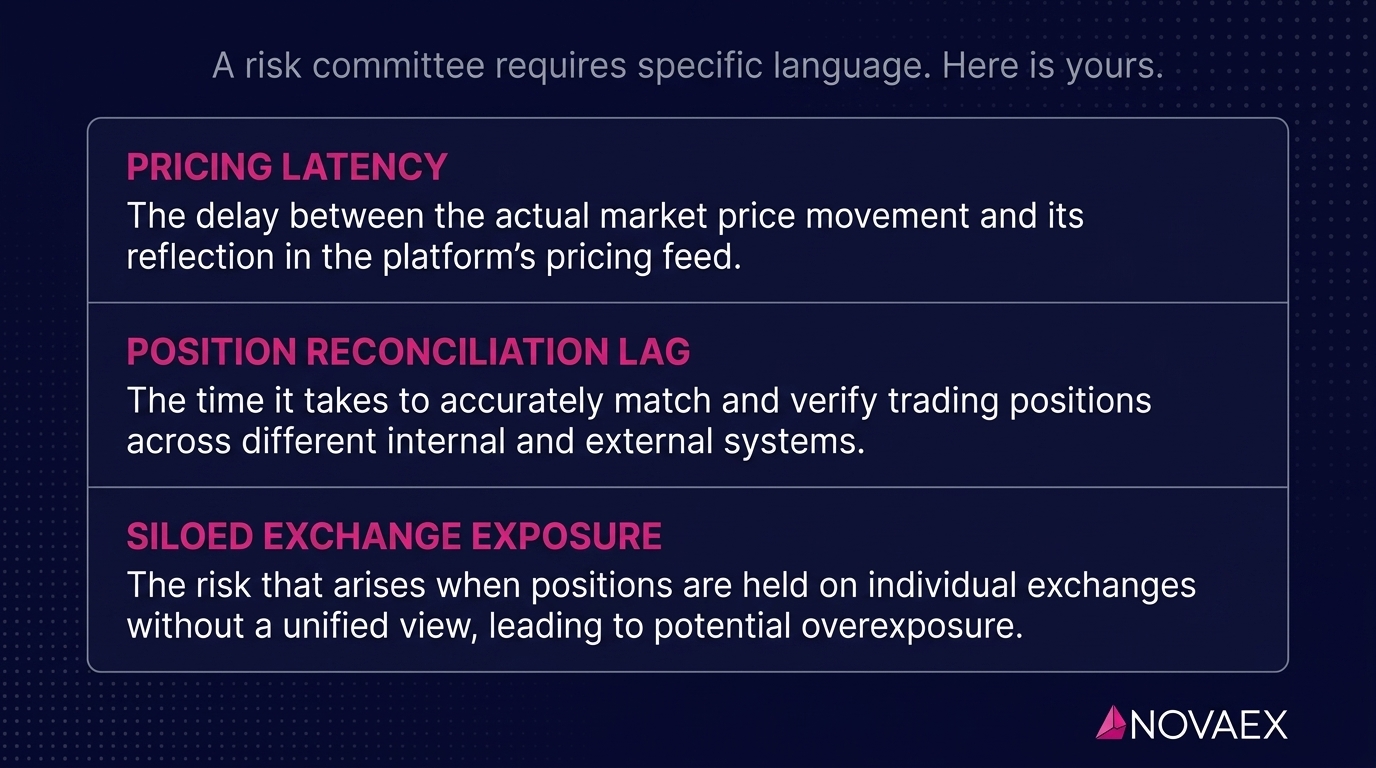
Spreadsheet Risk in Commodity Trading: A Risk Vocabulary
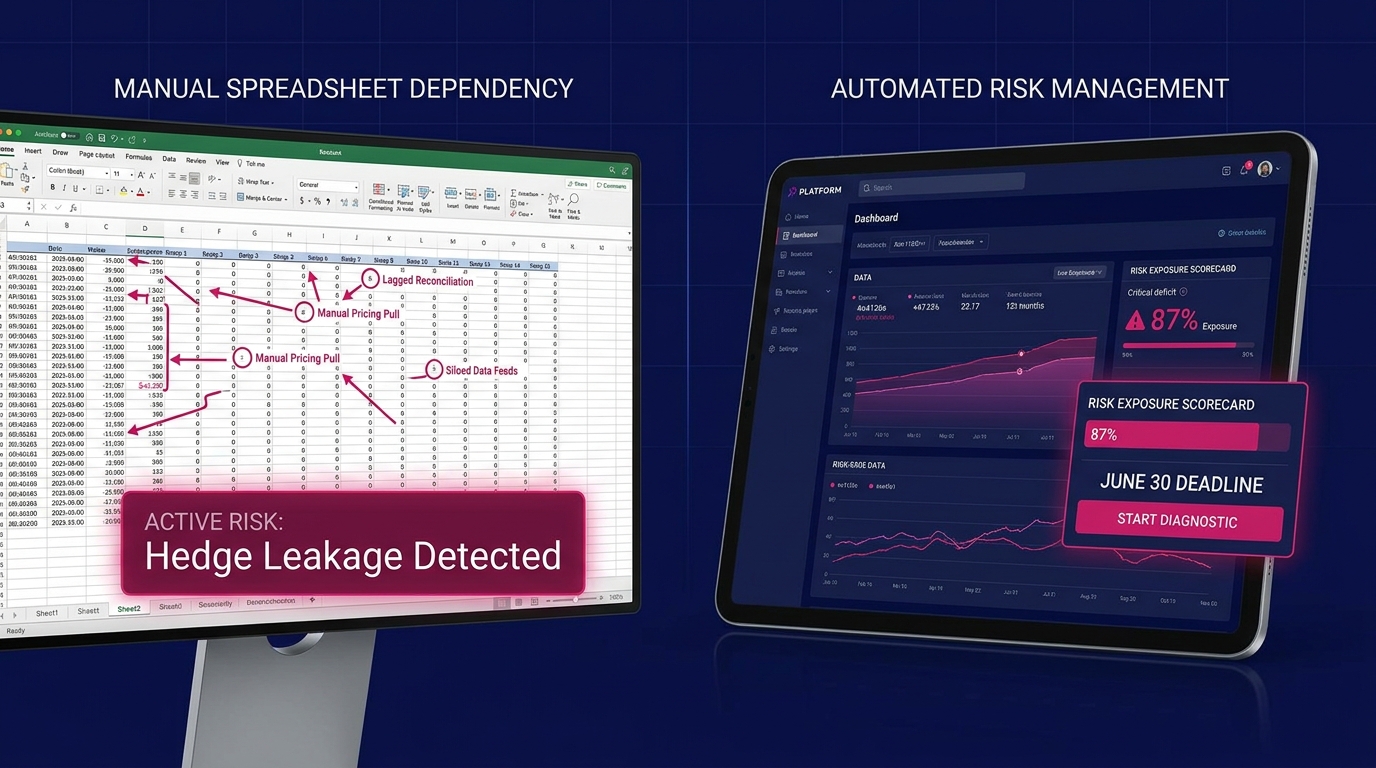
If a position workbook returns an incorrect delta during a volatile LME session, or if forty minutes are lost reconciling two versions of a hedge sheet before a risk call, that is spreadsheet-dependent process risk (SDPR). Most trading desks lack the structured language to classify, report, or preve
Spreadsheet Risk in Metals Trading: A Workflow Audit
Work through each indicator below. Note where your operation sits.
Metals Intelligence Platform Credibility: One True Signal
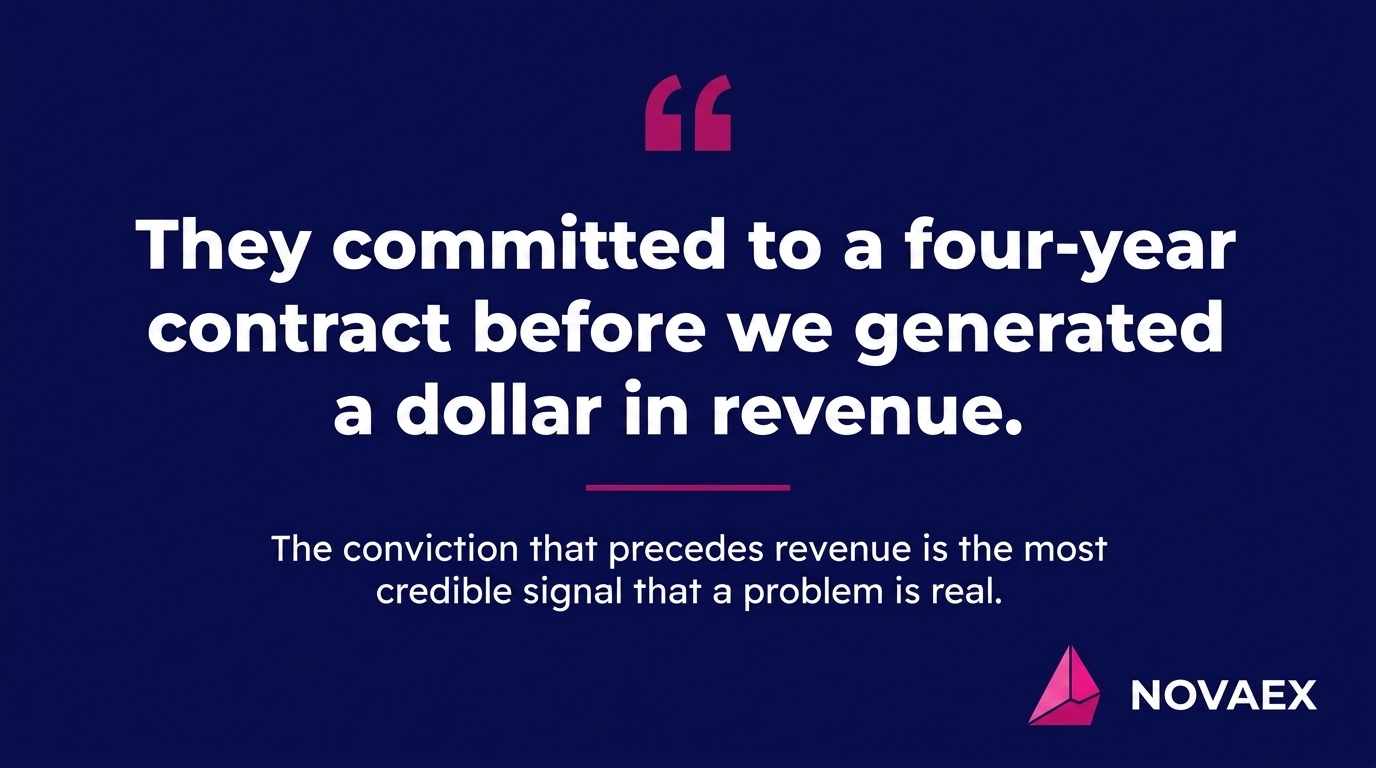
When a front-office trading operation signs a multi-year enterprise agreement with an unproven vendor, standard procurement risk management has been deliberately overridden. The condition that produces that behavior is a buyer who has concluded, through direct assessment, that the status quo carries
Why CTRM Software Fails Physical Metals Traders
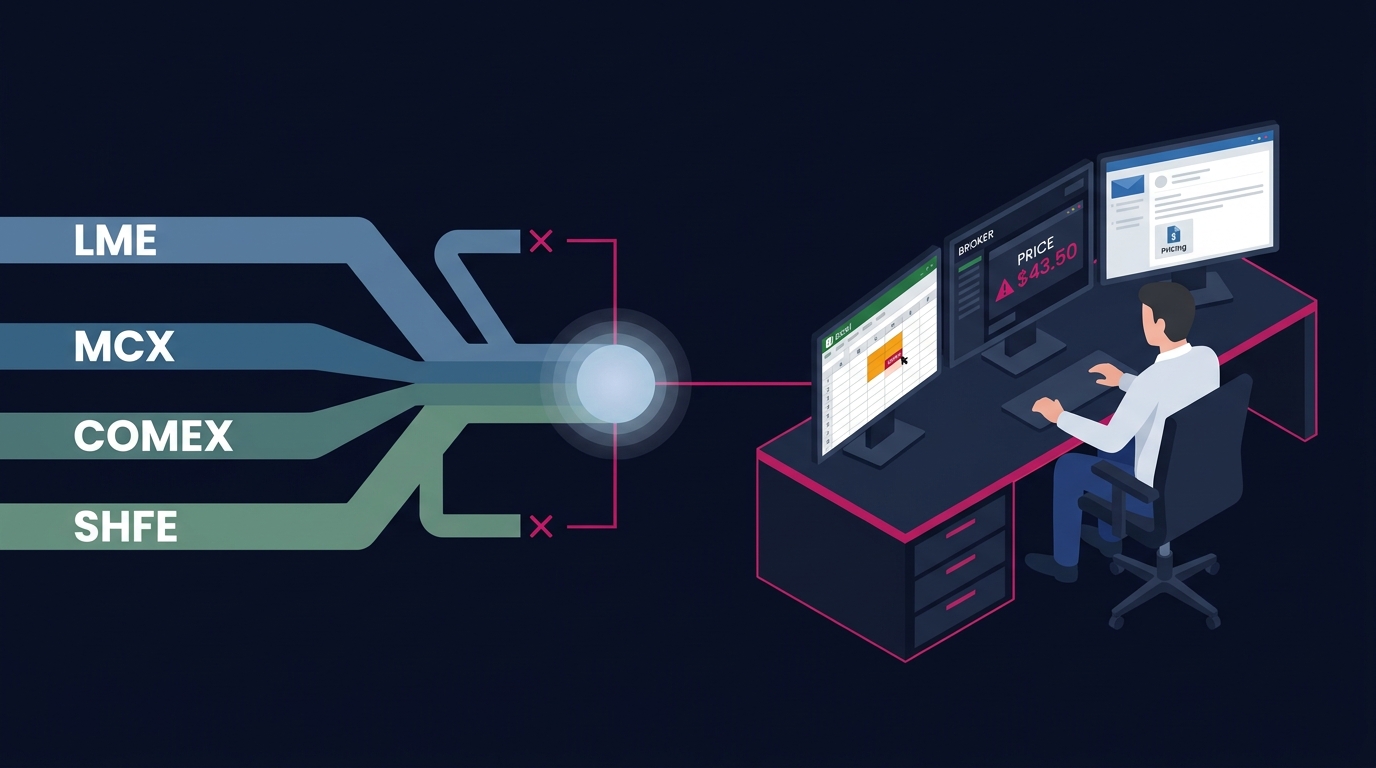
Physical metals traders have been failed by enterprise CTRM for one documented reason: these platforms were designed for organizations with IT departments, six-figure implementation budgets, and multi-month rollout capacity. Mid-market metals desks do not have those resources. That structural mismat
Base Metals Spreadsheet Reconciliation: The Accuracy Gap
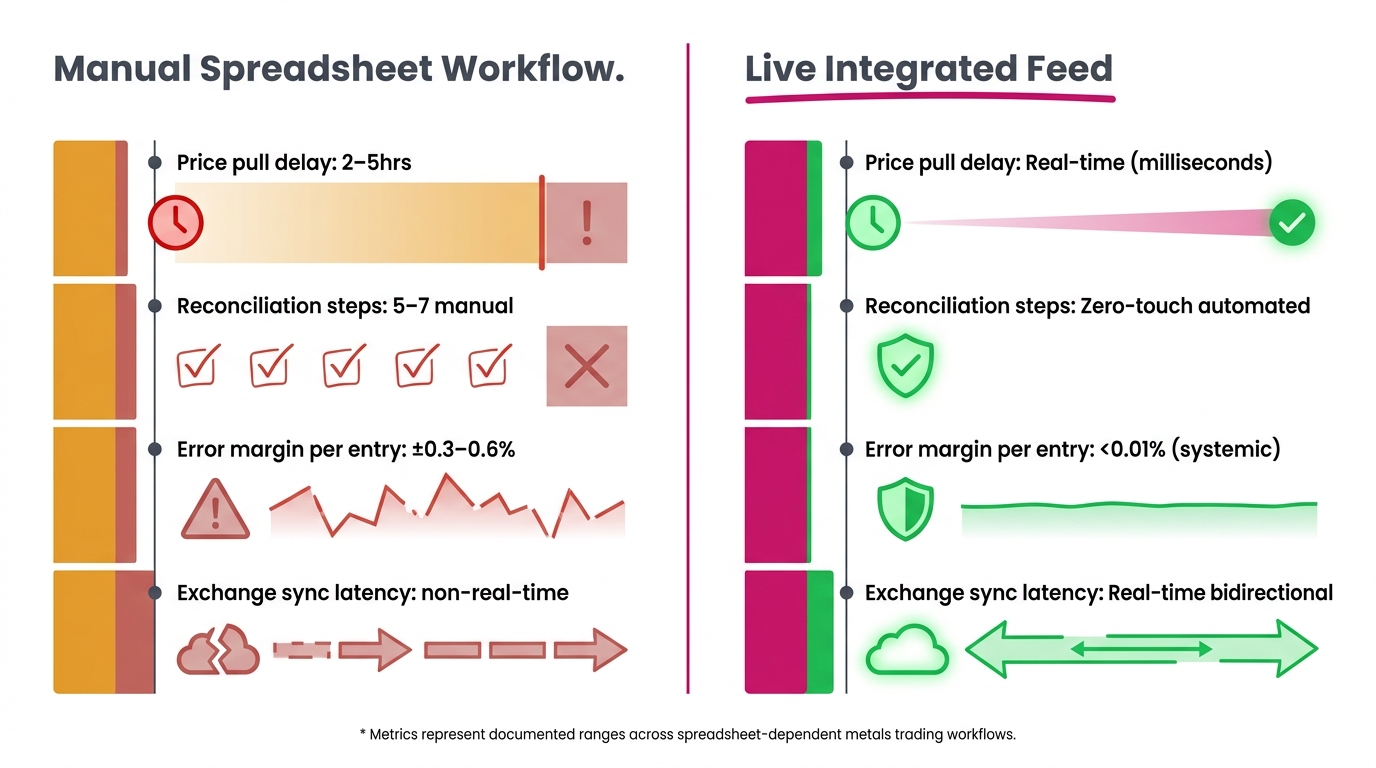
Most trading desks have never formally measured the error rate embedded in their spreadsheet reconciliation workflows. According to research compiled by EuSpRIG (European Spreadsheet Risks Interest Group), **88% of spreadsheets in active use contain at least one material error**. In base metals trad
Metals Trading Data Fragmentation Is a Structural Gap
Front-office metals traders have been solving the same problem for decades: prices live in one place, positions live in another. The moment markets move, the gap between them becomes the most consequential exposure point in any active book.
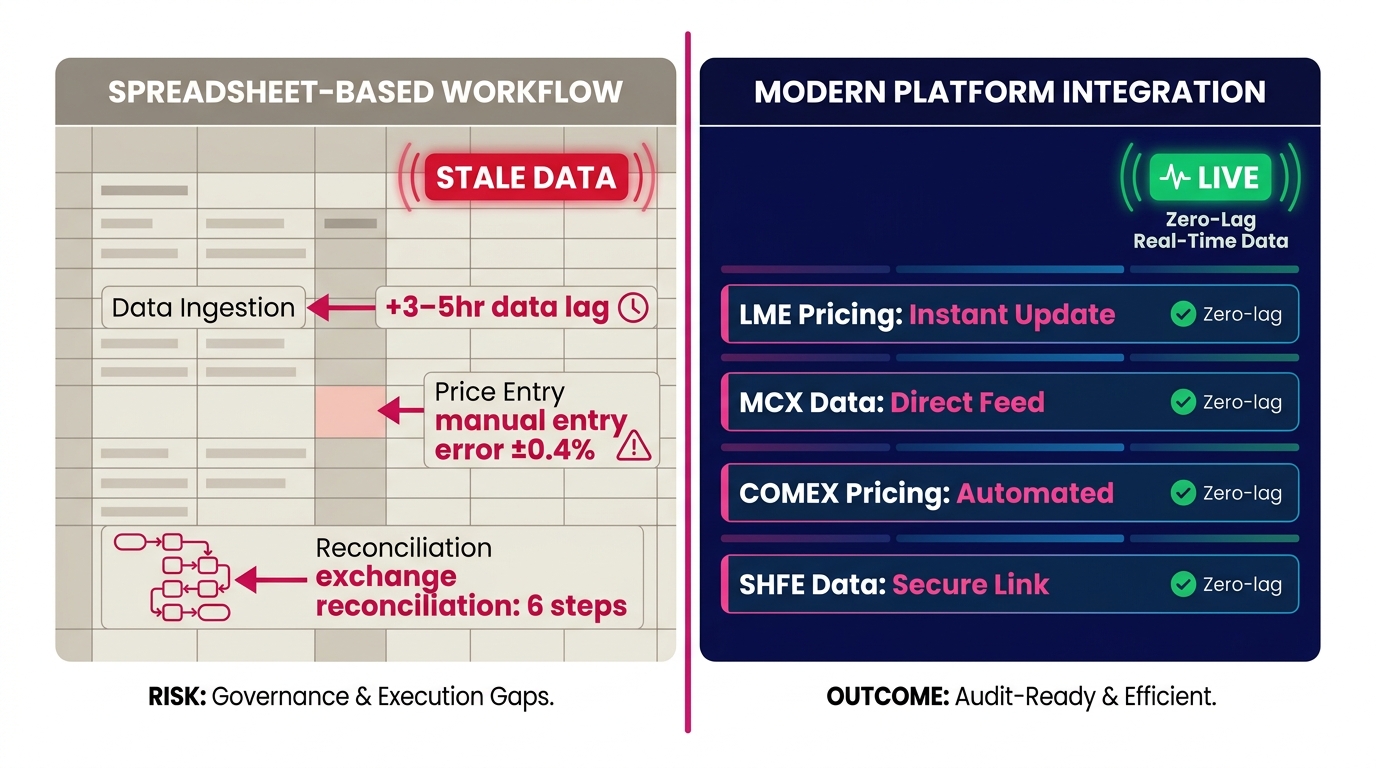
Spreadsheet Risk in Metals Trading Is Not Background Noise
According to the European Spreadsheet Risks Interest Group (EuSpRIG), 88% of spreadsheets contain at least one material error. For most metals trading operations, that statistic is routinely absorbed into operational routine rather than treated as a documented risk condition requiring a structured r
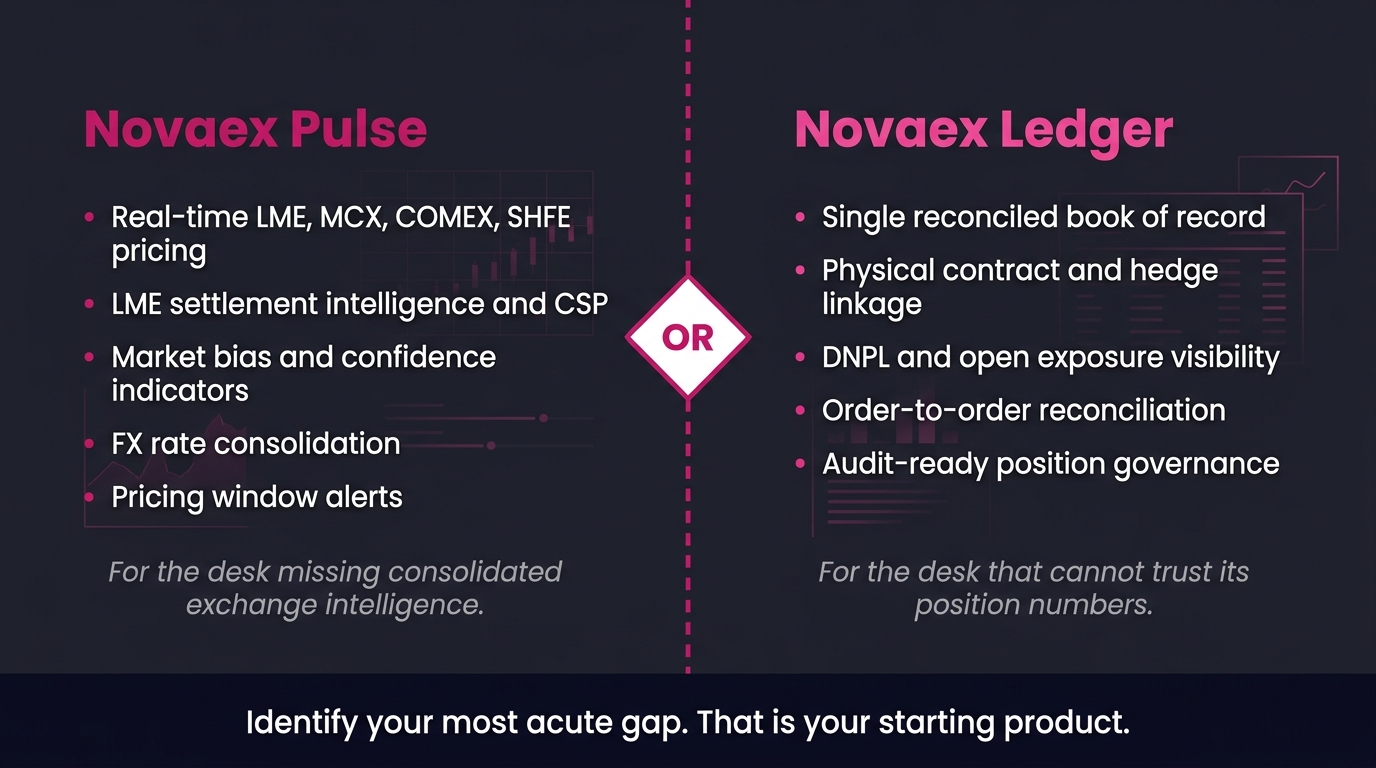
Pulse vs. Ledger: Diagnosing and Resolving Your Metals Trading Workflow Failure
If your firm has a metals trading workflow problem, it belongs to one of two documented categories: degraded market intelligence or unreconciled positions. **Novaex Pulse** is built to resolve the first. **Novaex Ledger** is built to resolve the second. Determining which failure is generating the mo
Depth-First Intelligence: The New Metals Trading Standard
Depth-first intelligence (the disciplined mastery of each base metal before expanding to the next) is becoming the structural standard for metals trading platforms. Traders operating on this standard gain compounding advantages in position visibility, risk analytics, and execution support that bread
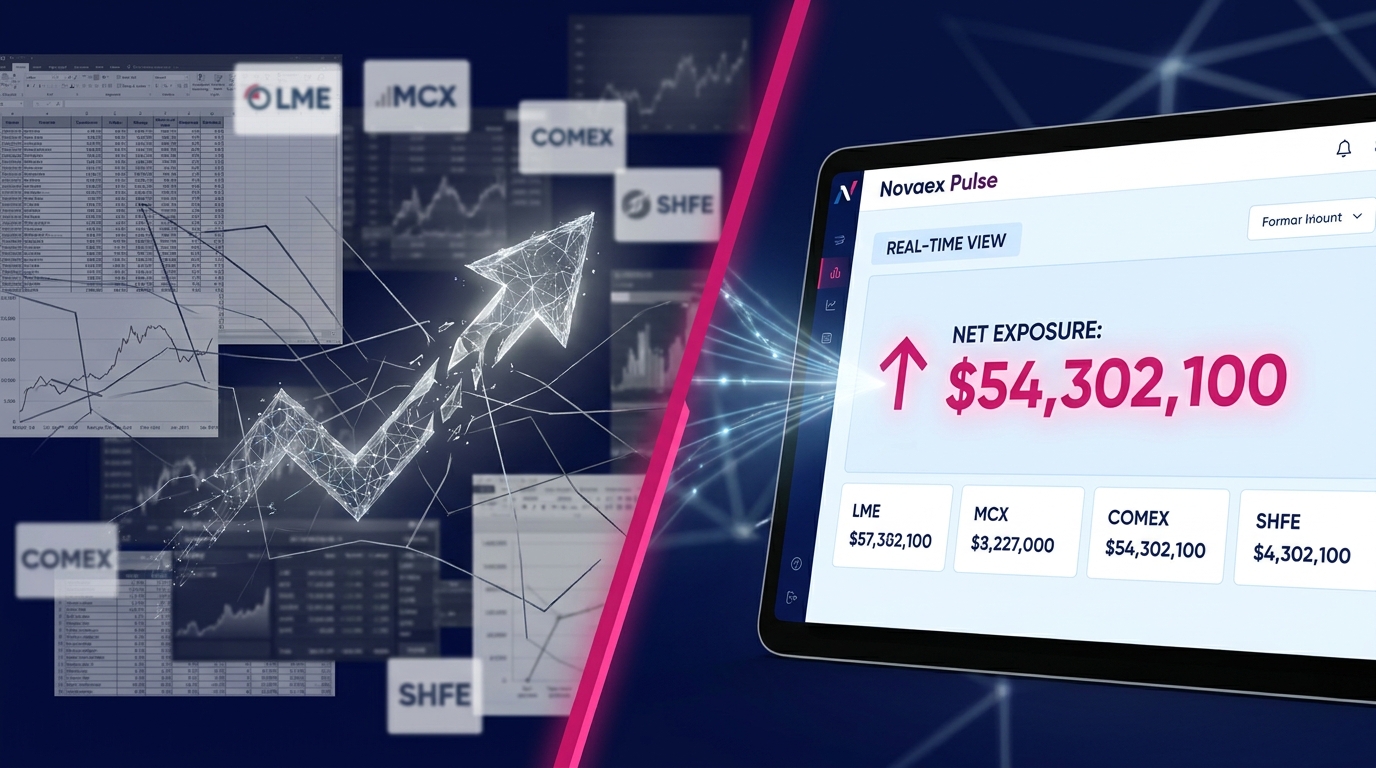
The Daily Cost of Metals Market Intelligence Gaps
Every metals desk operating four separate data feeds carries a cost that does not appear on any invoice. **The daily cost of operating without consolidated metals market intelligence** (LME, MCX, COMEX, and SHFE synthesized in a single real-time view) consistently runs to multiples of any platform s
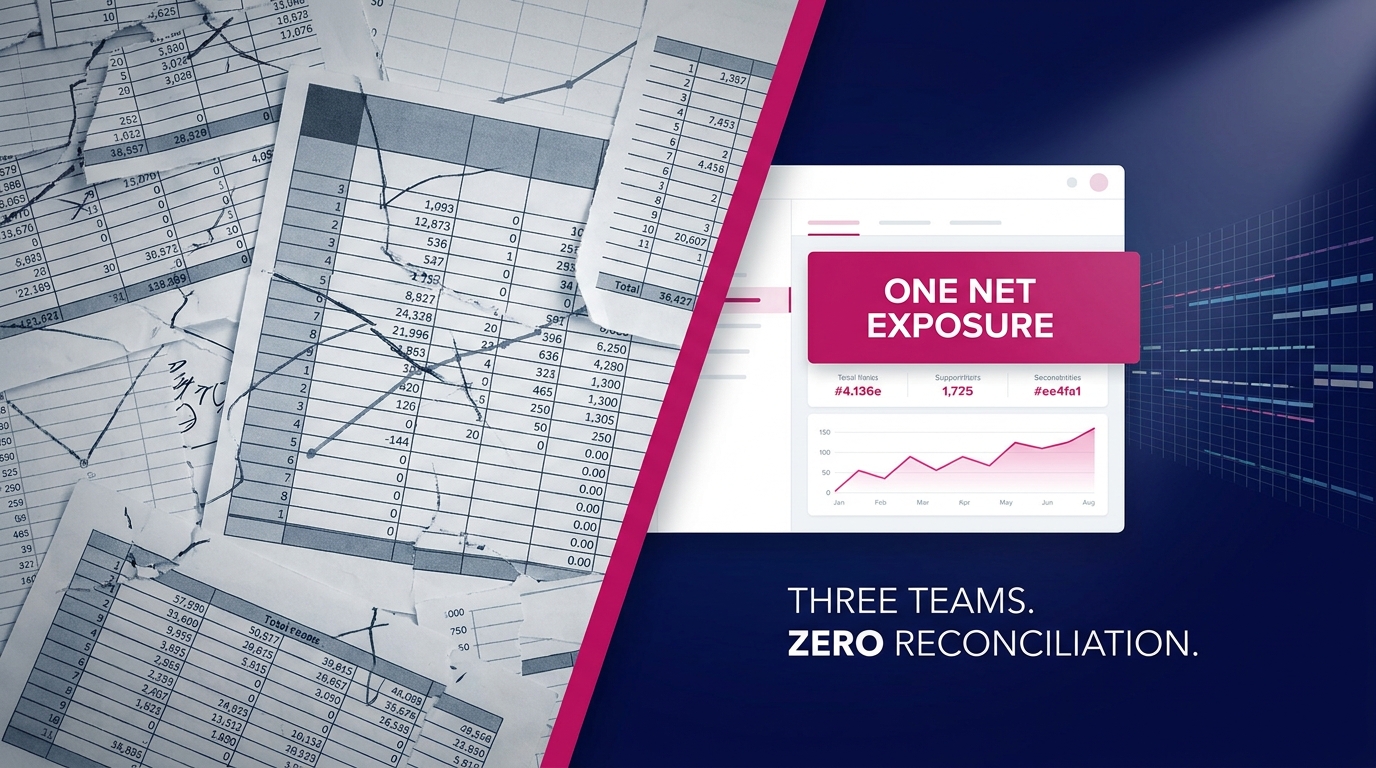
Metals Trading Governance: Three Structural Failures and Their Measurable Costs
Multi-system metals workflows produce three identifiable **metals trading governance failures**: unreconciled positions, delayed SHFE and MCX pricing, and fragmented exposure across books. Each failure is measurable, structurally present in most legacy-platform environments, and traceable to specifi
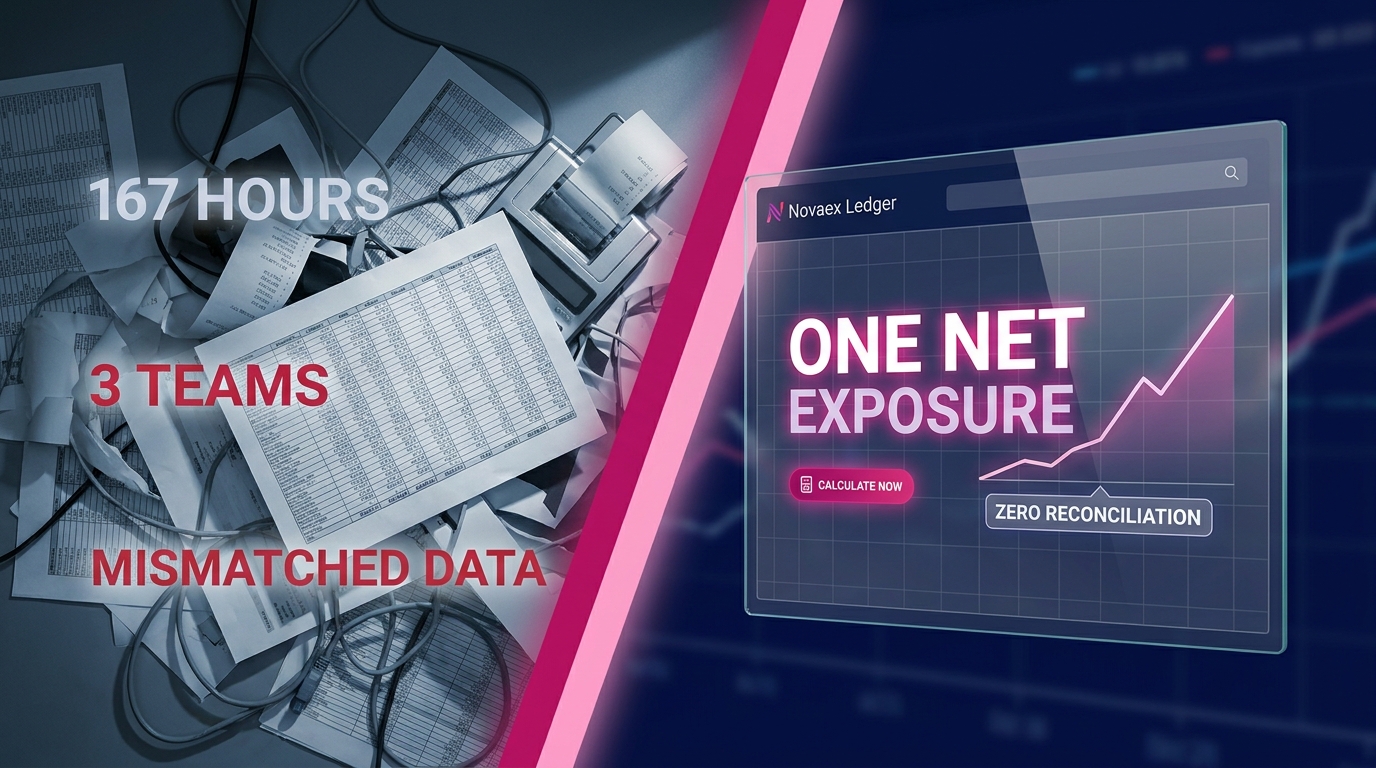
Manual Reconciliation Hours: Calculate Your Trading Cost
Manual reconciliation hours on a commodity trading desk are a calculable weekly liability rather than an unquantified operational overhead. Most metals desks have never formally measured them. This post provides a structured four-step framework to produce an exact hour and dollar figure for your tea
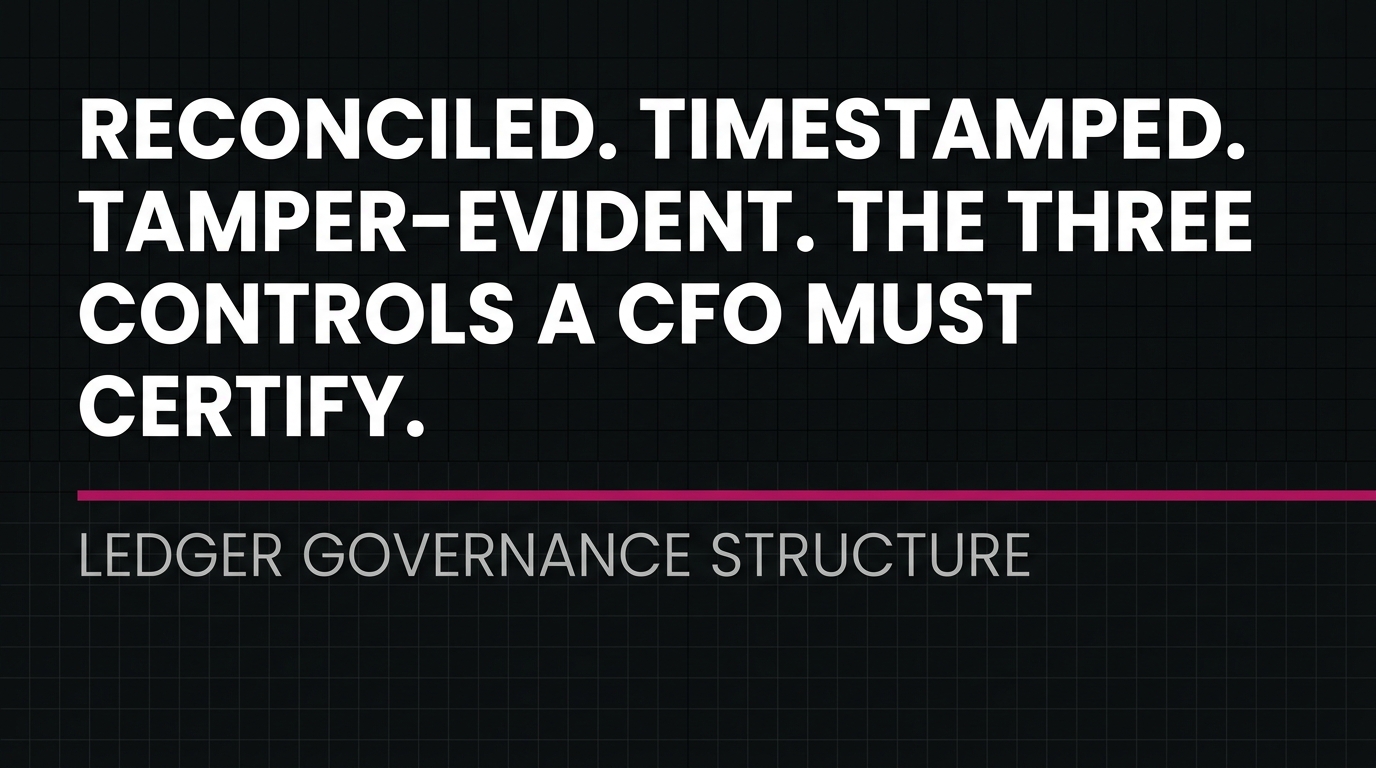
CFO Audit Controls for Commodity Trading Positions
A CFO certifying financial statements that include commodity trading exposure does not sign off on a general sense of confidence. **The three controls that matter are reconciliation integrity, timestamp immutability, and tamper-evidence**, and every CTRM platform's governance structure must satisfy
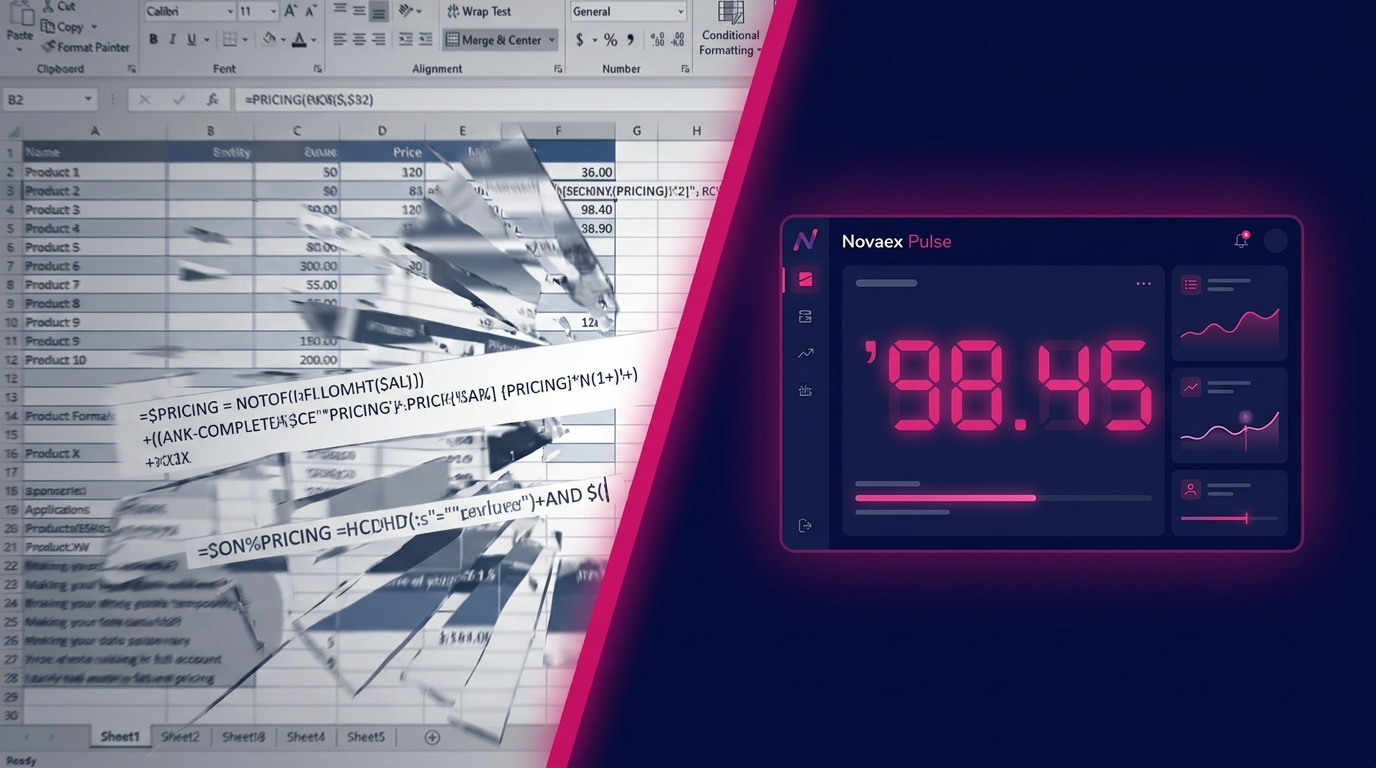
The Analyst Hours Lost to Manual Price Table Maintenance
Manual price-table maintenance in metals trading consumes an estimated 6, 12 analyst hours per week per position, hours spent pulling LME settlements, constructing pricing-period averages, and reconciling counterparty invoices. A formula engine configured to specific contract terms eliminates this m
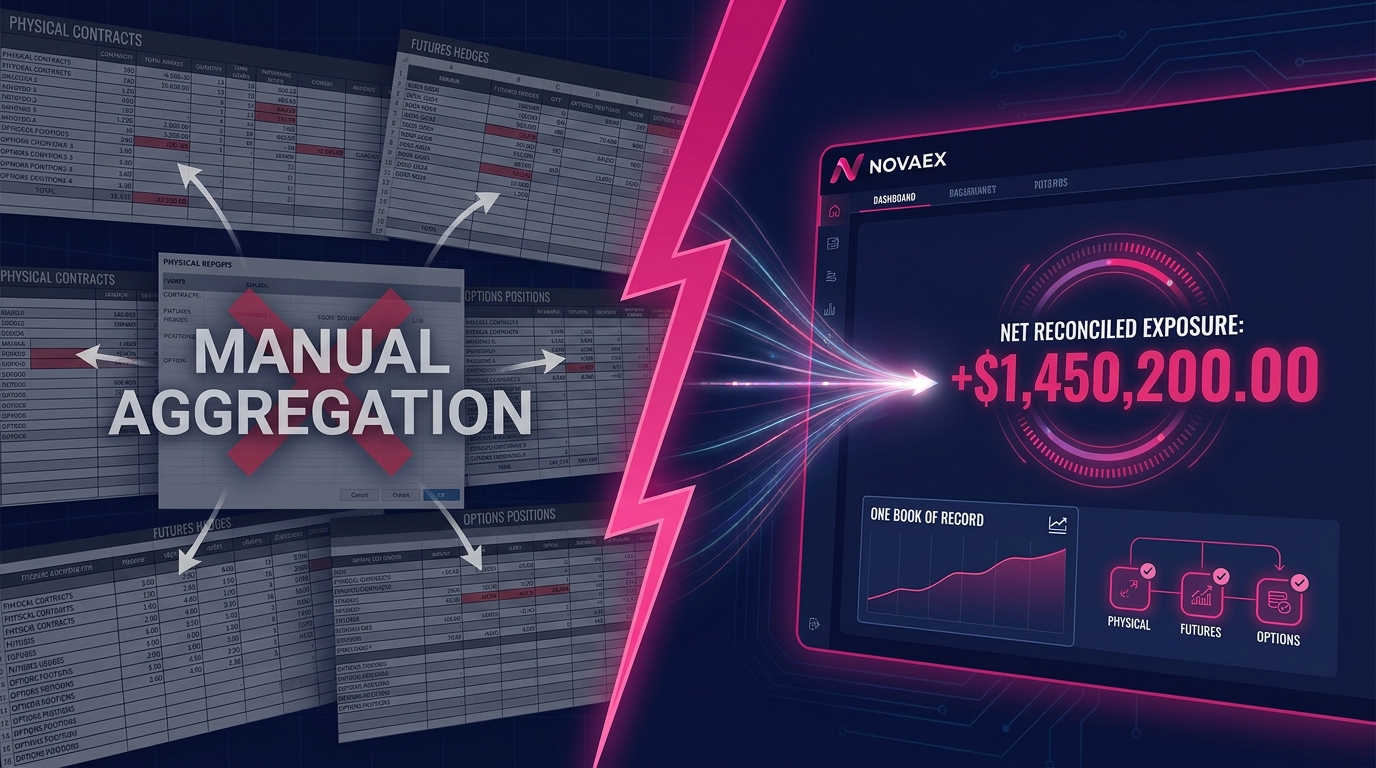
Metals Position Reconciliation: Inside the Single Book
The most direct drain on metals trading desk efficiency is the period before risk reporting when position data from disconnected systems produces contradictory net exposure figures. This recurring discrepancy demands manual resolution precisely when market conditions require trader attention elsewhe
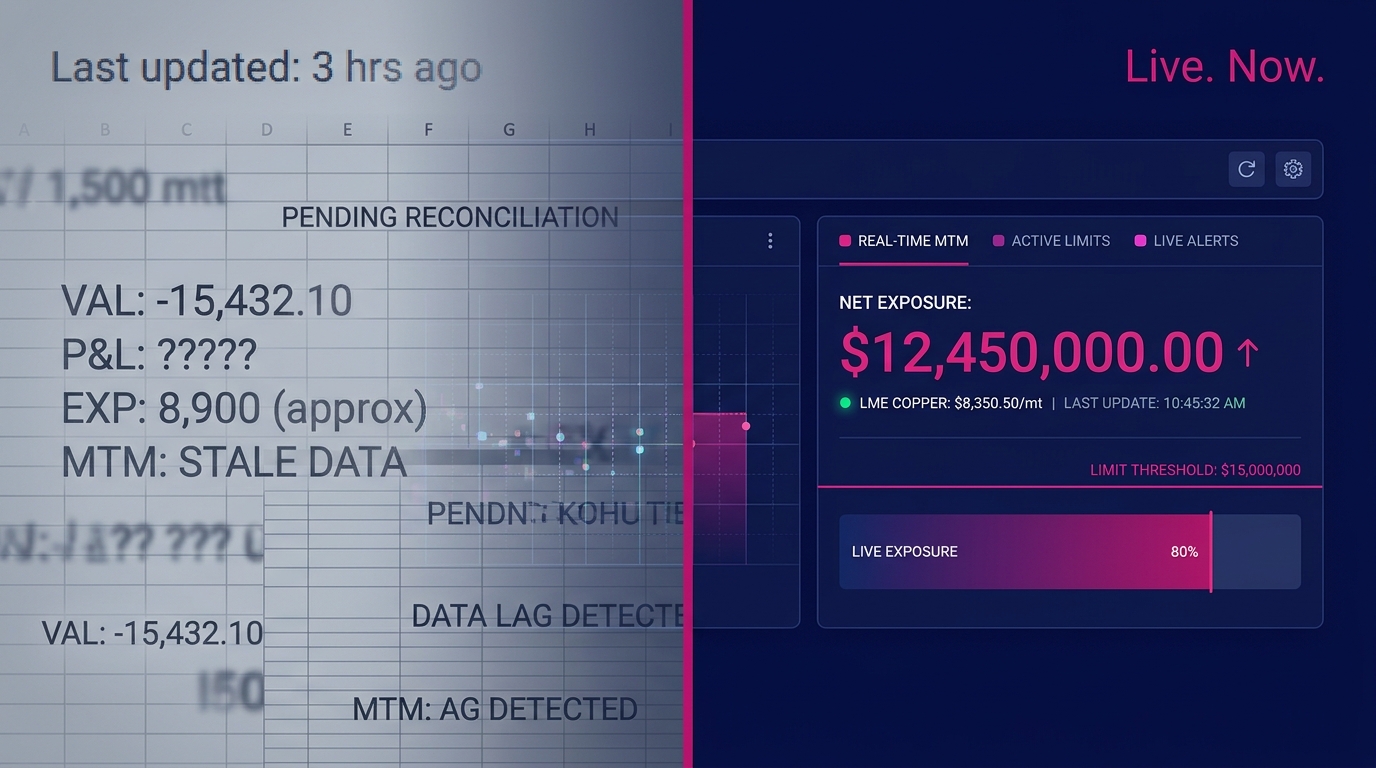
Intraday Position Limits Only Work With Real-Time MTM
TL;DR: Limits enforced against stale mark-to-market data function as historical records of risk already taken rather than live controls. Real-time MTM serves as the operational precondition turning a position limit from a lagging indicator into a live control mechanism.
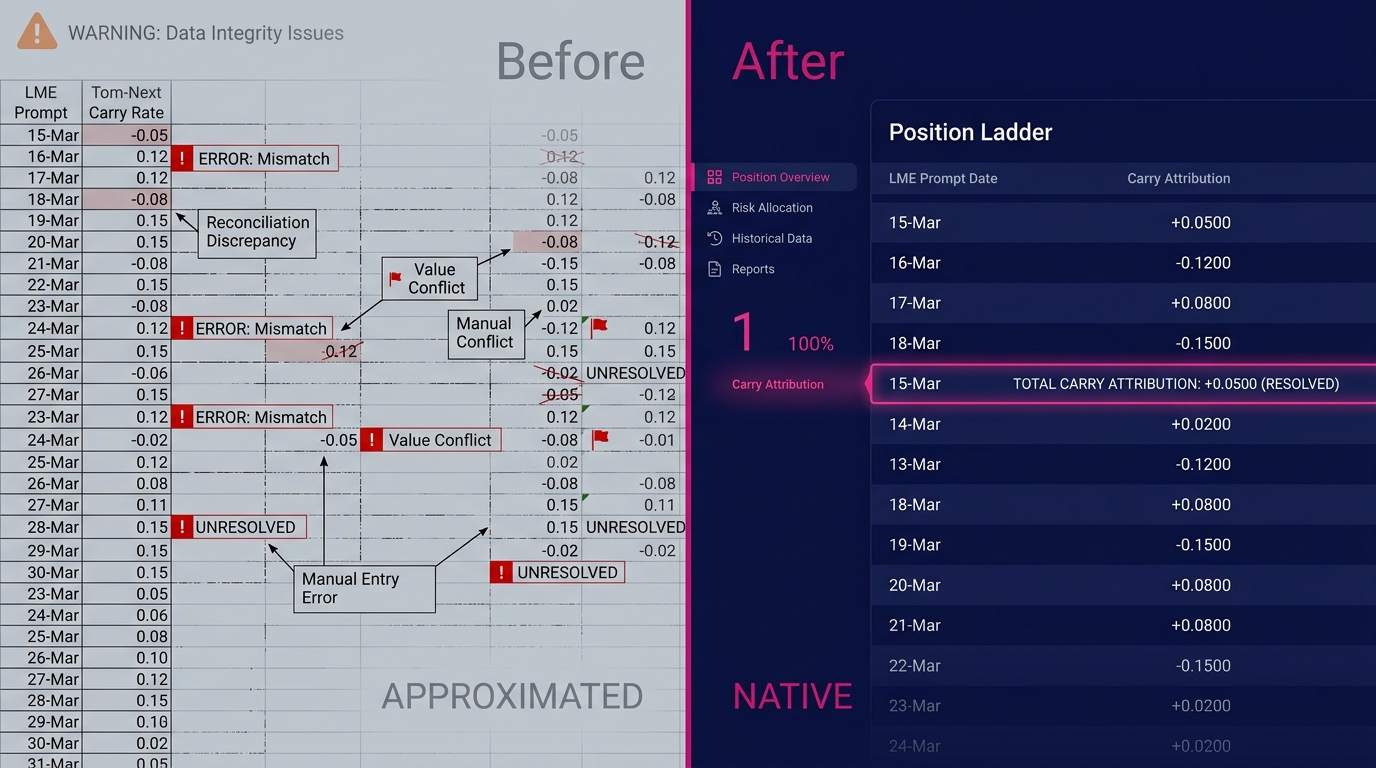
LME Tom-Next Carry Modeling: No Manual Adjustment Required
LME Tom-Next carry is the daily cost of rolling an LME forward position one prompt date forward. Most CTRM platforms approximate it. Novaex models it natively, pulling actual LME forward curve spreads across each daily prompt date and embedding the result directly in your position view and P&L attri
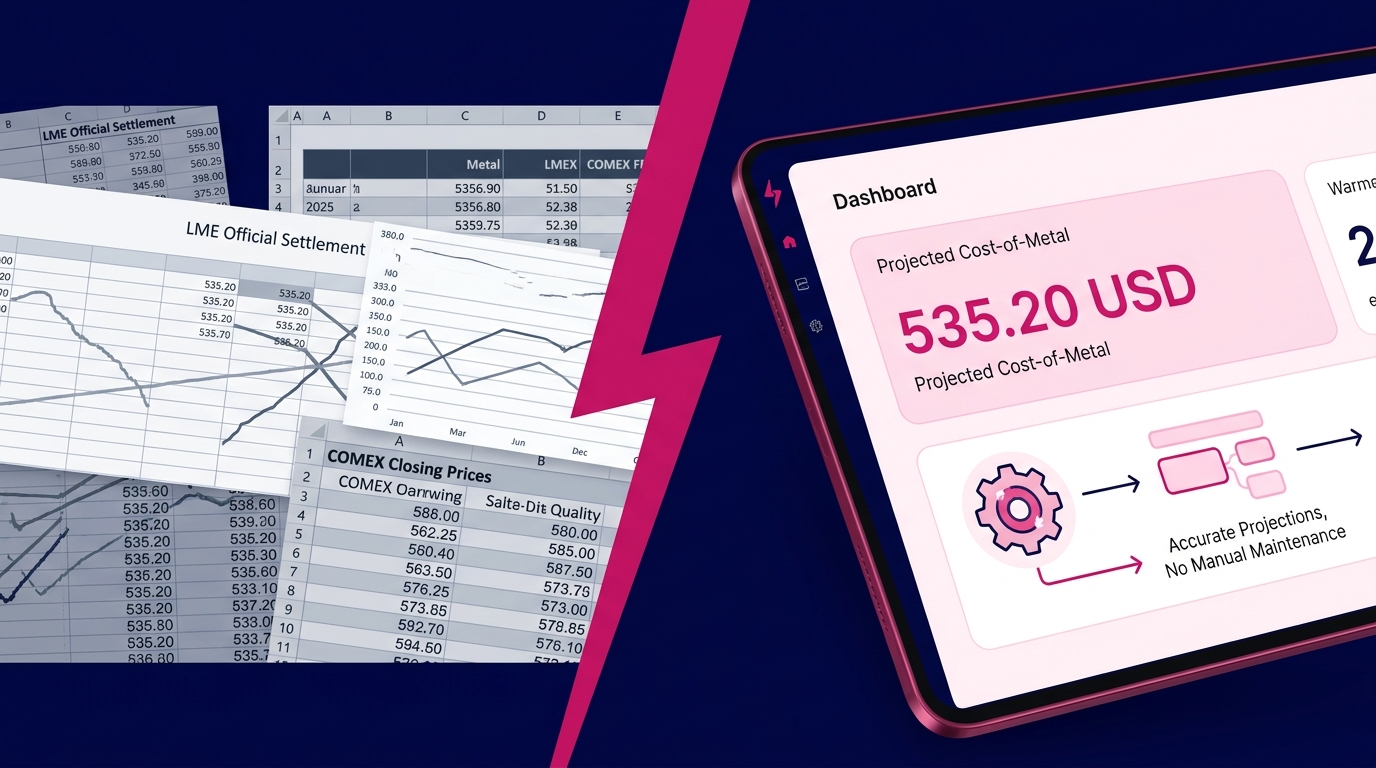
Multi-Exchange Basis Calculation: One Formula, Two Exchanges
When a procurement contract references both LME official settlement and COMEX closing prices, the formula is a precision instrument. **Multi-exchange basis calculation** requires treating each exchange price as a structurally distinct variable. Pulse's formula engine resolves both within a single co
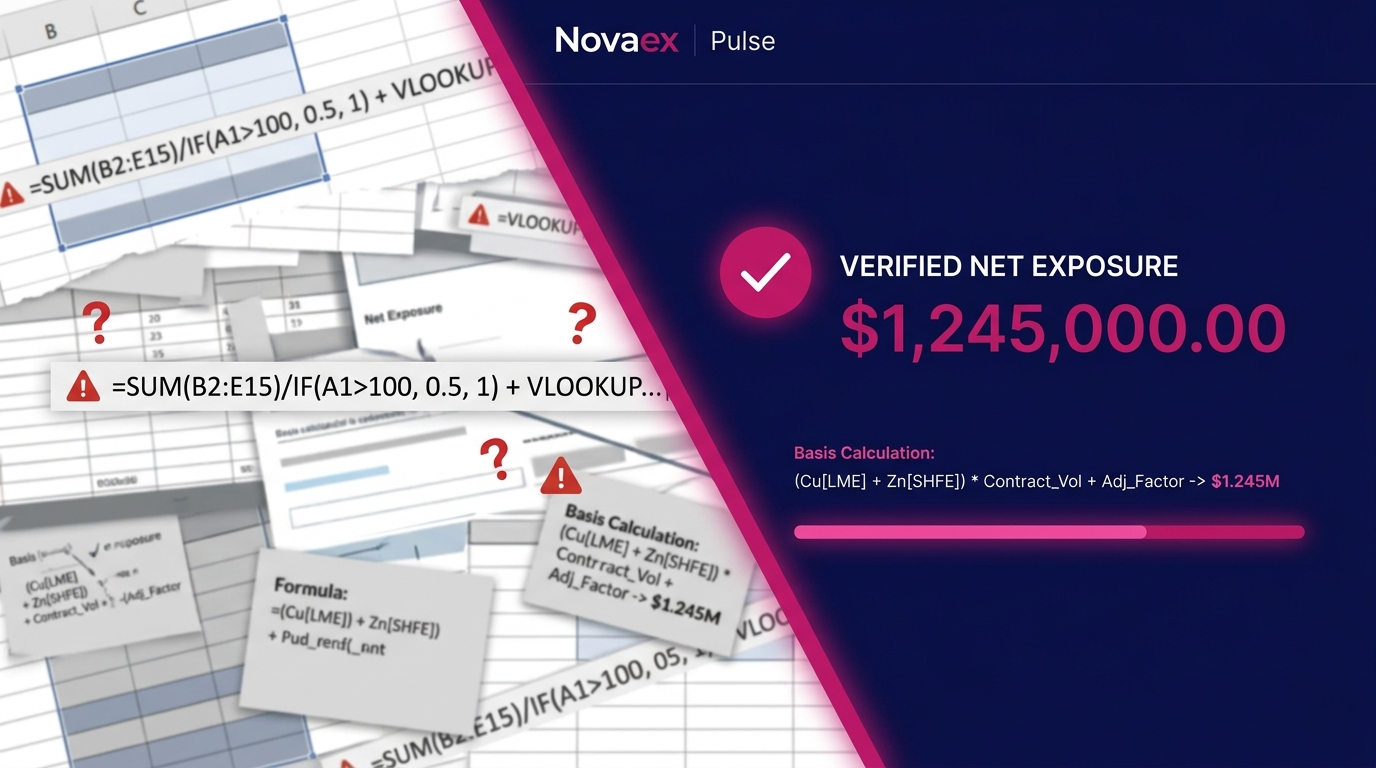
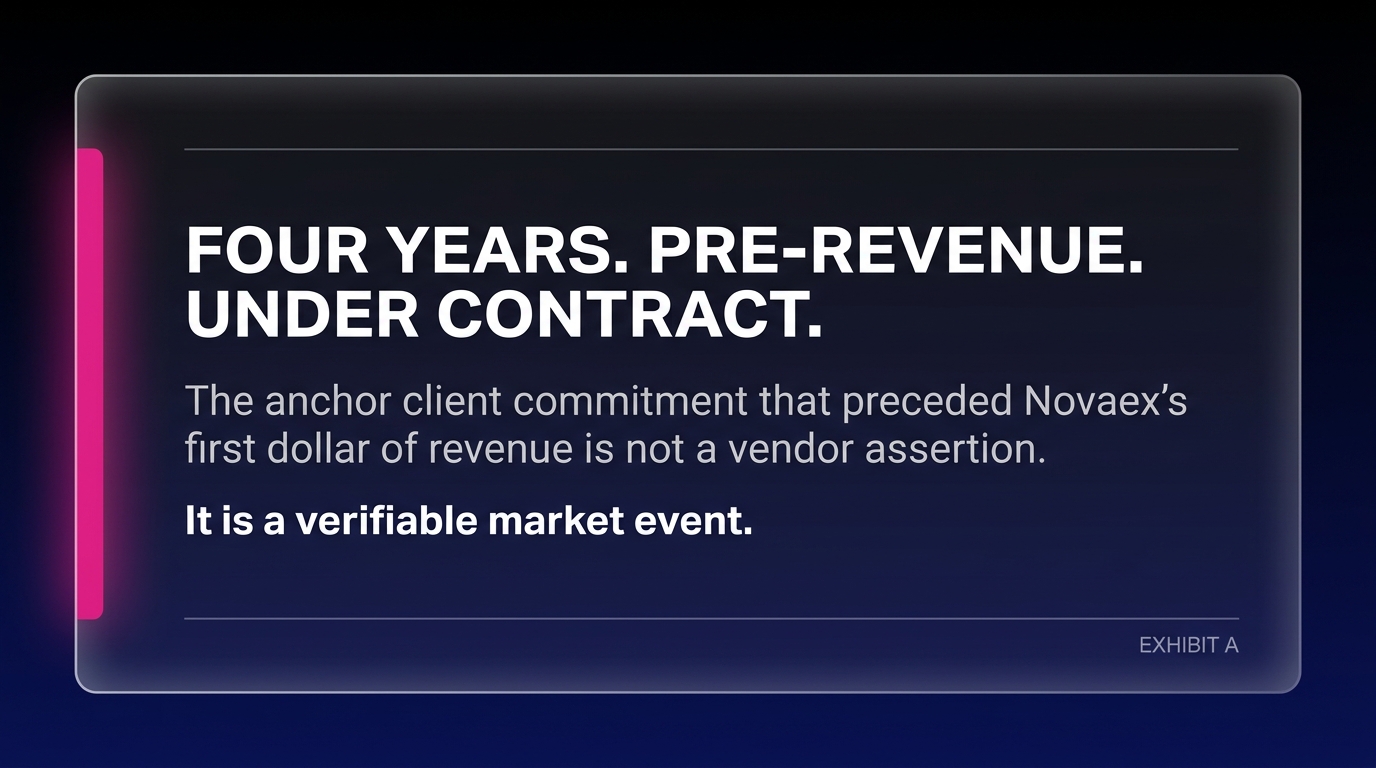
A 4-Year Contract Before Revenue: Enterprise CTRM Proof
Before Novaex generated its first dollar of revenue, an enterprise metals trading firm signed a four-year contract designating Ledger as their primary book of record. That decision bypassed product roadmaps and vendor presentations in favor of operational evidence: specific, auditable, and reproduci
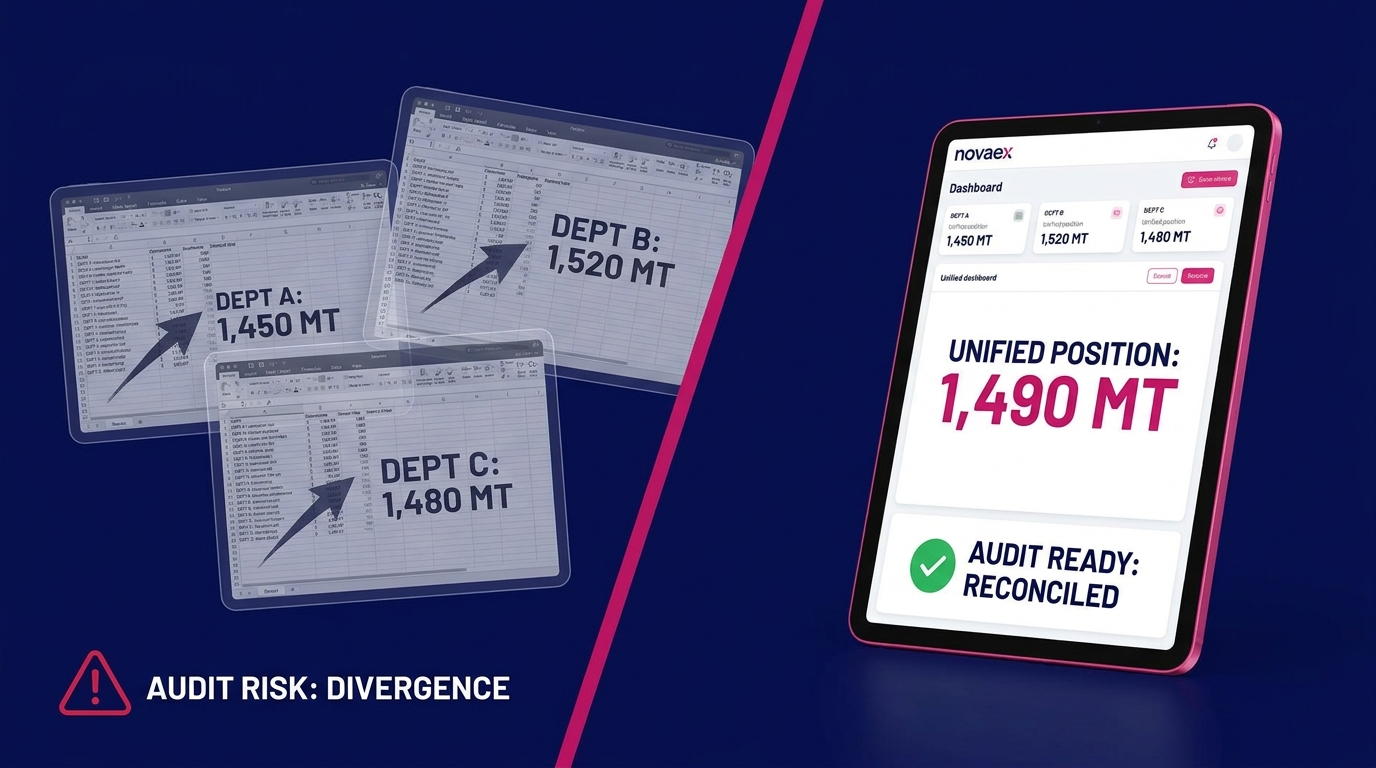
Metals Trading Position Divergence Is a Governance Failure
When front office, back office, and risk management each report a different position from the same portfolio, this represents a fundamental governance failure. **Metals trading position divergence** occurs when three departments process the same trade data through three separate systems, each applyi
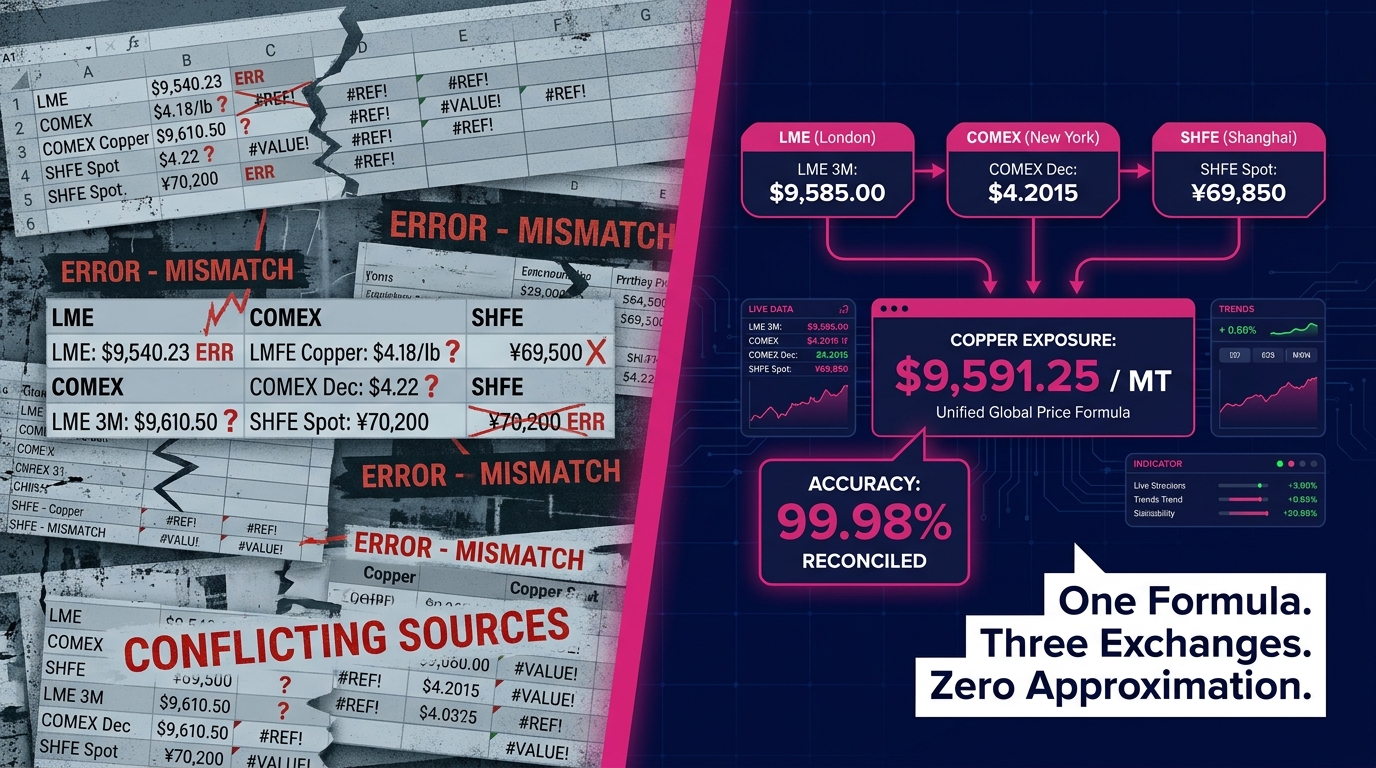
LME, COMEX, SHFE: Why Breadth-First Pricing Engines Fail
A metals trader running simultaneous positions across LME, COMEX, and SHFE cannot rely on a breadth-first platform's multi-exchange metals pricing engine. The architecture embeds a deliberate trade-off: exchange-specific formula precision is sacrificed for cross-commodity coverage. That trade-off is
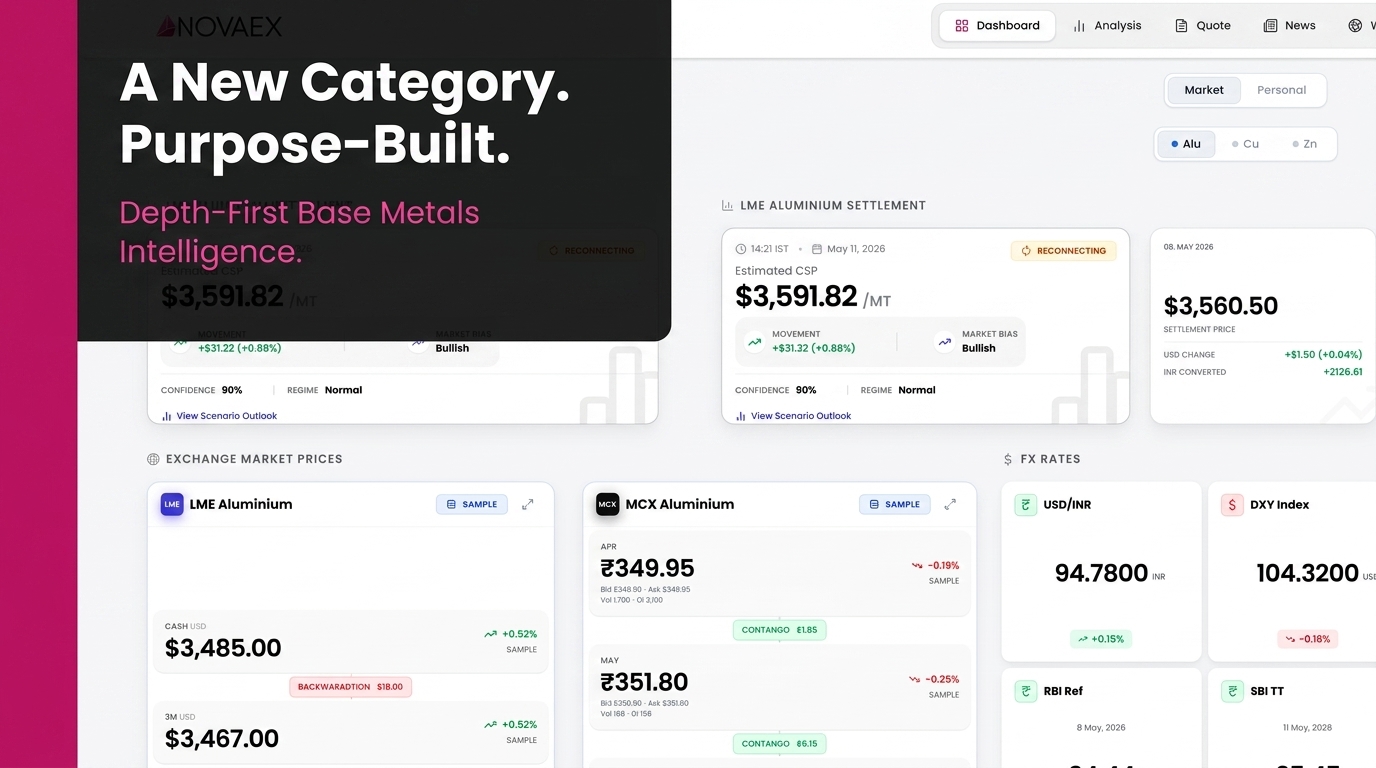
Depth-First Base Metals Intelligence: A New Standard
The daily reality most base metals traders manage is familiar: a front-office copper trader at a mid-market firm runs position visibility in one system, pulls LME settlement prices from a second feed, reconciles SHFE exposure in a spreadsheet, and discovers at the end of the day that none of these s
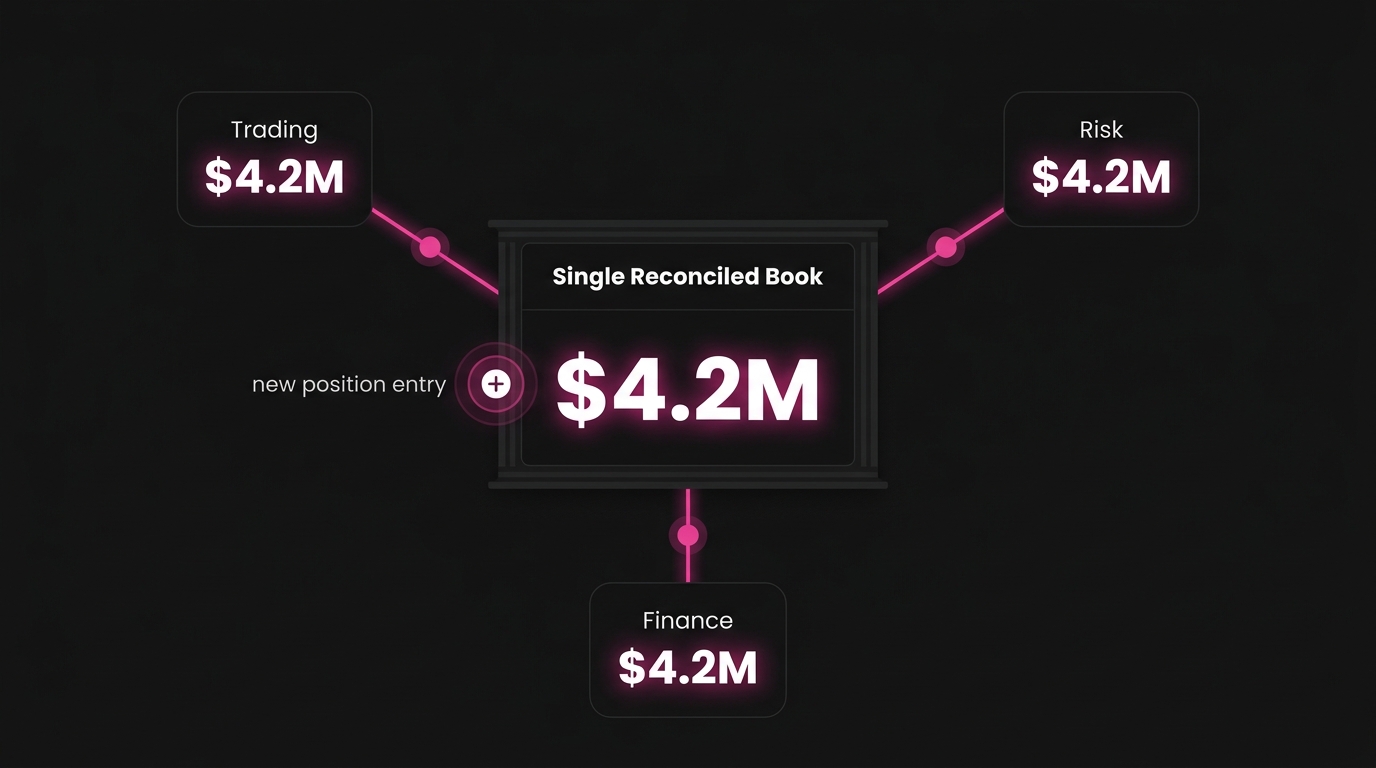
Single Book of Record: Real-Time Position Visibility
When a metals trader enters a new physical position, three teams need the same number at the same moment. A **single book of record** delivers exactly that: one reconciled exposure figure that updates simultaneously for trading, risk, and finance the instant a position is entered, with zero reconcil
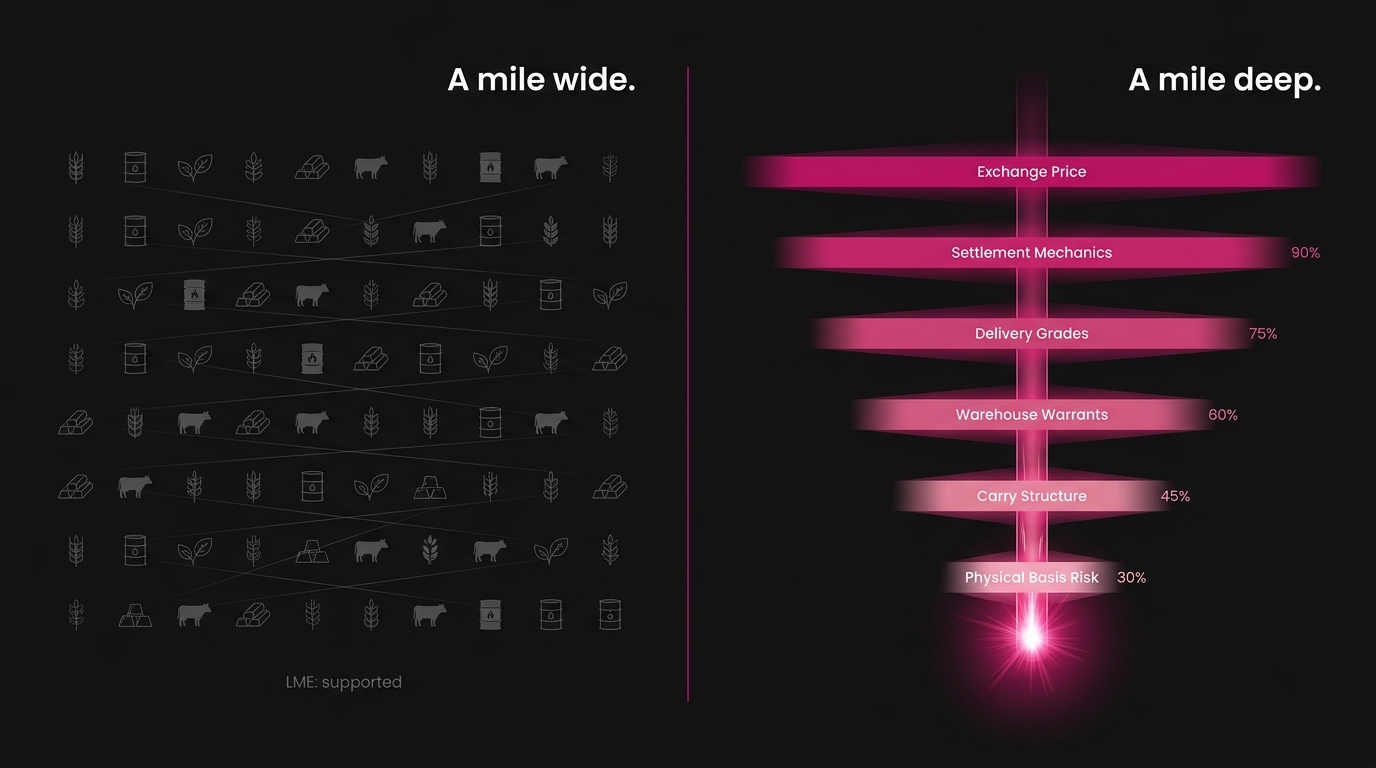
LME Settlement Mechanics: What Most Platforms Miss
Most commodity platforms support LME as a listed exchange. Mastering **LME settlement mechanics** means modeling the Ring-based official price window, the full prompt date ladder, 750+ approved delivery grades, and warrant-level physical inventory data as an integrated system. These represent catego
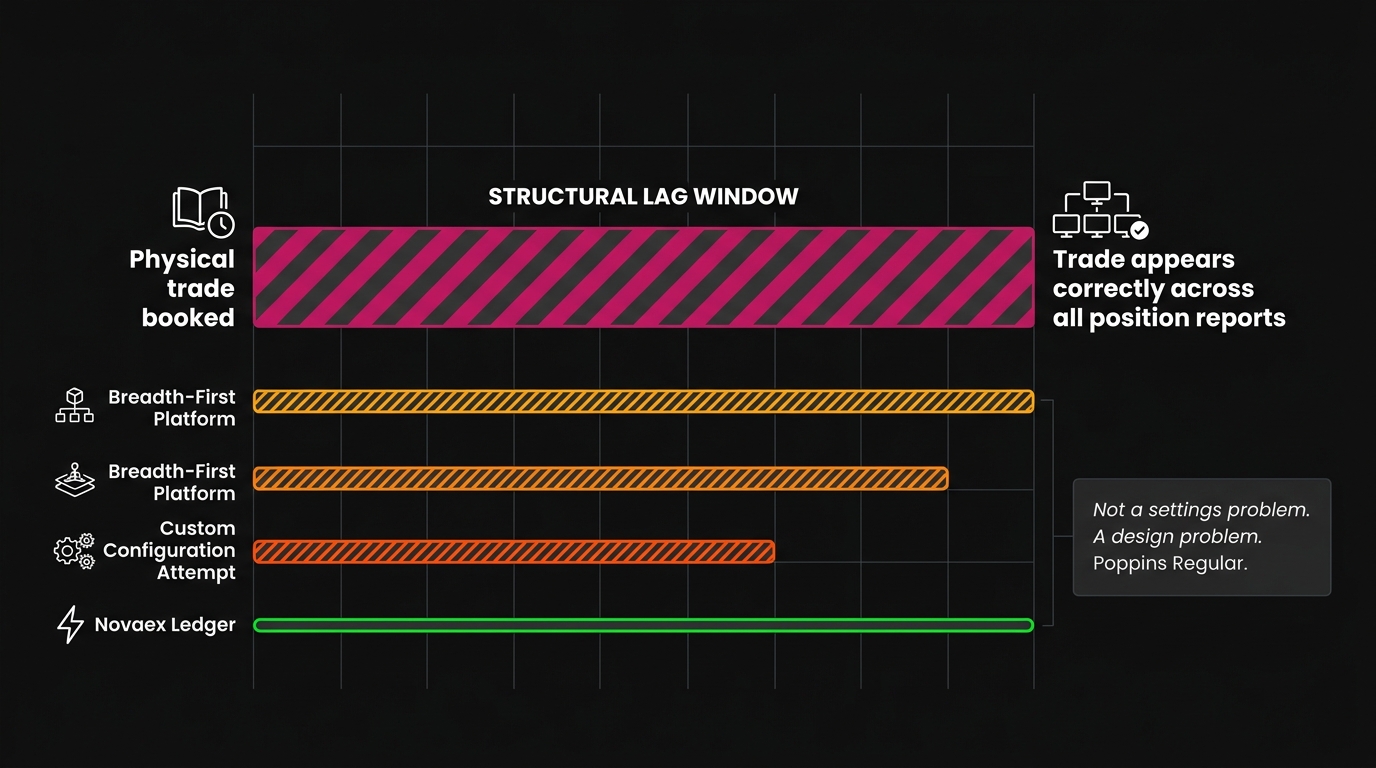
Why Reconciliation Lag Can't Be Configured Away
Reconciliation lag, the gap between when a physical trade is booked and when it appears correctly across all position reports, is not a configuration problem. It is a structural consequence of breadth-first commodity platform architecture. No settings adjustment, no implementation consultant, and no
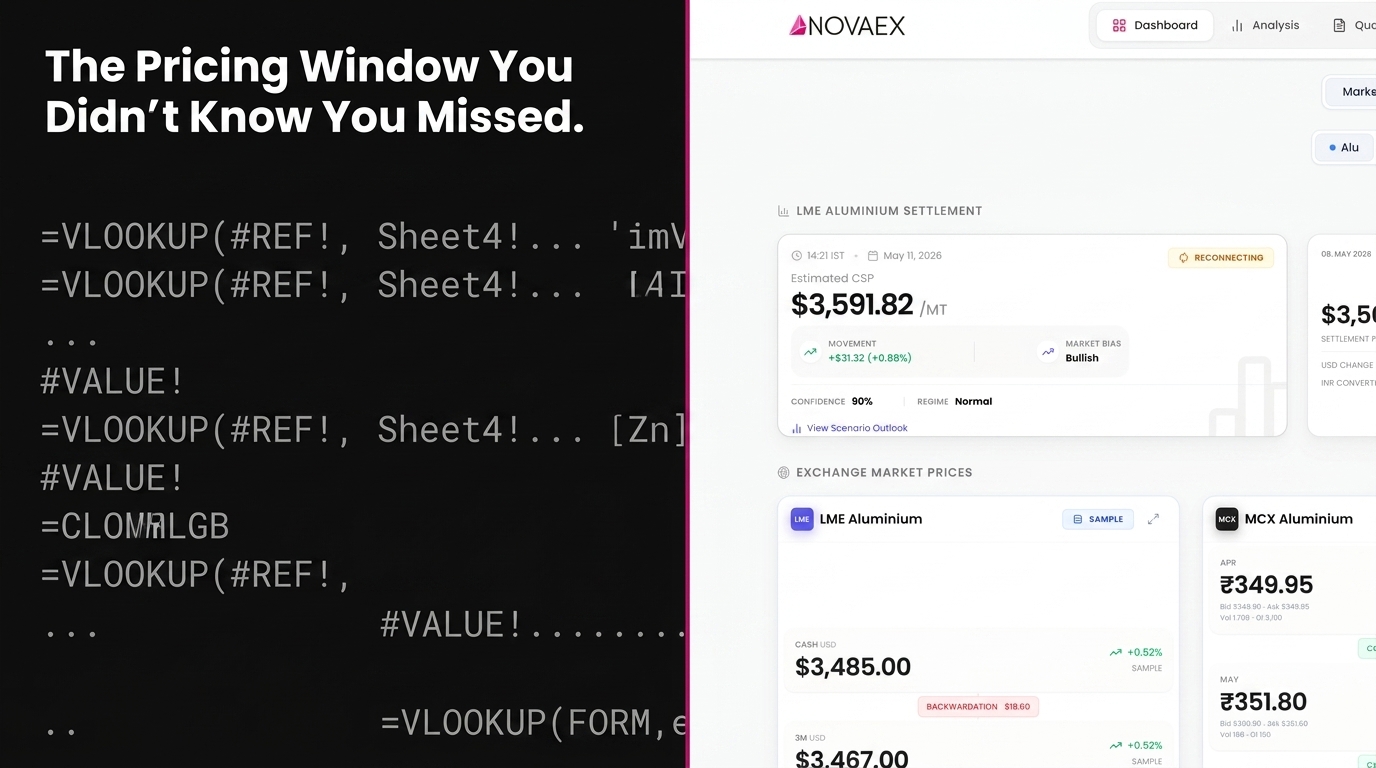
Why Metals Trading Spreadsheets Fail at LME, COMEX, SHFE
Multi-tab spreadsheet formulas collapse under concurrent data loads during live metals trading. This failure mode is structural, not situational. When LME, COMEX, and SHFE pricing windows overlap, simultaneous RTD feed updates exceed Excel's single-threaded calculation engine's processing capacity,
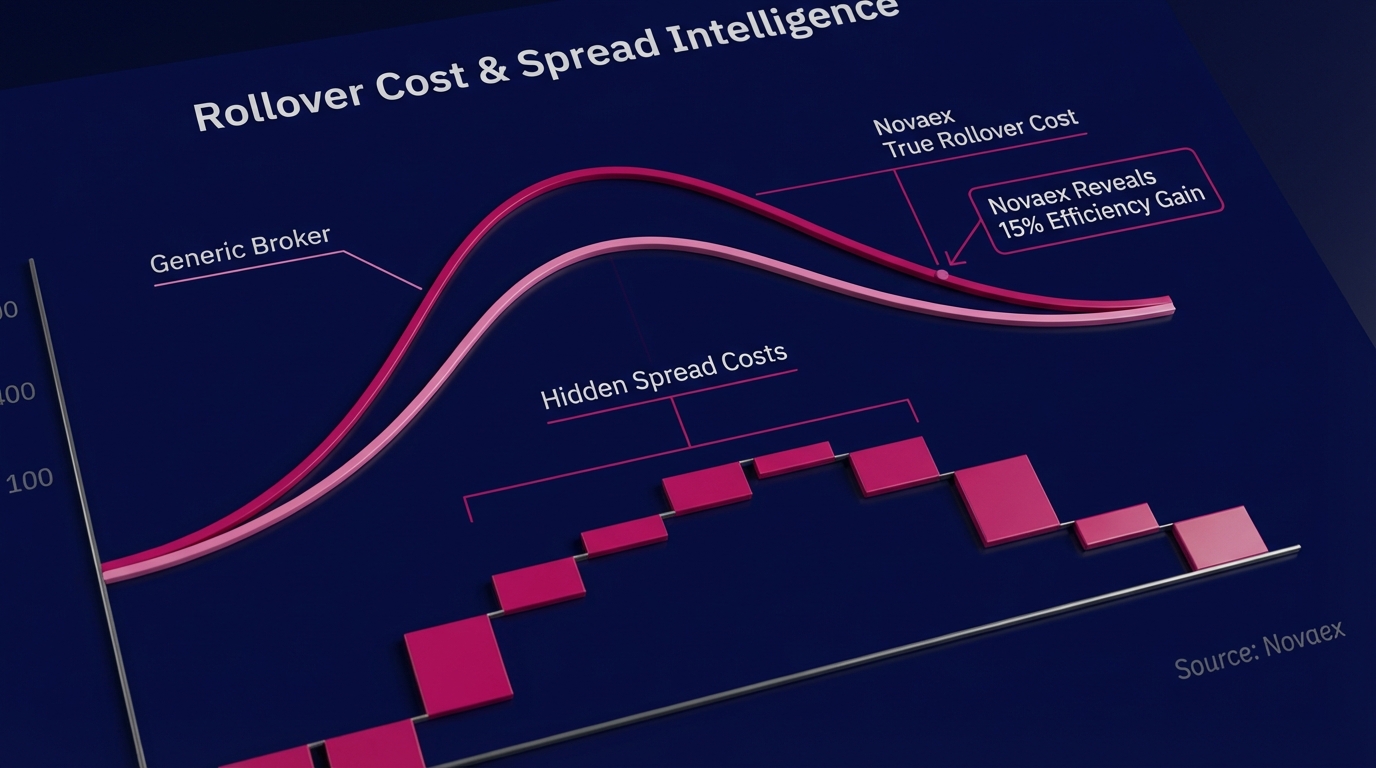
The LME Rollover Cost Spreadsheets Cannot Calculate
Spreadsheets cannot produce accurate LME rollover costs because the required data does not exist in any cell. Without live bid/ask depth and broker-accurate inter-month spread differentials, every rollover estimate is a structured approximation. If someone in your network manages metals exposure thr
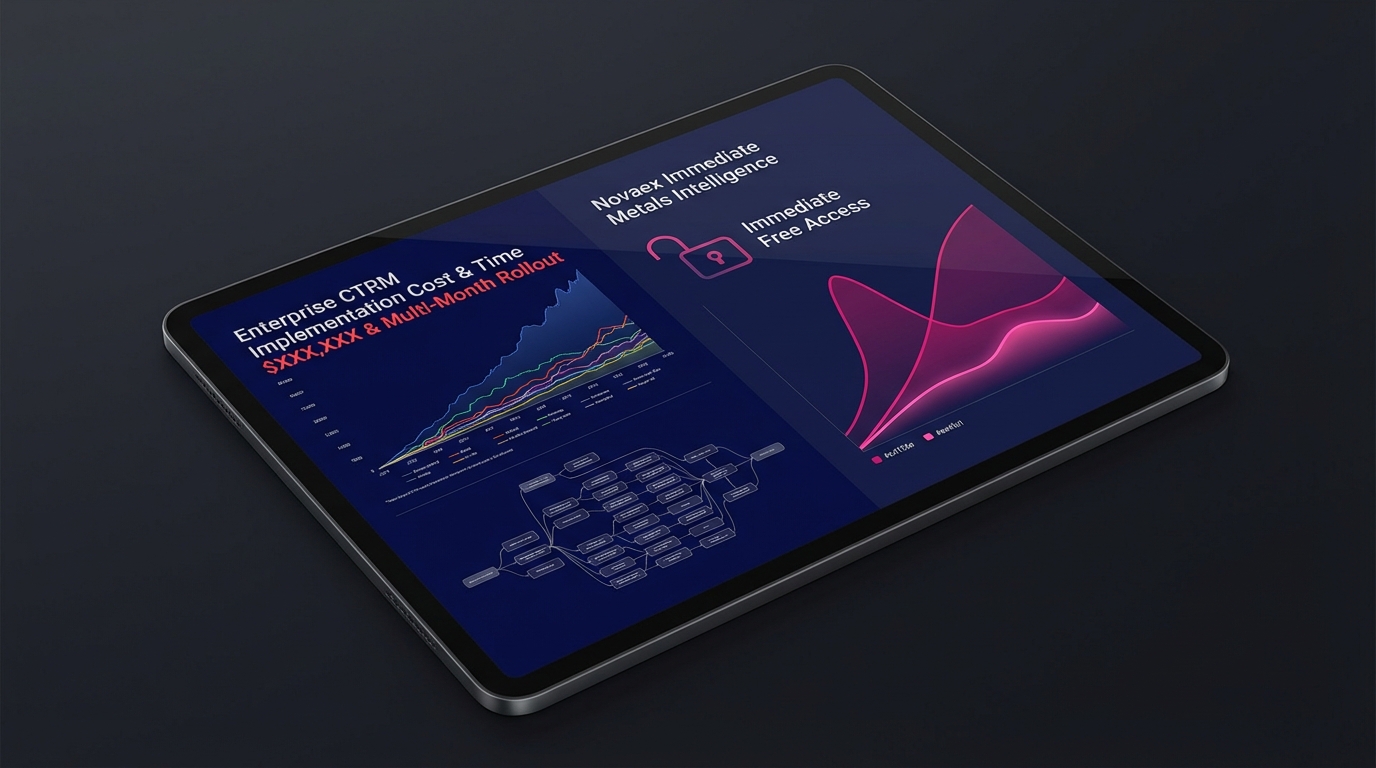
Enterprise CTRM Cost: What Six Figures Actually Buys
Enterprise CTRM implementations carry a total first-year spend of $500,000 to $2 million and require 9, 18 months before a trader logs a single live position. These platforms were engineered for organizational compliance and multi-commodity book governance, rather than spread accuracy or rollover co
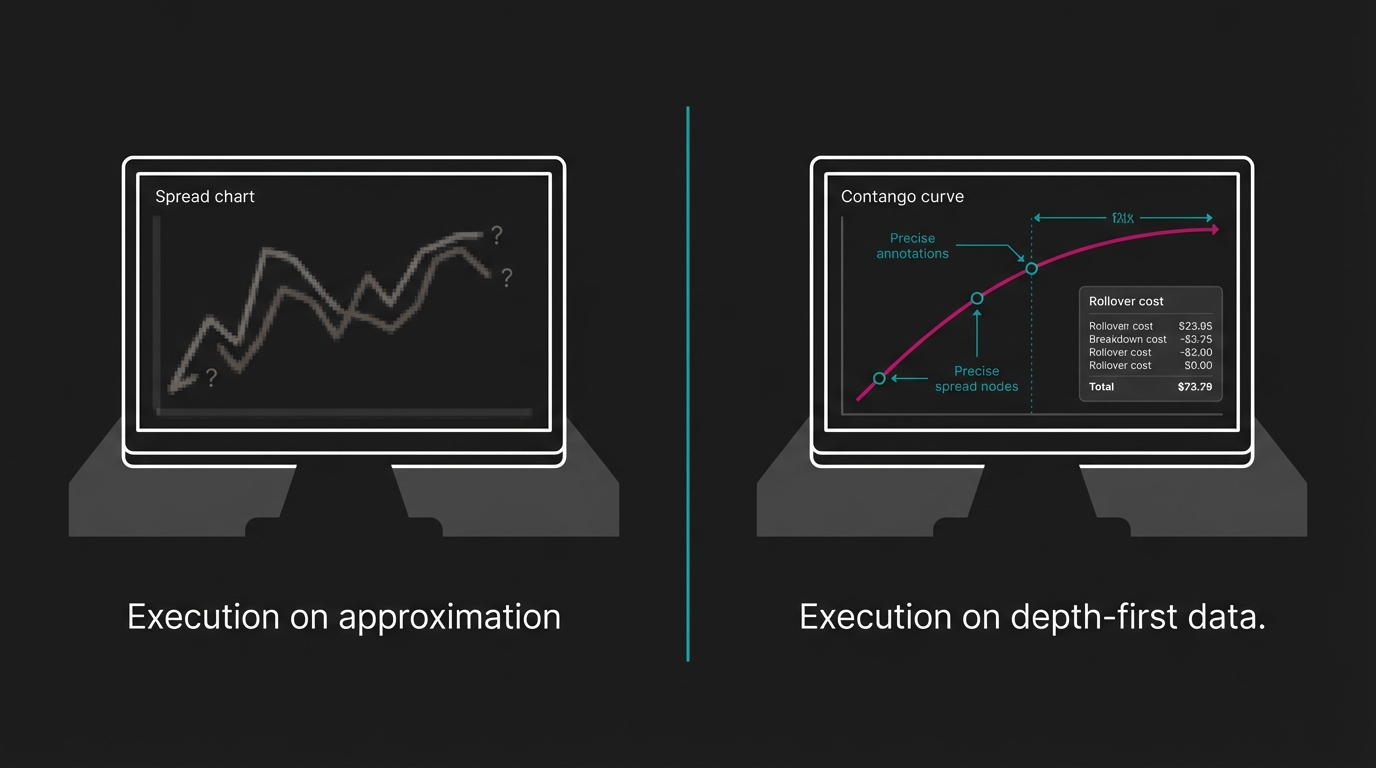
Metals Hedge Execution Data: Where Two Standards Diverge
The quality of your hedge execution is determined before you place the trade. **Metals hedge execution data** that reflects actual broker-quoted spreads across LME, COMEX, MCX, and SHFE gives traders a significantly different starting position than indicative pricing sourced from aggregated multi-co
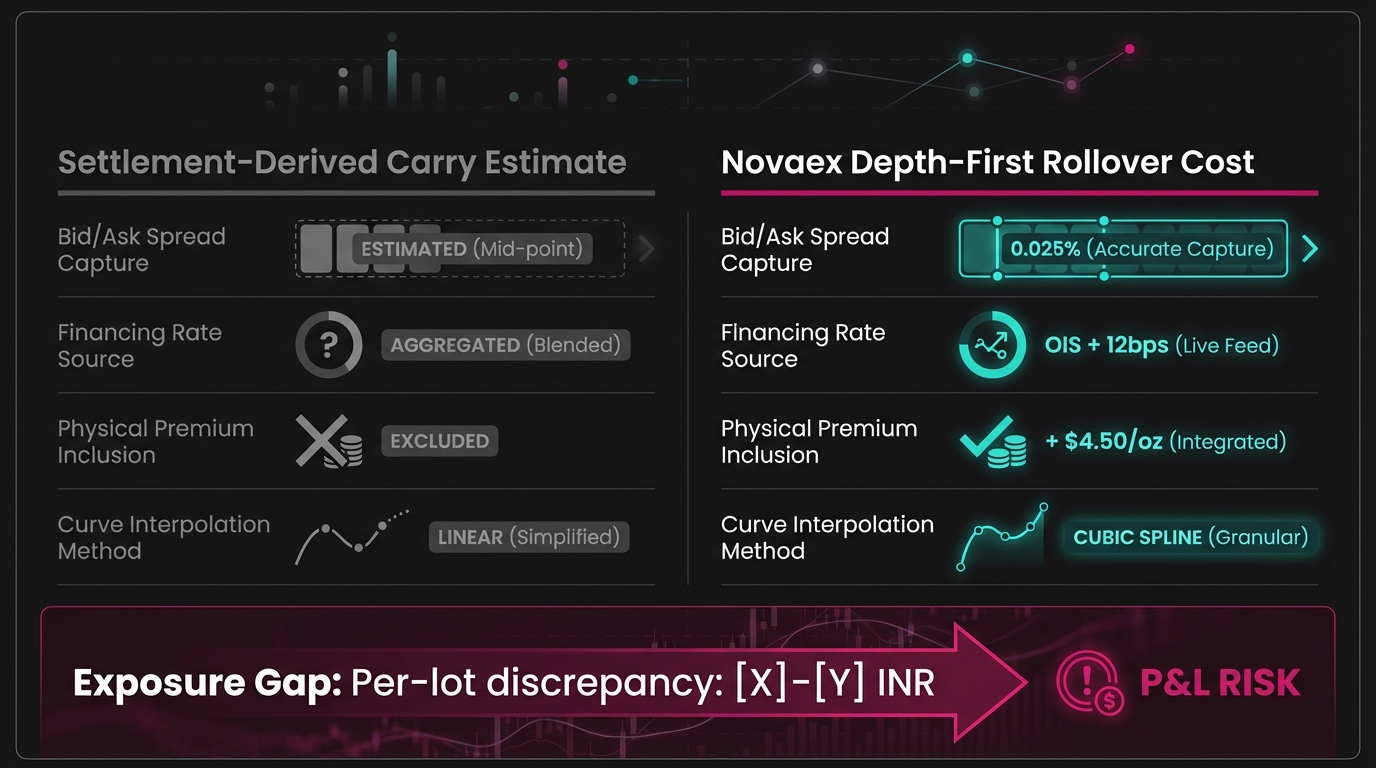
Rollover Cost Calculation: The Inputs a Settlement-Based Approach Does Not Capture
Most trading desks treat their platform's rollover estimate as a close approximation. The data is more specific than that. The gap between a settlement-derived carry estimate and a depth-first rollover cost calculation is not rounding error; it is a structural input omission that compounds with ever
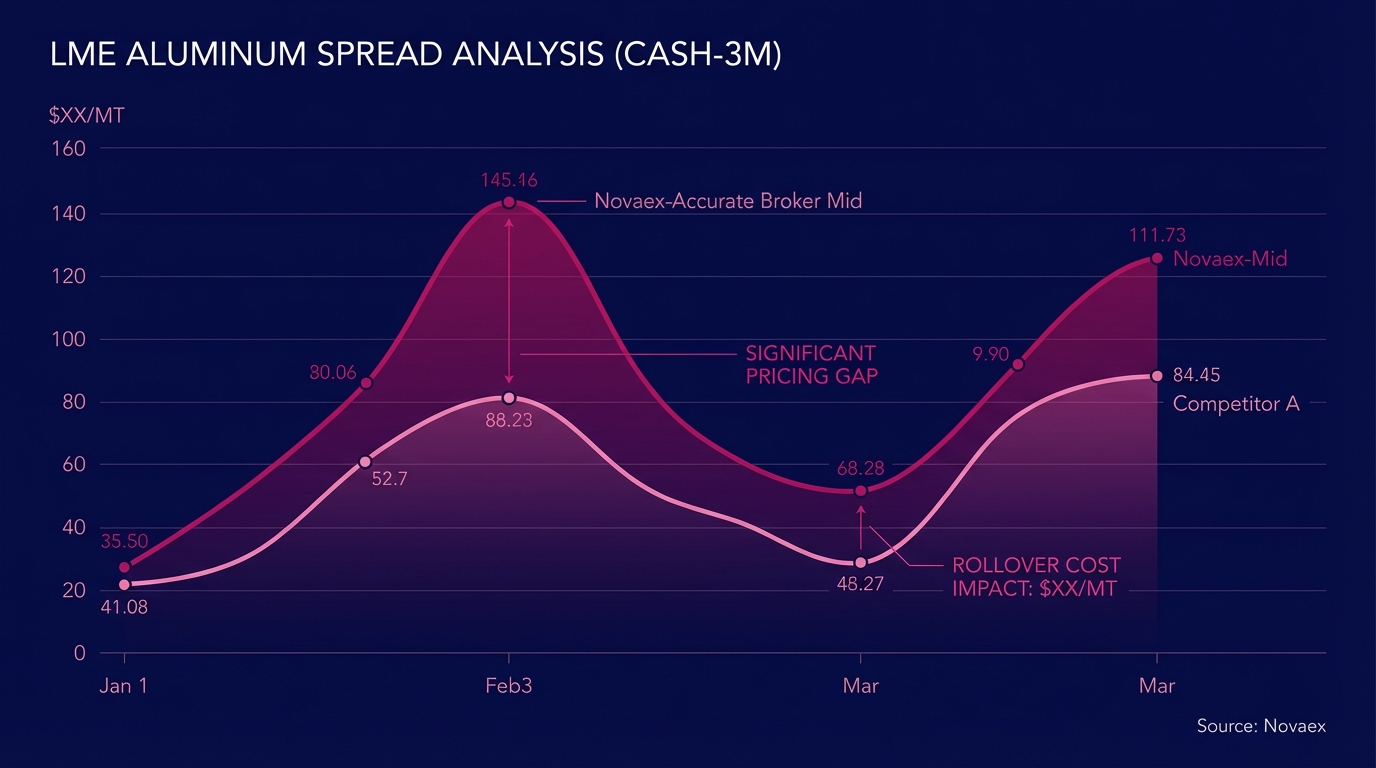
Metals Spread Pricing Accuracy: Run the Hedge Audit
If your spread data comes from a generic multi-commodity platform, you likely have an unquantified pricing gap sitting inside your hedge book right now. **Metals spread pricing accuracy** acts strictly as a hedge execution cost variable rather than a platform feature. This post outlines the audit: f
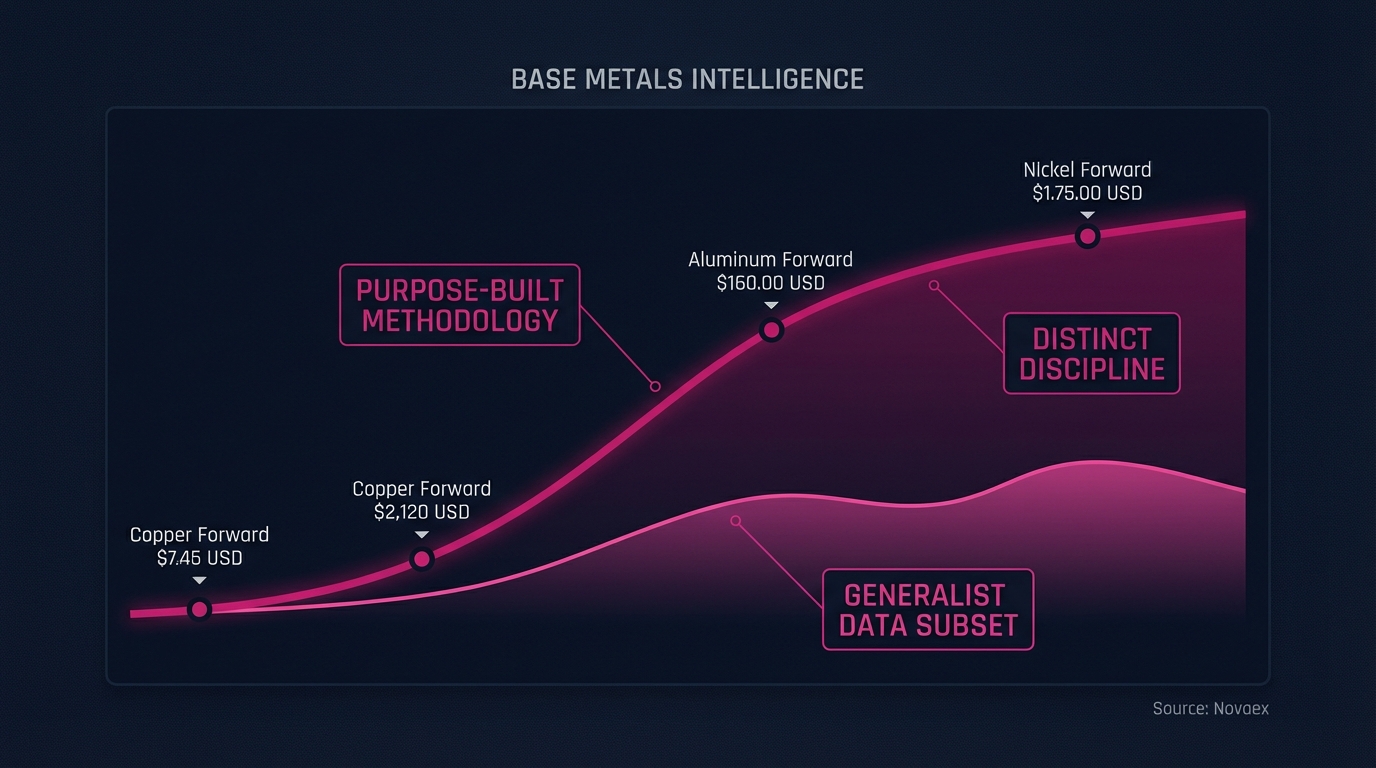
Base Metals Intelligence Is Not a Commodities Data Subset
Most commodity platforms approach coverage as a mapping problem: identify markets, ingest feeds, display outputs. The result is predictable: diluted intelligence distributed across every market while none is fully mastered. For a front-office metals trader managing LME positions under time pressure,
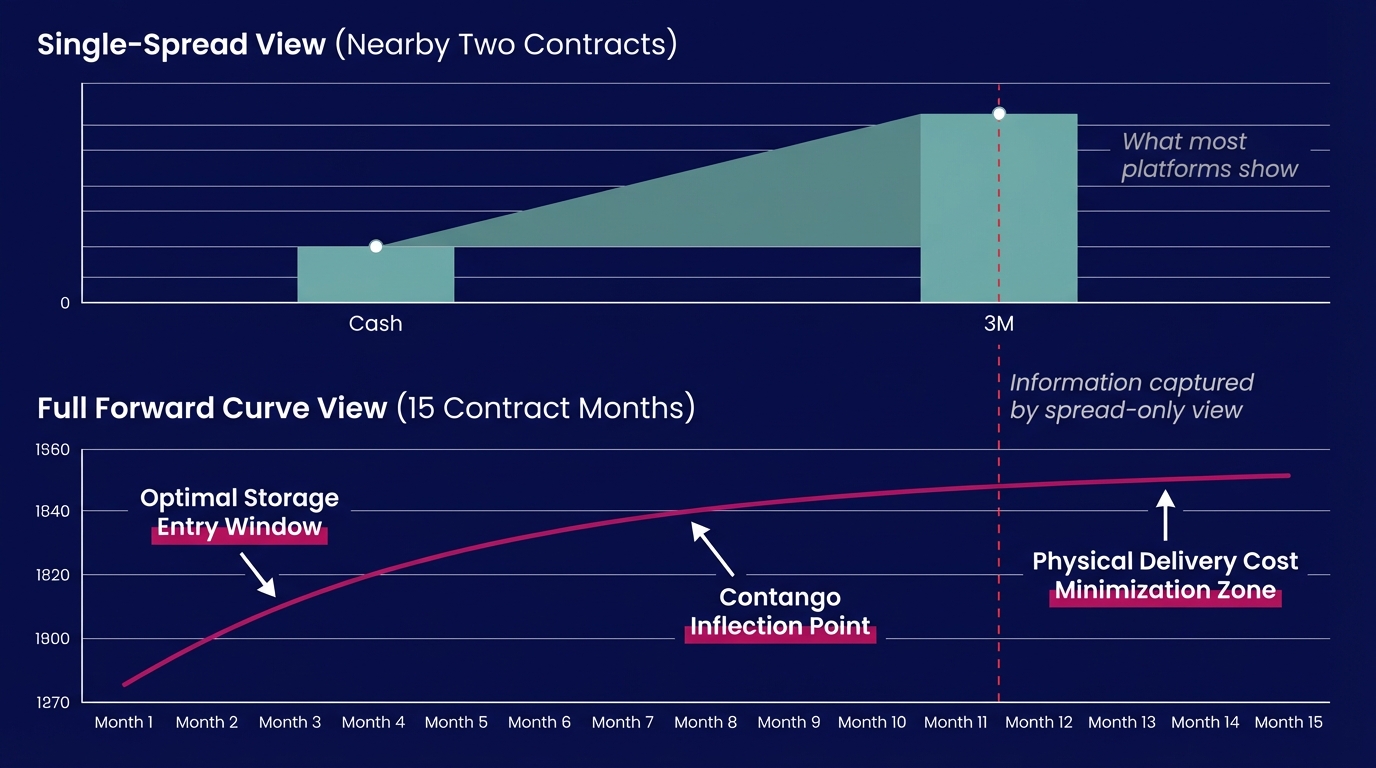
Copper Forward Curve: Why Spread Charts Miss the Mark
A single nearby spread tells you whether the copper forward curve is in contango or backwardation today. The full forward curve tells you *where* that structure changes, *how steeply*, and *how long* it persists. This information determines whether storing metal for three months profits more than st
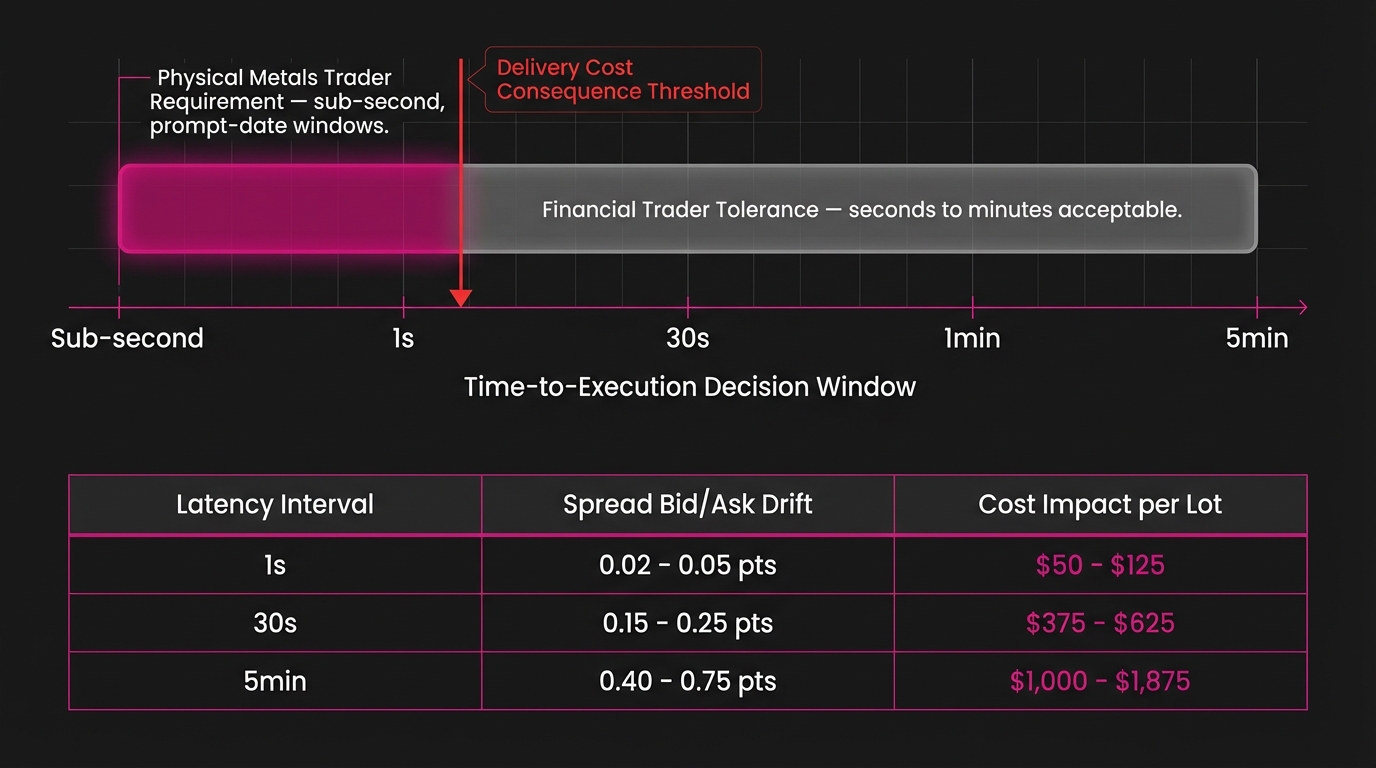
Physical Metals Data Latency: Why Prompt Windows Matter
Physical metals trading data latency functions as a direct delivery cost risk. When a prompt date approaches on the LME, spread decisions require broker-consistent, real-time bid/ask precision. A 30-second delay in that window operates as a measurable cost event. Financial traders can absorb data la
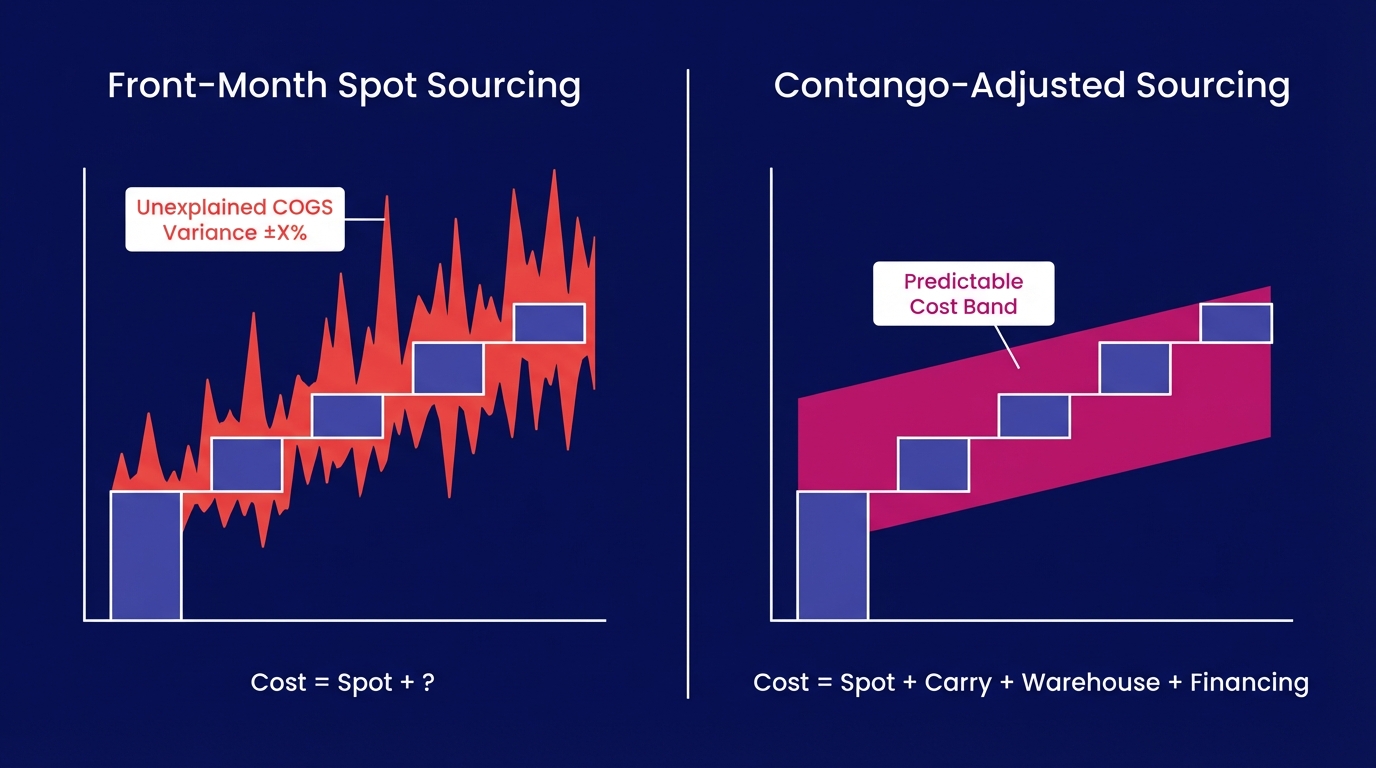
How Aluminum Contango Creates Hidden COGS Variance
Manufacturers who benchmark aluminum purchases against front-month spot prices (rather than the forward curve) embed contango-driven cost errors directly into COGS. When LME aluminum trades in contango, sourcing decisions anchored to cash prices systematically understate true delivered cost, generat
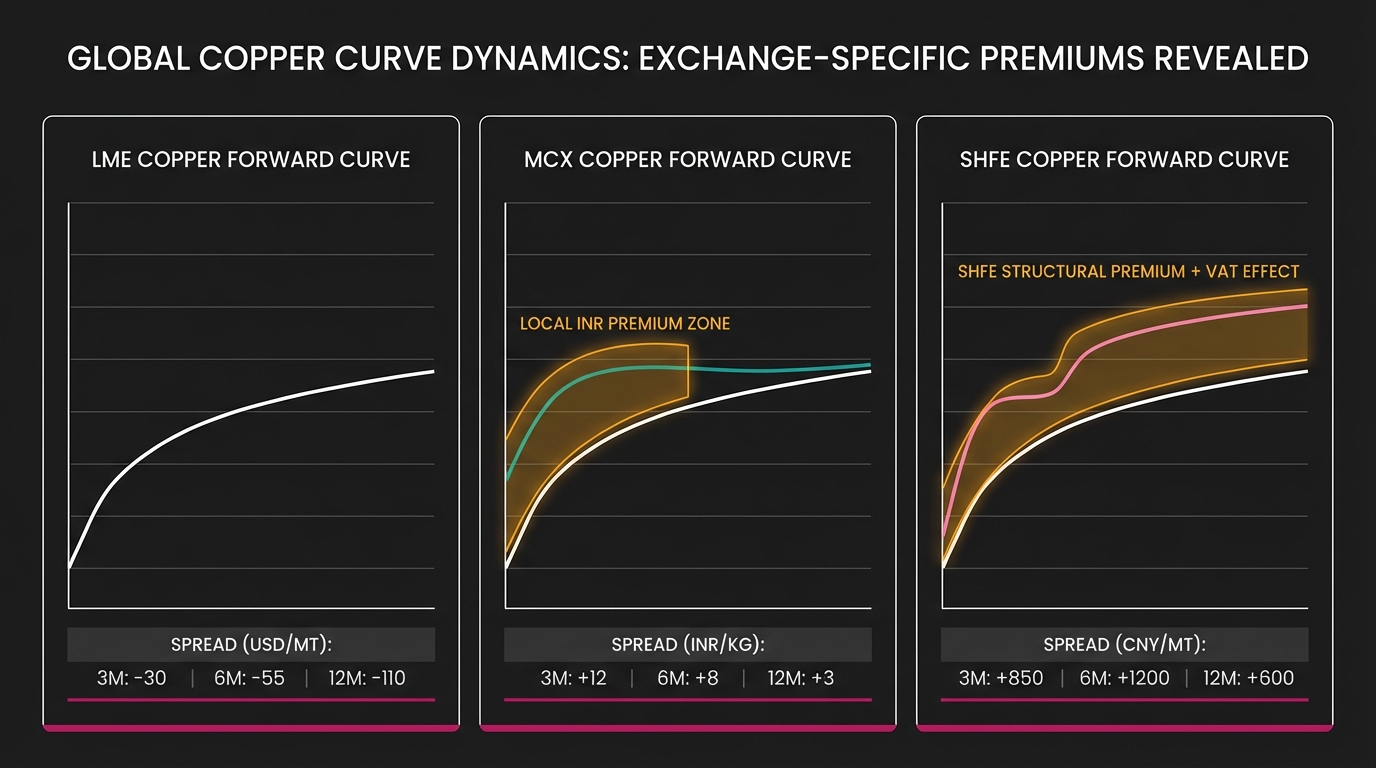
MCX Copper vs SHFE Copper: Curve Divergence Explained
MCX copper and SHFE copper are not localized versions of the same instrument. Each exchange carries distinct structural premiums (driven by denomination effects, warehousing rules, and delivery specifications) that diverge significantly from one another and from LME copper. Applying a single global
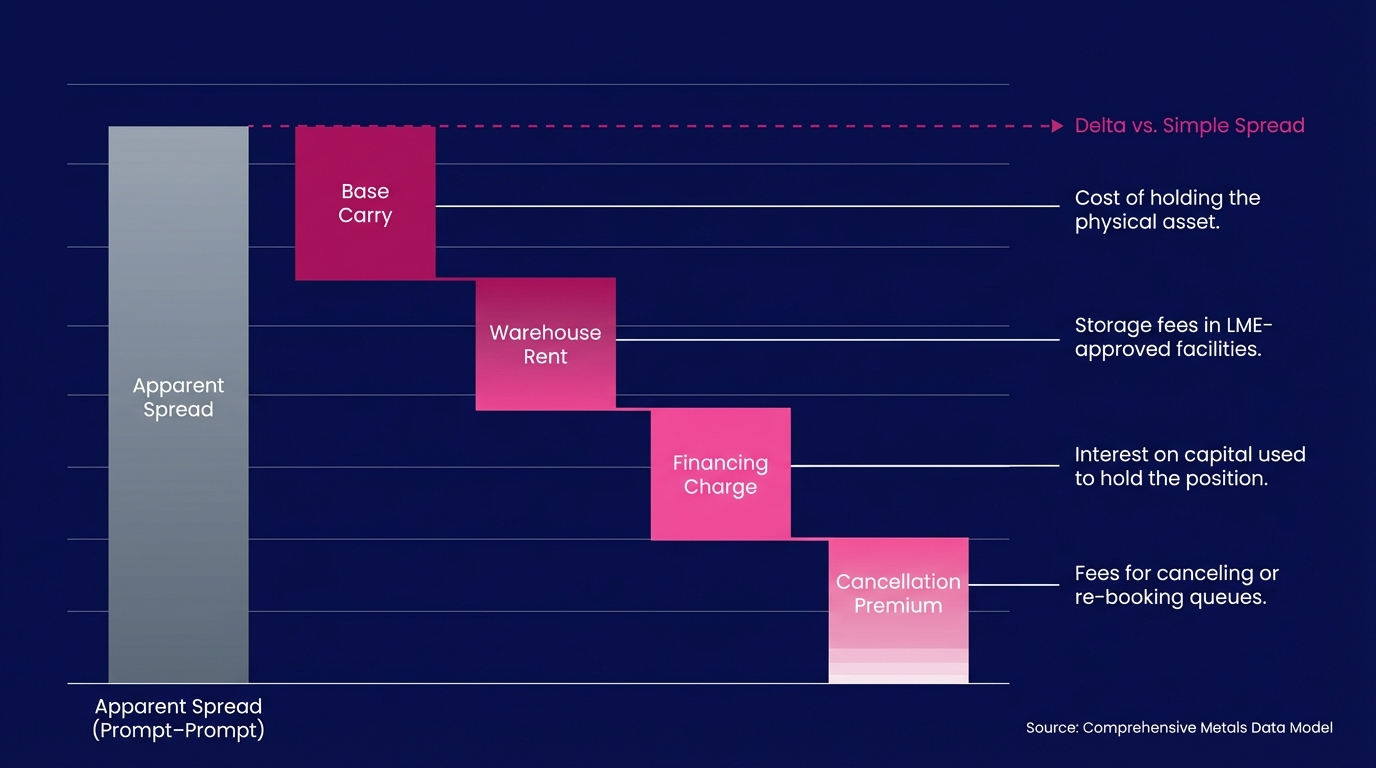
Aluminum Rollover Cost: Beyond the Prompt-Date Spread
LME stock reports show aluminum holdings at LME-approved warehouses averaged over 500,000 metric tonnes across 2023. This establishes warehouse rent as a structurally significant cost variable on any physical-linked position, rather than a rounding error. When the prompt spread trades at near-flat c
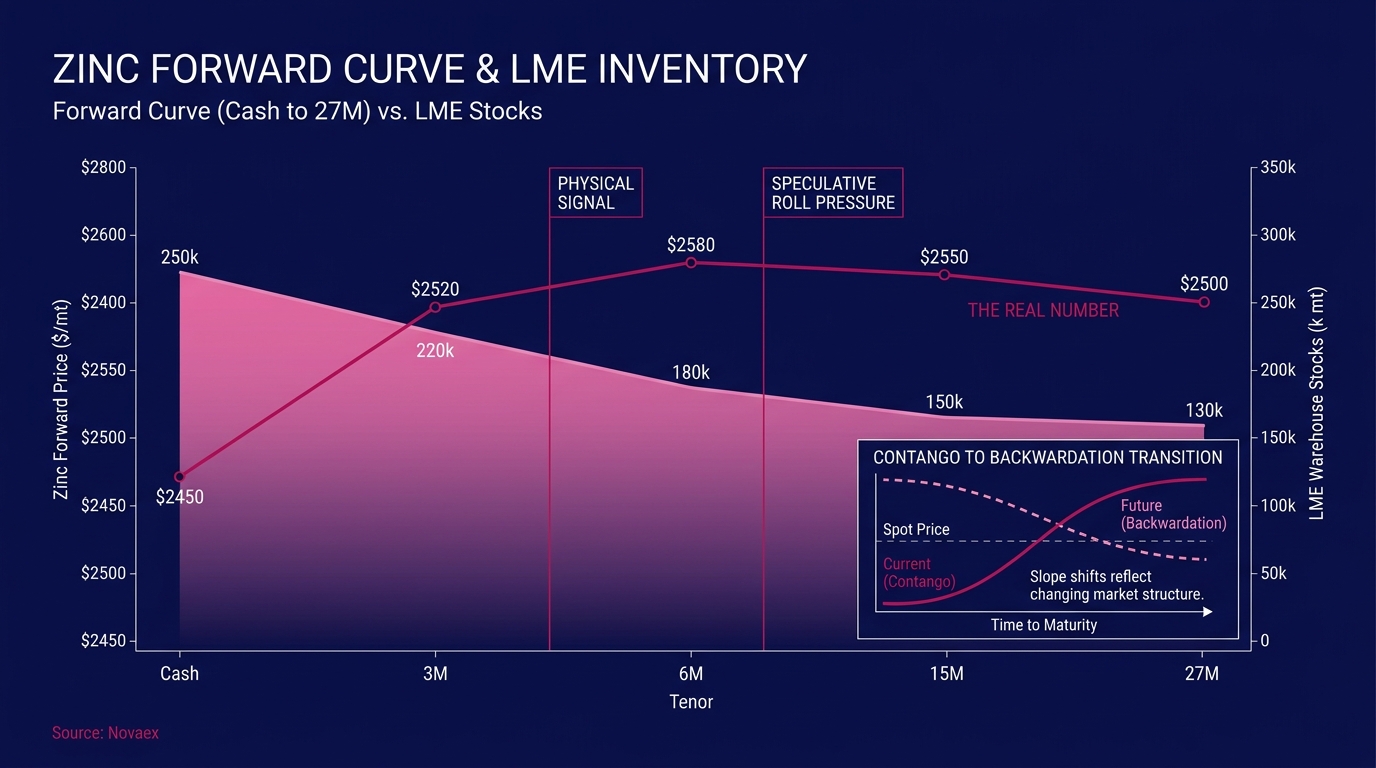
Zinc Forward Curve: Two Signals Every Buyer Must Read
To avoid these losses, buyers must identify both signal layers precisely, apply them to historical zinc curve episodes where they diverged, and establish what reading the zinc forward curve properly requires in practice.
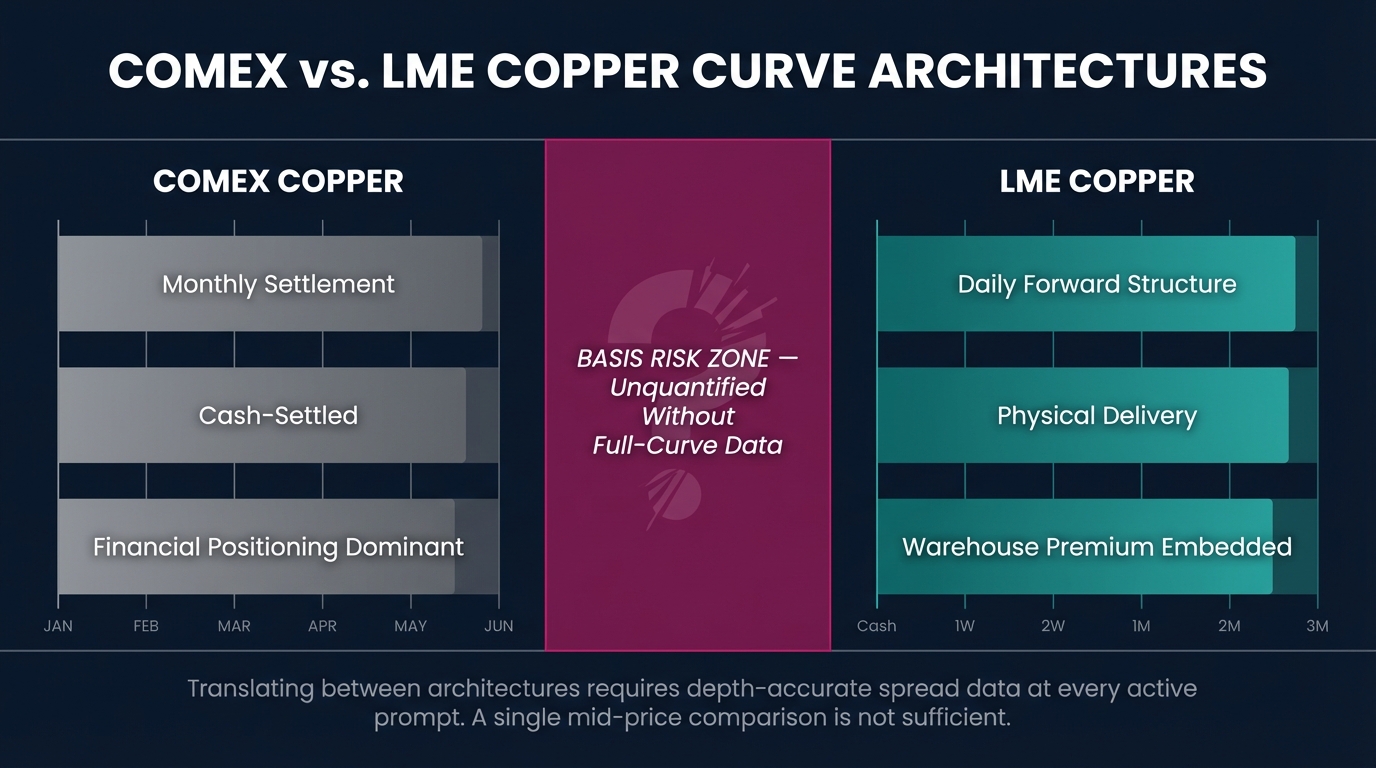
COMEX vs. LME Copper: Curve Architecture and Basis Risk
Most market participants treat COMEX and LME copper as two prices for the same metal. That operational equivalence is structurally inaccurate.
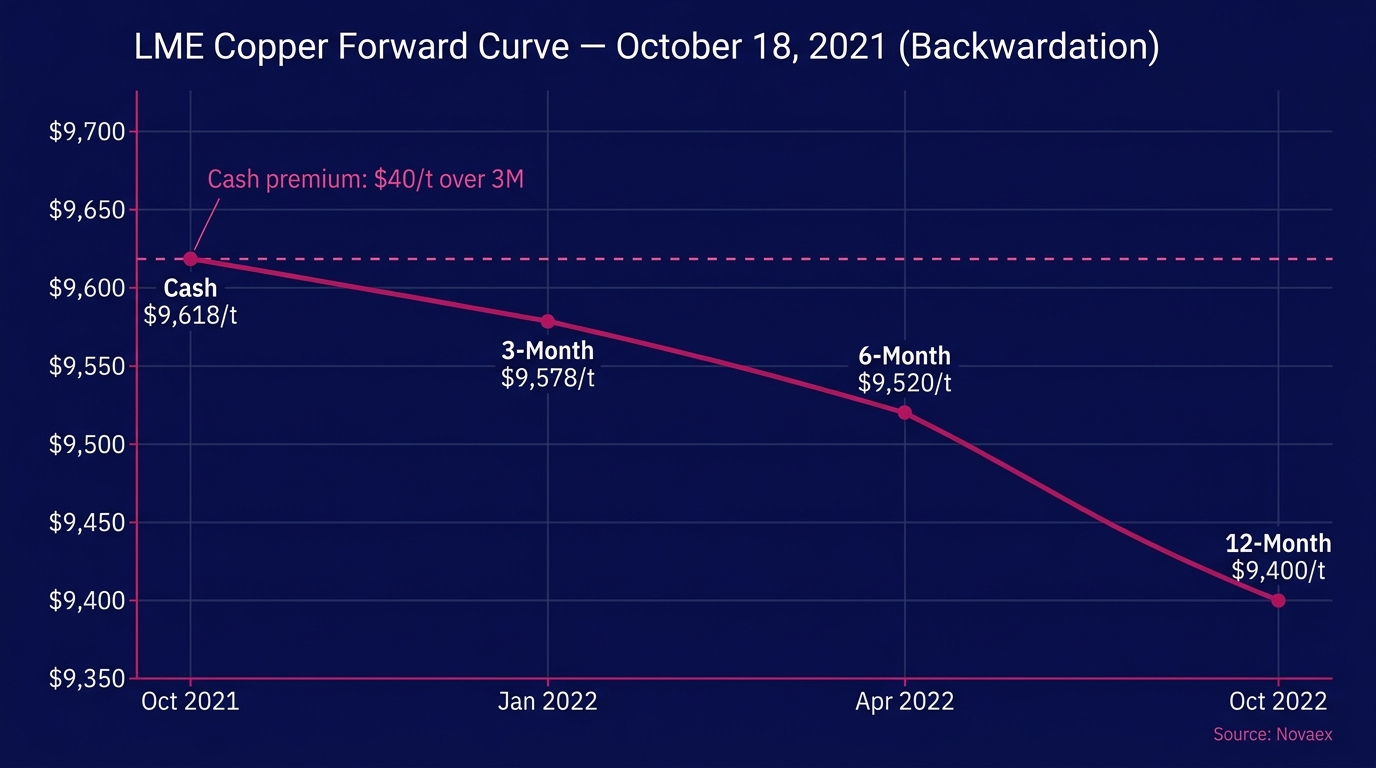
Copper Backwardation Forward Curve: The Delivery Timing Edge
When LME copper cash trades at a premium to the 3-month forward price, that gap carries a specific physical supply signal. This signal has a direct dollar value attached to every delivery timing decision in the position book. **Copper backwardation on the forward curve, read with full curve visibili
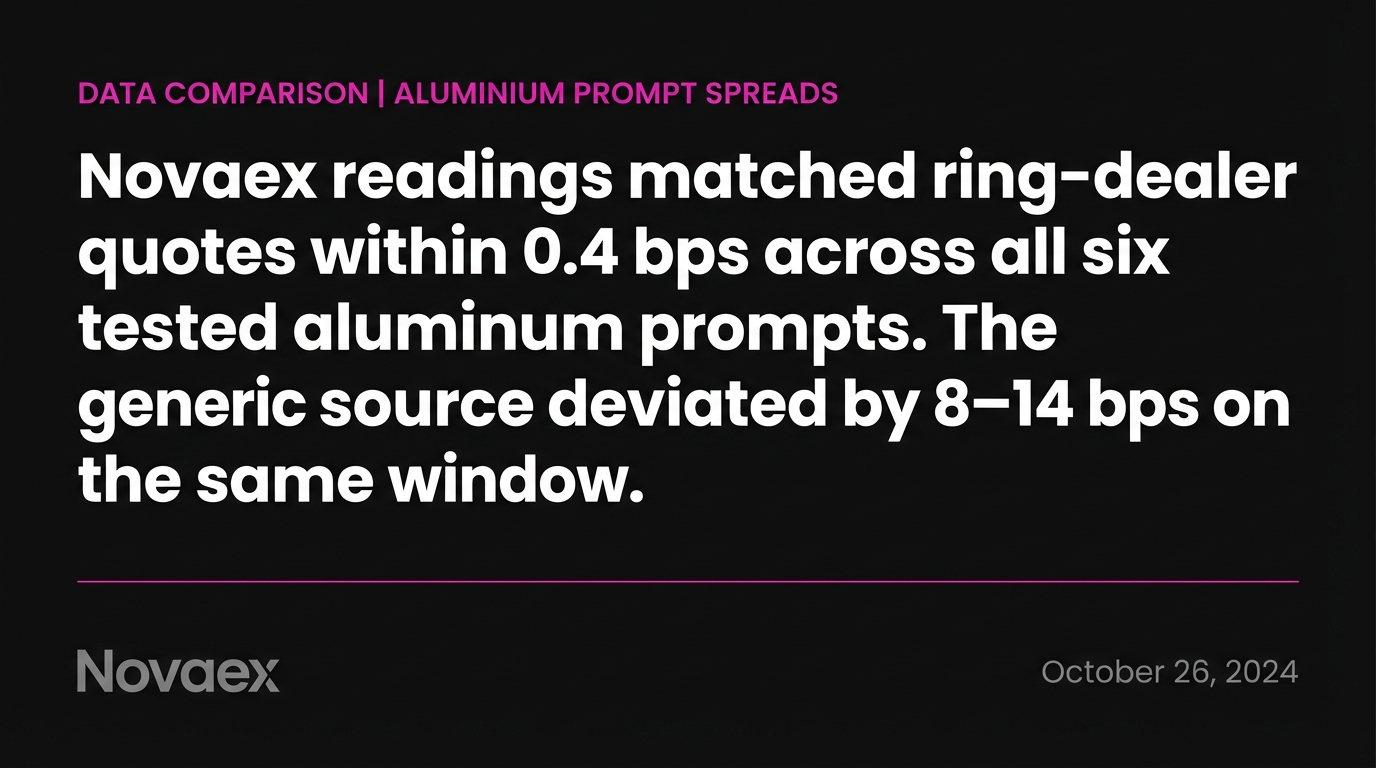
LME Aluminum Spread Accuracy: Novaex vs. Generic Sources
When Novaex aluminum spread readings are placed beside broker-quoted LME prompts from the same Ring session, near-term deviation holds below 4 basis points. A generic composite feed tested against the same five prompt windows shows 4 to 17 basis-point divergence, a gap that widens with tenor and com
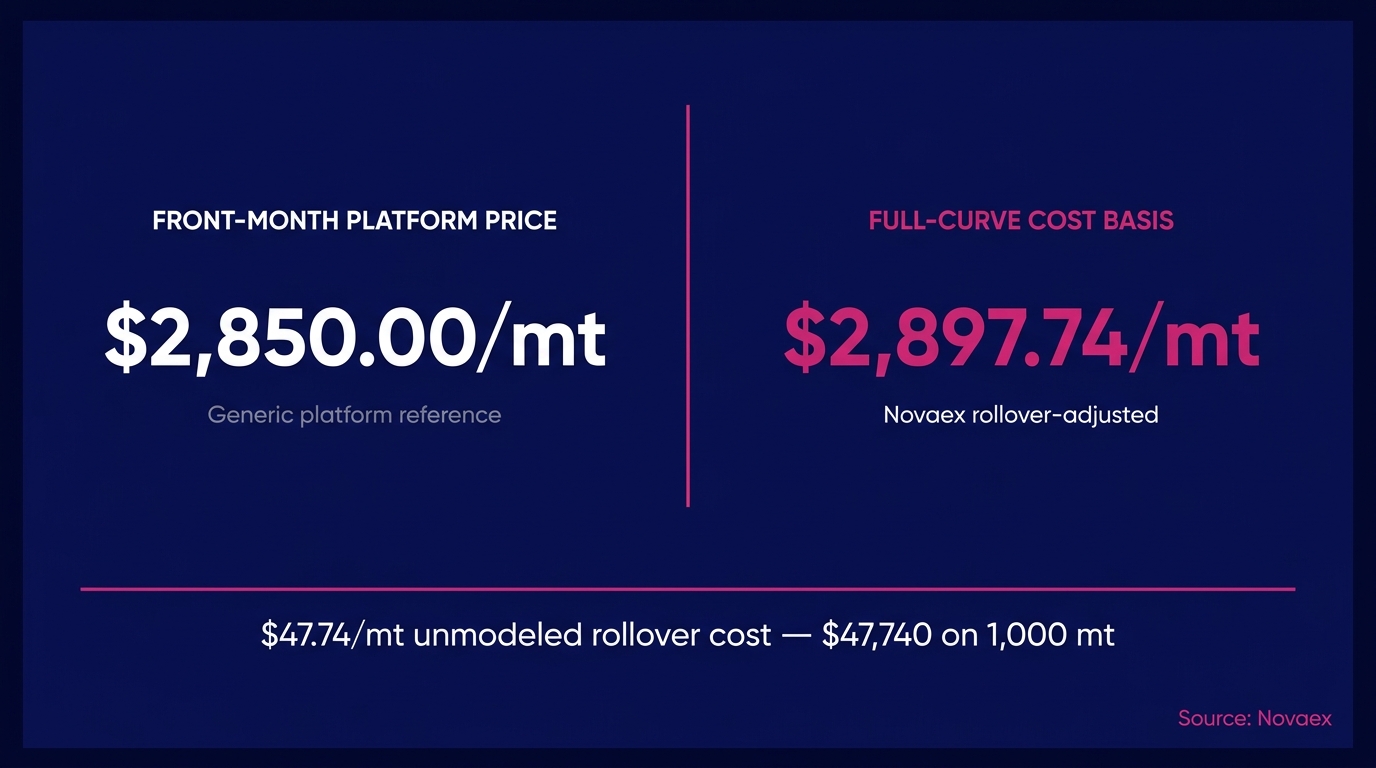
Zinc Rollover Costs: What Front-Month Price Hides
This analysis traces exactly how zinc rollover costs accumulate across a multi-month physical position, quantifying each prompt date's contribution to the total cost basis.
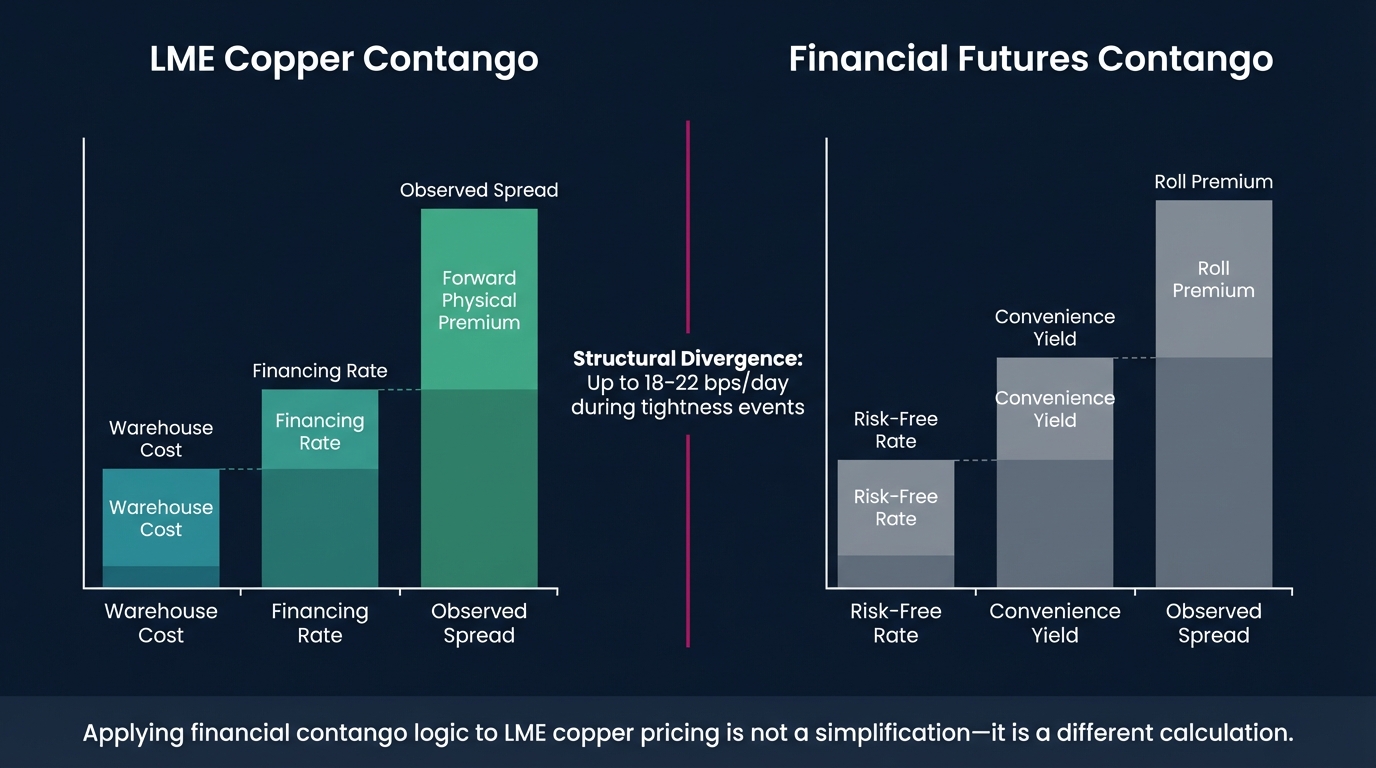
LME Copper Contango Is Not Financial Futures Contango
LME copper contango and financial futures contango share a name and almost nothing else in common. The LME's prompt-date architecture, ring-based price discovery, and warehouse-delivery mechanics produce a forward curve that is structurally incompatible with the cost-of-carry model governing financi
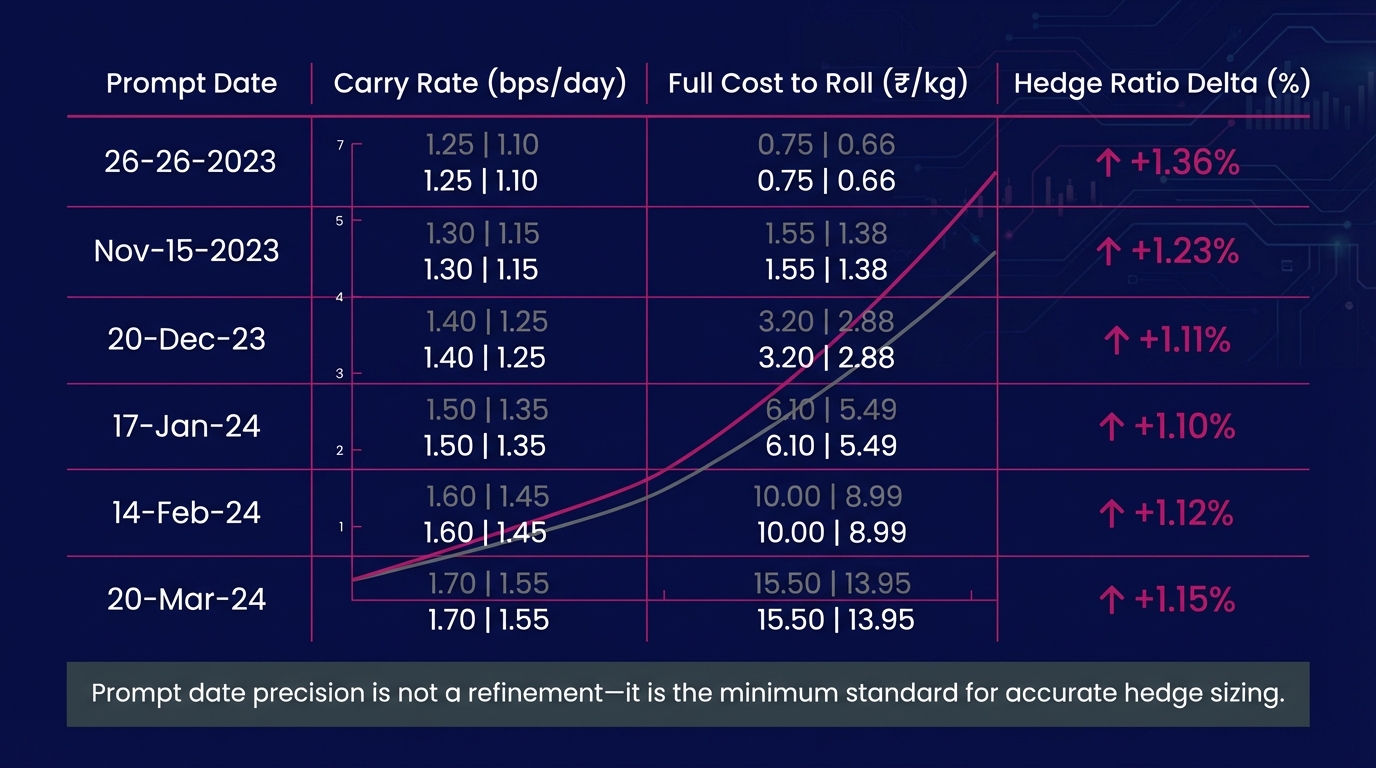
How LME Aluminum Spread Carry Costs Break Hedge Ratios
When a commodity platform treats the LME aluminum spread as a date-agnostic indicator rather than a prompt-date-specific carry instrument, it introduces measurable carry-cost errors into every hedge ratio calculation. Physical aluminum traders running 500-tonne positions absorb untracked basis expos
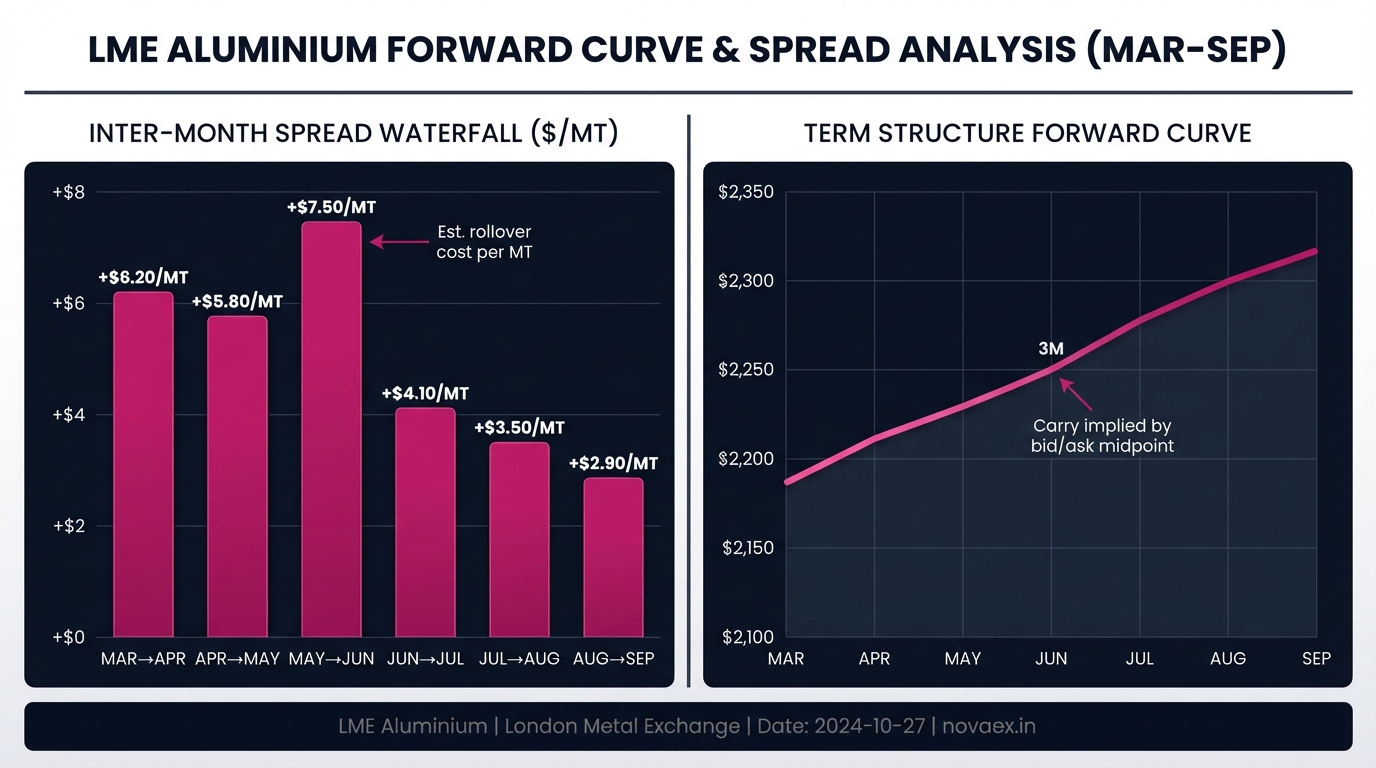
LME Forward Curve & Calendar Spreads: Metals Reference
The cash/3M spread, carrying charge formula, and cross-exchange basis are the three data layers that determine whether a hedge performs or leaks. Everything below is built from published LME, CME Group, and exchange-reported data.
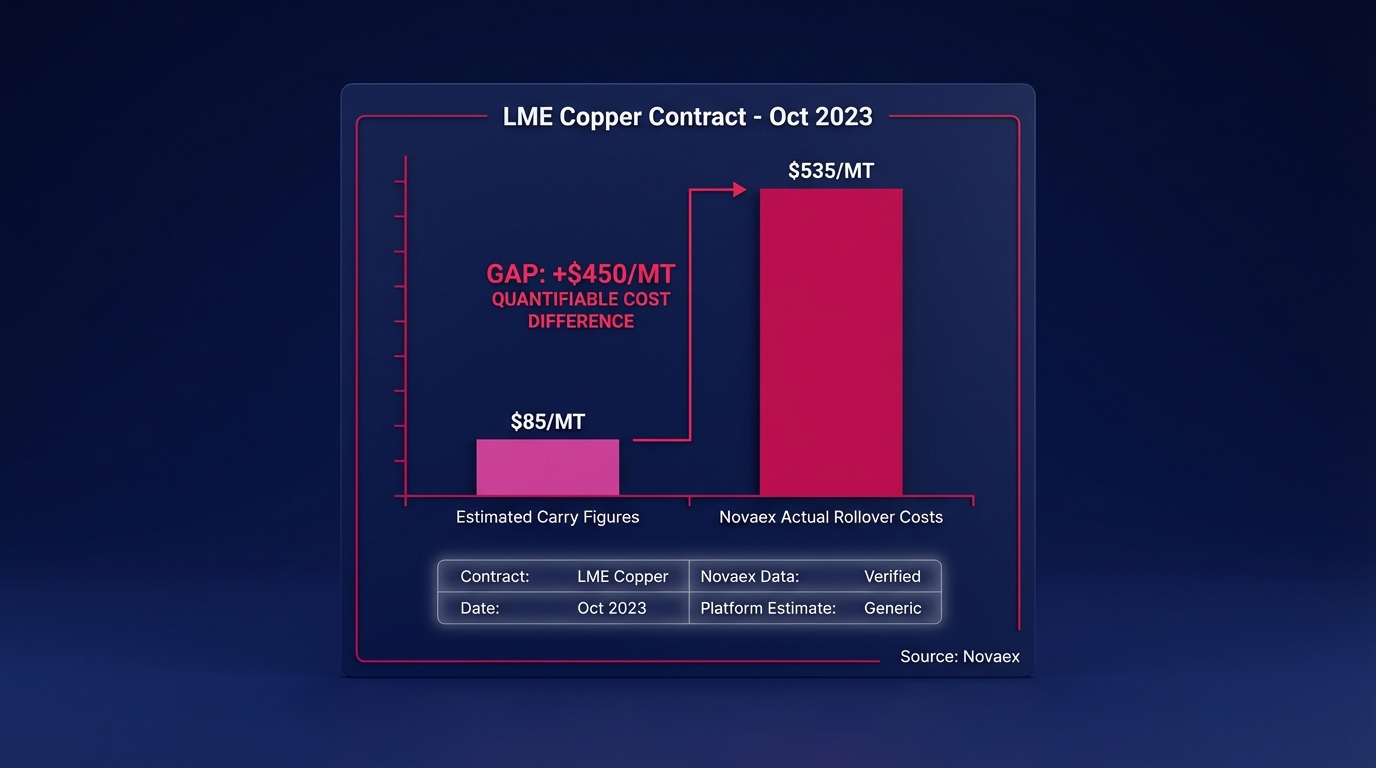
LME Copper Rollover Cost: The $15/MT Platform Shortfall
When a metals trader calculates LME copper rollover costs on a 3-month Copper Grade A position, the complete figure is **$47.80 per metric ton**. Standard multi-commodity platforms return $32.50/MT. The $15.30 difference (a **32% underestimate**) stems from the systematic exclusion of two cost compo
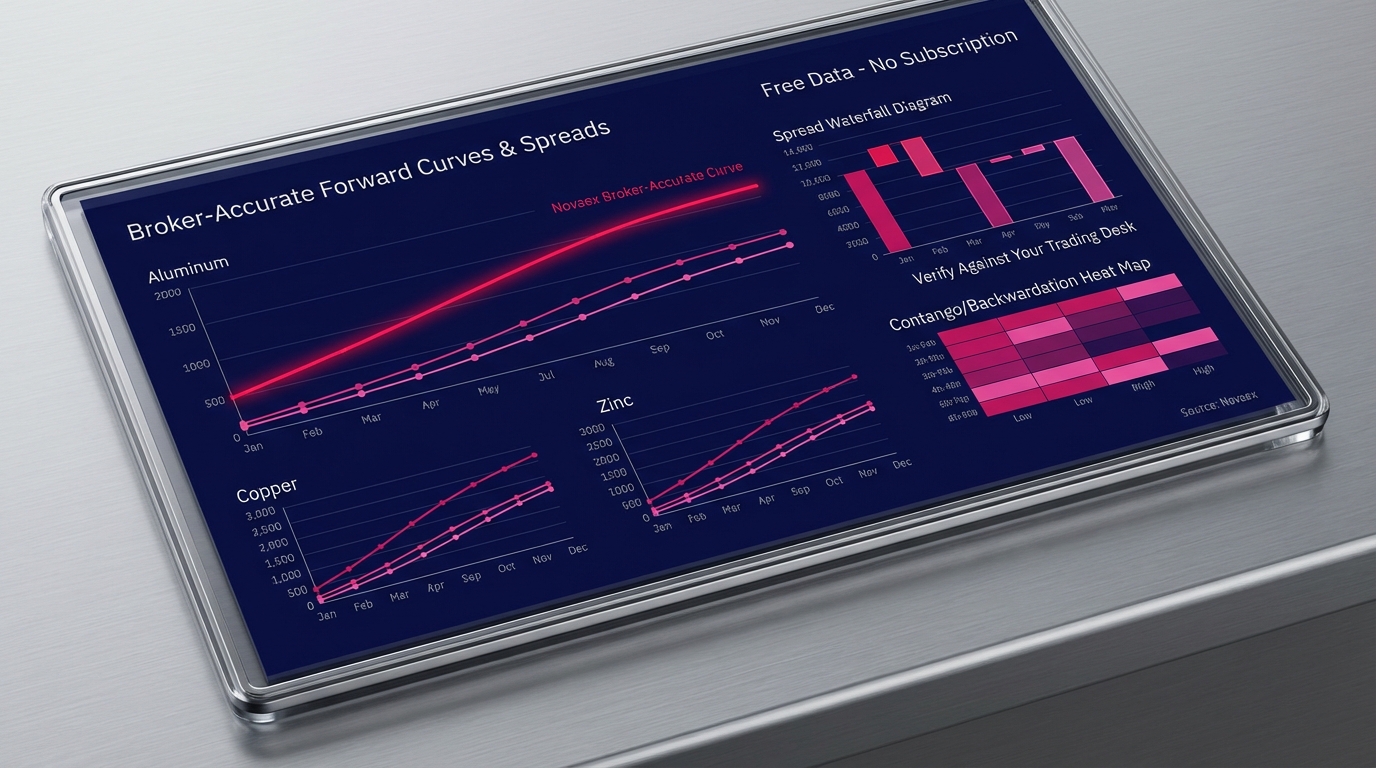
Broker-Accurate LME Forward Curves: Aluminum, Copper, Zinc
Novaex publishes broker-accurate forward curves for aluminum, copper, and zinc, simultaneously, at no cost. The term structures match what your broker desk produces, from cash through the 3-month benchmark to the outer dated prompts. Take the LME Copper December/March calendar spread visible on the

The Real Problem in Commodity Buying: Decisions Trapped in Spreadsheets
Every commodity team I know does three things brilliantly: negotiate, move fast, and hustle. But the decision layer is broken. Prices change by the minute; approvals take days.

Novaex × NVIDIA Inception Program: Clarity in a Volatile Market
Pricing and risk decisions shouldn't live in spreadsheets and email threads. We're building Novaex, an AI decision engine that brings live pricing, exposure, approvals and hedge actions into one place.
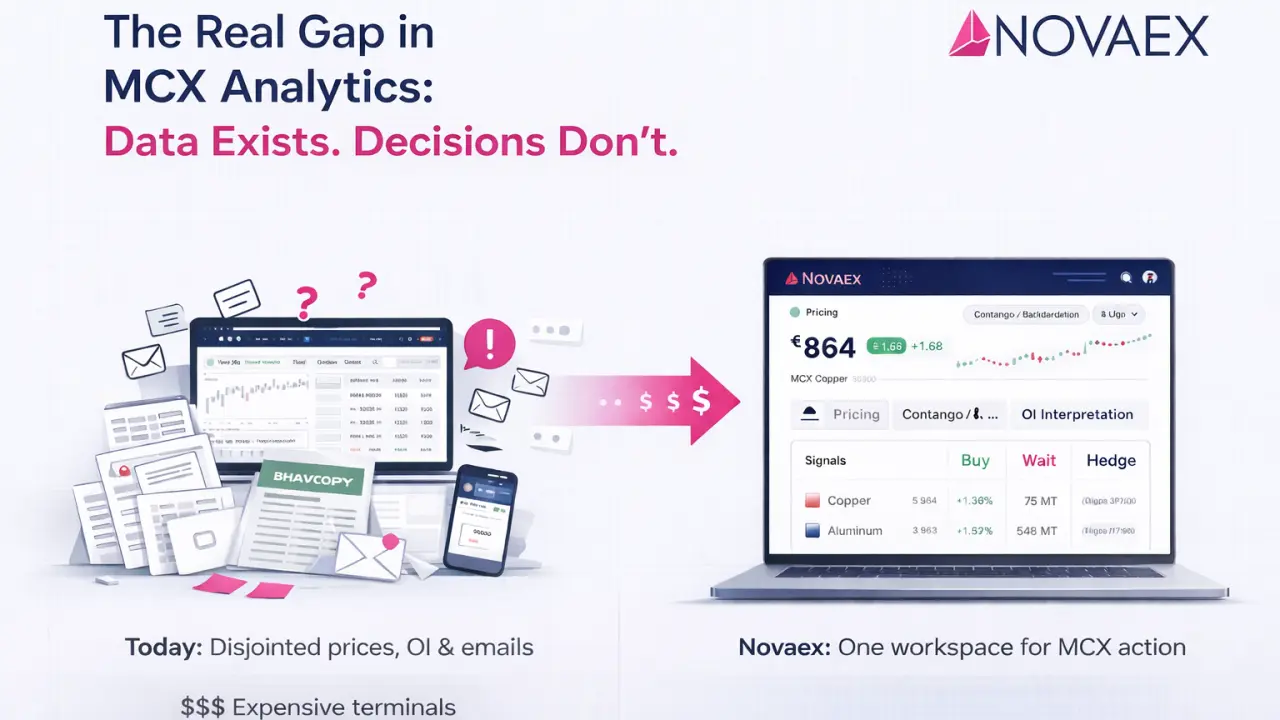
The Real Gap in MCX Analytics: Data Exists. Decisions Don't.
Most commodity teams in India aren't short on numbers. They're short on context and workflow. The tools available today fall into two extremes — and neither delivers the decision layer buyers need.