Backwardation: what changes when you are long vs short physical
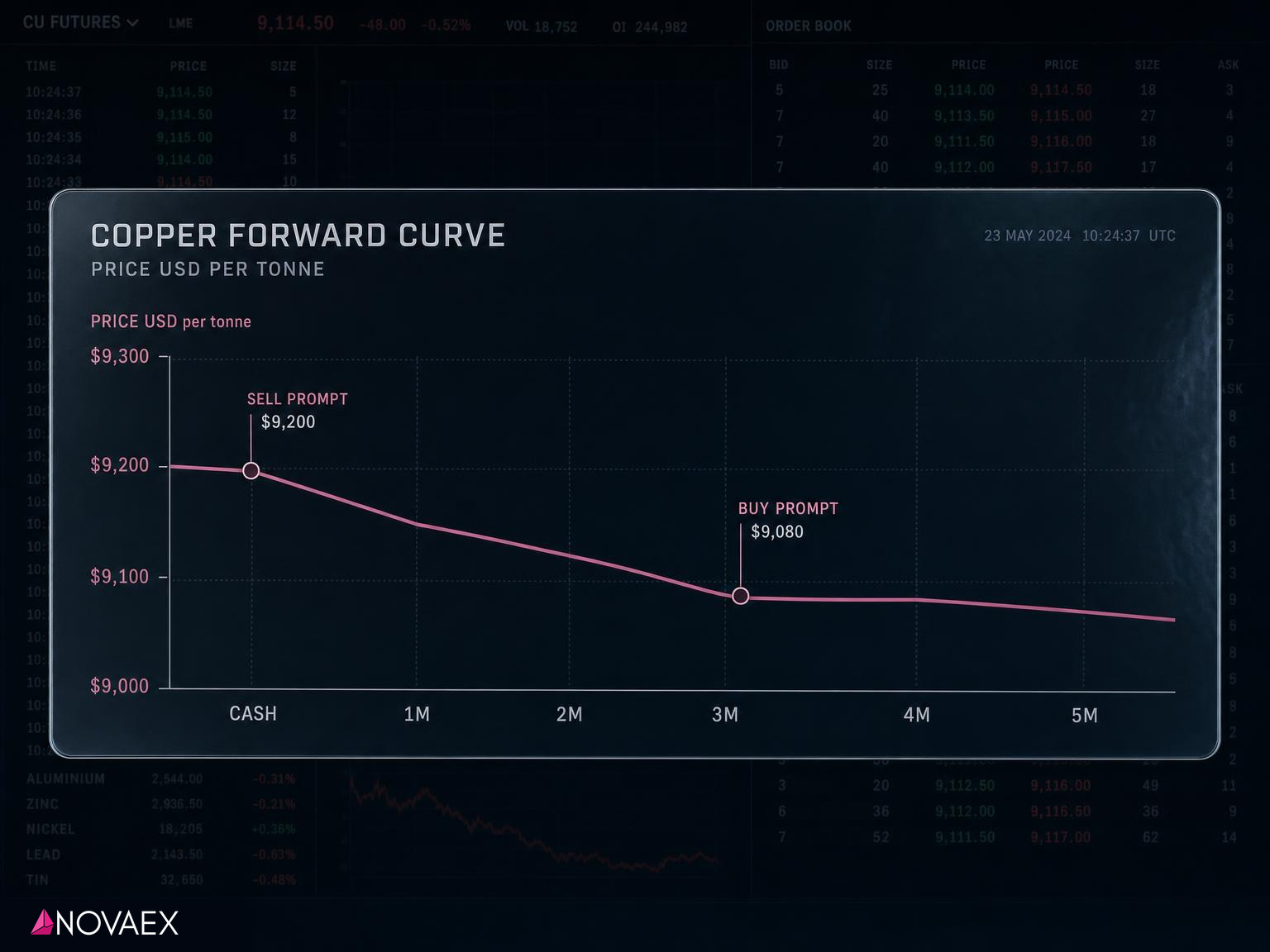
Long physical sells prompt. Short physical covers prompt. The carry arithmetic behind both calls.
Backwardation pays you to sell now and charges you to wait. If you hold physical metal, it discounts every tonne you carry into lower forwards. If you are short physical, it charges you for every day you stay uncovered. Name your side before the desk opens and the action is settled.
What does backwardation mean for a physical book?
Backwardation means cash trades above the three-month price. The market pays a premium for metal now and discounts metal for later delivery.
For a physical book, that shape is a carry bill. A cash to three-month spread of plus 120 dollars reads as 120 dollars per tonne to carry metal from prompt to three months out, before warehousing and finance. The October 2021 copper squeeze showed how far this can run, with the cash to three-month spread reaching plus 1,100 dollars per tonne during a warrant concentration event.
The rule most desks absorb is only half of it. Backwardation is good for longs is wrong. Backwardation is good for selling and hard on carrying, whichever side you started on tells you what to do next.
What should you do if you are long physical?
If you are long physical, sell prompt and keep stocks light.
You own metal priced at cash. Every forward sale prices below it. Take an illustrative book to see the drag, labelled illustrative: cash 9,200 dollars, three-month 9,080 dollars, spread plus 120 dollars. Hold 100 tonnes for three months and sell forward and you book about 12,000 dollars less than selling the same metal for cash today, before rent and interest.
Your short futures hedge does not fix this. It locks the price, not the curve. Rolling that short forward in backwardation can show a small benefit on the futures leg, and that benefit fools desks into holding the physical longer. Do not. The physical discount runs against you the whole time you carry.
So the call is SELL PROMPT. Price fresh sales against cash or the nearest prompt you can deliver. Do not push tonnage into deferred months to chase a higher number. There is no higher number in backwardation.
What should you do if you are short physical?
If you are short physical, cover prompt and do not stay rolled.
You have sold metal you must still source. Cash is the expensive end. Every day you stay uncovered you face buying high to meet a sale priced off a lower forward. Your long futures hedge carries the same pressure. Take the same illustrative curve: long 100 tonnes of three-month cover against a short physical sale, rolling it at plus 120 dollars, carries about 12,000 dollars of roll cost per cycle if the shape holds.
Waiting for the curve to flatten is waiting on someone else's warrants to release. Cover the physical in the prompt window. Buy cash or the nearest dated contract you can take delivery against. Close the gap line by line against broker confirmations before the next quotation period sets.
So the call is BUY PROMPT. Pay the nearby price once rather than paying the roll repeatedly.
Why pay the certain carry rather than wait for the curve to turn?
Because the certain small loss beats the conditional large one.
Desks know this instinct already: pay to roll, pay to borrow metal, pay tom-next to stay square, rather than hold an uncovered short into a tightening prompt. That instinct is right in backwardation. The October 2021 event moved hundreds of dollars per tonne across single sessions. No timing call covers that tail.
This is where the working matters. LME and MCX live on screen; COMEX and SHFE computed into the cross-exchange arbitrage view. Check the cash to three-month spread and the tom-next rate on the day, match physical, hedge and broker books to the same prompt, and square it before month-end finds it for you.
Worth closing before the window shuts.