Margin calls on metals hedges: reading exposure before the broker does
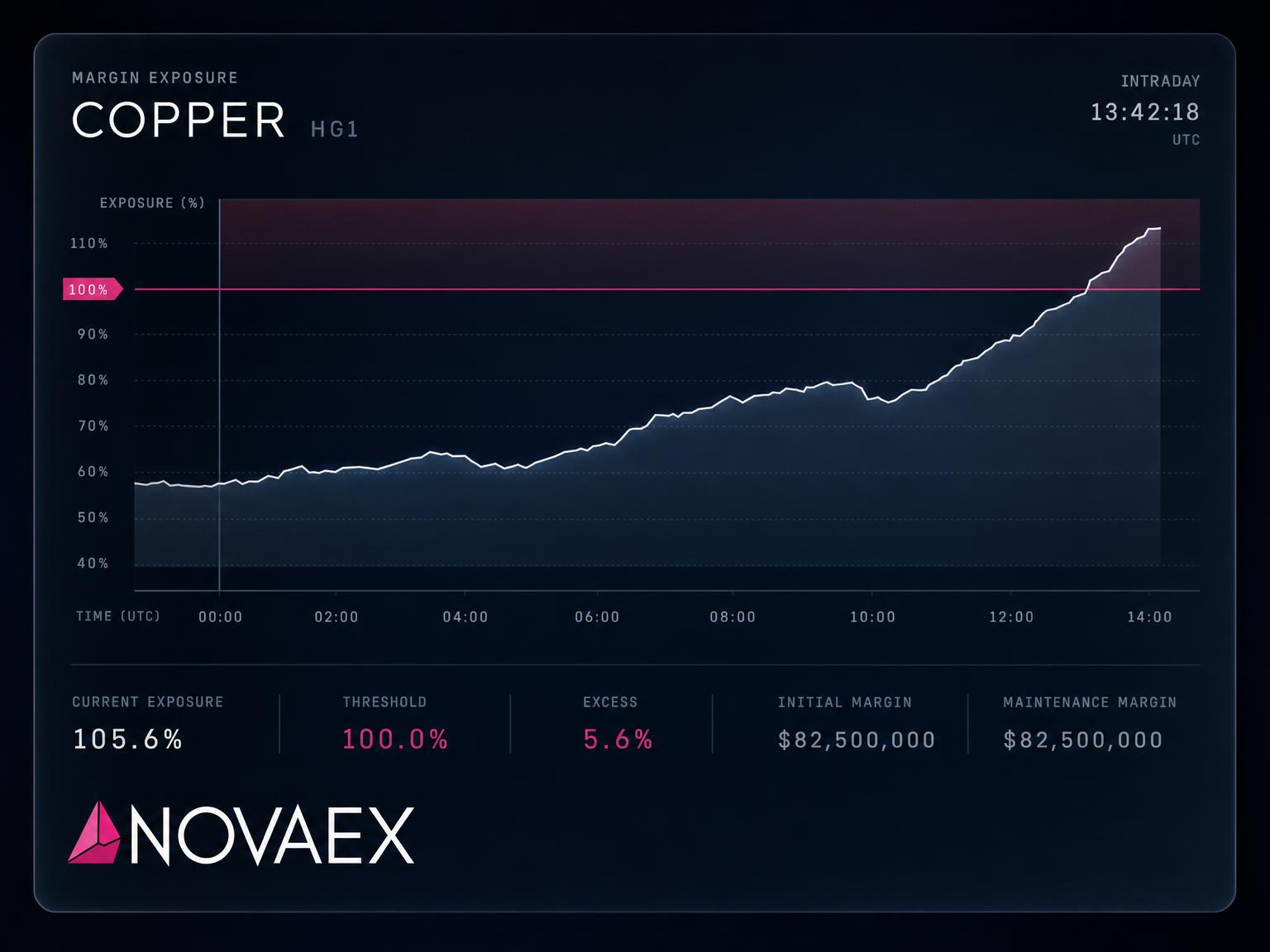
Hold your own line below the broker's, read distance to it before the desk opens, and act on the cross.
The broker's call lands at 10:15. The exposure crossed at 06:40.
A margin call means the hedge account can no longer carry the loss the market priced in, so the broker asks for funds or closes risk. Read it early by holding your own line below theirs, measuring distance to it before the desk opens, and acting on the cross. That read turns the call from a surprise into a decision.
What actually triggers a margin call on a metals hedge?
A margin call on a metals hedge is triggered when adverse price movement pushes the account below the level that carries the position. The broker then asks for additional funds, and the call can arrive intraday when volatility is high. Unmet calls leave the position open to being reduced or closed by the broker.
Two balances sit behind that call. Initial margin is the collateral held against the risk the position could move. Variation margin is the daily mark to market that moves cash as prices move. The LME's introduction to margins sets out both, with variation assessed to cover adverse moves and calls possible at any time under its framework.
A sharp overnight move in copper is enough. The short that looked comfortable at the close needs more collateral by morning, and when volatility runs the broker does not wait for the close. Schwab's guide to how futures margin works describes intraday calls during trading hours and the consequence that matters: positions left uncovered can be reduced or closed.
Physical timing makes the exposure jump. Tonnage sold forward against one quotation period and hedged against another moves the hedge account while the physical sits still. The call reads as a funding event. Its source is a mismatch the desk can name, which is why the exposure read starts from the position, not from the cash.
How do you read distance to the threshold before the desk opens?
Distance to the threshold is the gap between current exposure on the hedge account and the level that triggers the broker's call, read at one fixed clock before the desk opens. The desk holds its own line below the broker's and treats touching its own line as the decision point. One number, one timestamp, per metal.
Three lines on one panel. The broker's line, your line below it, and where exposure sits now with a timestamp. Say 38.4 t of copper sold forward against a December LME short: the panel reads the hedge book against LME and MCX live on screen, with COMEX and SHFE computed into the cross-exchange view, and prints distance to your line at 06:40.
Where the broker's line sits for each hedge account.
Where your line sits below it, fixed and named.
Where exposure sits now, timestamped, per metal and contract.
Copper and aluminium do not share a line. Volatility, prompt structure and quotation periods differ, so the distance that feels safe on one misleads on the other. Set the internal line per metal and contract, and read each the same way.
Setting your line is a judgement about lead time, not a formula. It sits far enough below the broker's that the desk gets hours to fund or trim, and close enough that it does not cry wolf on ordinary noise. Overnight gaps, quotation-period mismatch and the time funding takes to move all push it lower. Read at the same clock every day and the number is comparable. Read at random times and it is noise.
What do you do at the point it crosses?
At the point exposure touches your own line, you fund, trim, or reshape the hedge before the broker acts. Funding covers the call. Trimming cuts the position that draws it. Reshaping moves cover to the contract that carries less stress. The desk picks one, names the contract and the venue, and gives it a time.
Crossed at 06:40, the call is explicit. Cut a stated tonnage from the December LME copper short before 07:30, or shift that cover into the prompt that matches the physical quotation period. Which contract, which venue, when. Stated before the market settles it, not described after.
The cross is not analysis hour. The work was done when the line was set. At the cross the desk executes the named move and logs the timestamp, so the trail shows the decision point rather than the broker's call.
The broker's threshold protects the broker. Your threshold protects the desk. Set yours below theirs, read it before the desk opens, and act on the cross. Set it at 06:40 and the 10:15 call stops being a surprise.