Negative Zinc Treatment Charges: Which TC Is Your Book Carrying?
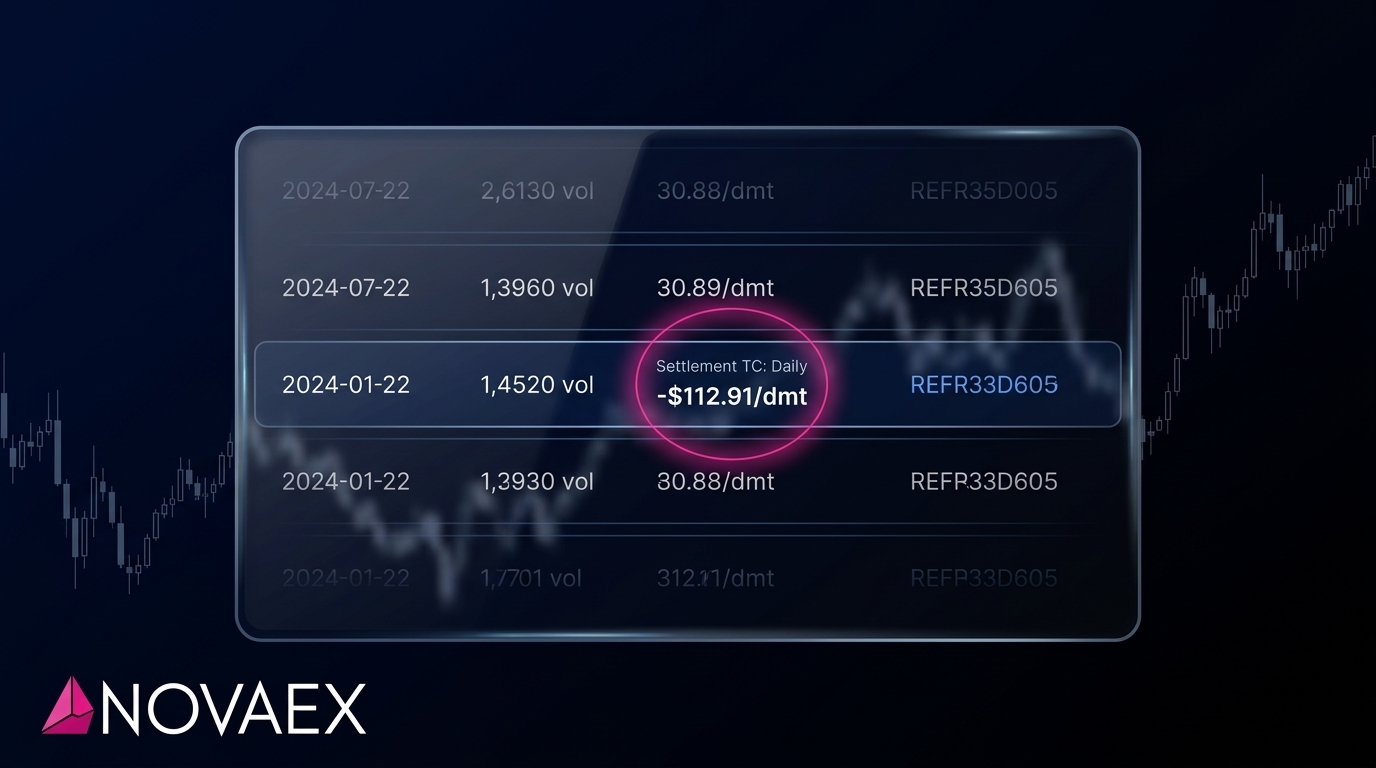
Benchmark at $85, spot near minus $110. Two readings side by side, and what risk and treasury should square before the close.
Benchmark says $85 a tonne. Spot says minus $110 and worse. If treasury values concentrate payables on the wrong one, the hedge cover reads whole while the physical underneath it is not — and the month-end position misstates both.
What does a negative zinc TC mean?
A treatment charge is the discount a smelter deducts from the metal price to process concentrate into metal. When the charge prints negative, the smelter pays to secure feed instead of being paid to process it. That only happens when concentrate is scarce and smelters and traders bid against each other for the same units. Negative TCs favour the mine. They squeeze the smelter.
Why is spot near minus $110 while the benchmark sits at $85?
The $85 per dry tonne annual benchmark covers term tonnes under annual contracts. The spot market for imported concentrate into China cleared far below it. Fastmarkets put spot CIF China at $(100) to $(135) per tonne on 28 August, with smelter purchases at $(100) to $(125) and trader purchases at $(125) to $(140) record-low spot assessment. Against an $85 benchmark, a spot print of minus $100 to minus $135 leaves a $185 to $220 gap on the same tonne — $85 minus minus $100 is $185, $85 minus minus $135 is $220.
The split tells the story. Reported deals included Dugald River units at $(125) and Buenavista at $(135) same Fastmarkets assessment. Fastmarkets started publishing smelter and trader assessments separately that week because the two bids had diverged. Traders paid more negative numbers to hold book ahead of winter stockpiling and possible South American weather disruption, while smelters held near $(120) and worked through earlier feed.
Into October the pressure stayed on. SMM noted smelters unwilling to cut further as margins squeezed, with South American containerised offers around minus $130 to minus $140 per dry tonne and New Century near minus $160 SMM weekly review. A separate October market read put imported TCs near minus $110 against the $85 benchmark October zinc market read.
Tight concentrate, winter stockpiling and softer sulphuric acid prices together explain it. Blockades, mine-safety curtailments and winter buying held availability tight, while acid credits stopped covering the gap supply detail.
Which TC is your book actually carrying?
Most producer books carry two at once. That is where the misstatement starts.
Reading Level in late August to October What it prices
Annual benchmark $85 per dry tonne Term tonnes under annual contracts
Spot CIF China $(100) to $(135) per tonne What the next imported parcel actually costs to place
Your contract terms Minimum volume at benchmark-linked terms What treasury may have booked
If the physical book is marked at $85 while replacement feed clears at minus $120, the concentrate payable is understated and the smelter margin reads better than it is. If the hedge book assumes benchmark-linked feed cost into a quotation period that will settle on spot-linked parcels, coverage reads whole and is not. The board sees a protected position. The desk holds an open one.
For a producer treasury hedging approved production under board policy, that gap is audit-relevant. Policy says hedges match physicals. The TC decides what the physical is worth.
What should risk and treasury check this week?
Four checks. Each takes one afternoon with the trail in front of you.
- Price each parcel on its own terms. Split term tonnes from spot top-ups. Mark spot parcels at the spot print for their loading month, not at the benchmark. Note silver and germanium payables beside the TC. The 2026 benchmark introduced germanium payables for the first time benchmark detail, and high-silver parcels change the economics parcel by parcel.
- Match hedges to the right quotation period. A hedge placed against a benchmark-priced physical that arrives a month late on spot terms is two exposures, not one. Check the purchase QP against the sale QP and the hedge QP, line by line.
- Reconcile three books, not one. Physical, hedge and broker confirmations each carry a different TC assumption. Bring all three into one view and square the TC field first. The tonnes reconcile after the price term reconciles.
- Test the smelter-margin read. Negative TCs plus softer sulphuric acid prices put some smelters near cash loss in late August margin read. If your margin model still uses $85, rerun it at the spot print and take the lower number to the board.
Do negative TCs force smelter cuts? Some trimmed rates in mid-2026, but broad cuts need both TCs and byproduct prices to stay weak together. Chinese smelters kept running through negative prints because cutting hands share to the smelter that does not operating detail. Watch operating rates, not headlines.
Square the two readings before the close, and the rest stays a correction. The trail, line by line, is what lets you prove it.