Proving hedge coverage against board policy without waiting for the close
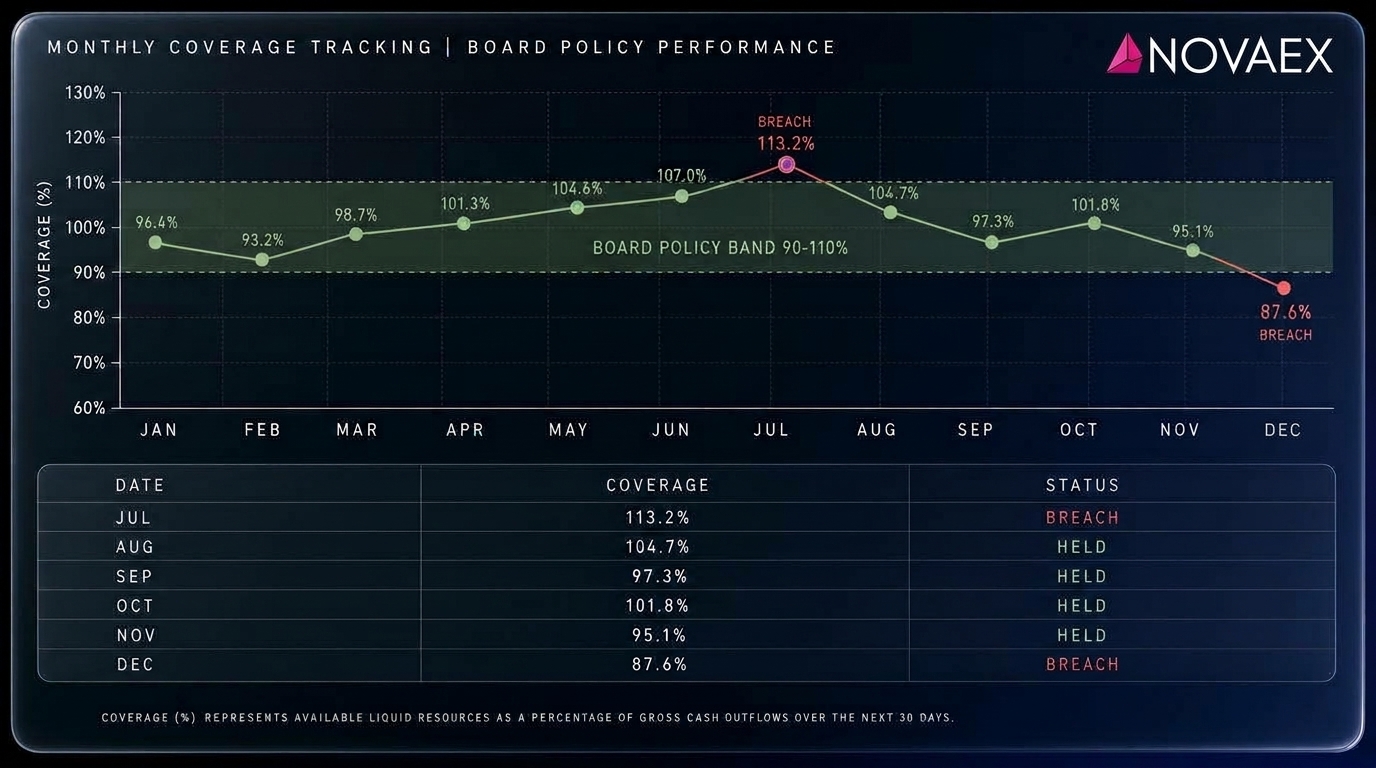
Board policy sets the band. An intra-month coverage read proves you held it.
Board policy sets a coverage band for approved production. Proving you held it mid-month takes hedged tonnage divided by approved physical tonnage, both cut to the same quotation period, with broker confirmations matched line by line. Done that way, a breach is a decision the same morning, not a variance at the close.
Why does the board only see coverage three weeks late?
The board sees coverage late because the three books meet late. Physical tonnage sits in the CTRM or ERP. Hedges sit with the broker. Confirmations arrive on their own schedule. Someone joins them in Excel at the close.
That timing decides what you can say in the room. At month-end you can explain where coverage sat. Mid-month you cannot prove it. Tonnage that moved, a quotation period that rolled, a hedge placed against a physical that has since changed shape — all of it waits until the close to surface. By then the only question left is how to word the variance.
What does an intra-month coverage read actually take?
An intra-month read takes four inputs cut to the same date and the same quotation period: approved production under policy, committed and shipped physical, hedge fills by contract, and broker confirmations matched to those fills.
Cut to the same quotation period is doing most of the work. Coverage by month flatters. Coverage by quotation period tells the truth, because that is where the sale prices. Donald Douglas and Emma Jenkins put the policy point plainly in LBMA Alchemist: commit only production truly available for delivery, match hedge terms to sale terms, and treat 50 to 60 percent cover as high against the 70 to 80 percent commitments that marked past failures. A read that ignores those cuts will show you inside the band while a single quotation period sits outside it.
The rest is matching discipline. Each hedge fill ties to a physical parcel and to a broker line. LME and MCX prices sit live on screen; COMEX and SHFE are computed into the arbitrage view. The trail runs line by line, so audit can follow any tonne from policy to fill to confirmation without a second spreadsheet.
How do you know you have breached the band?
You have breached when hedged tonnage divided by approved tonnage for any quotation period prints outside the board band. One ratio per quotation period, tracked across the month.
Draw the band across the month and plot coverage against it. Inside reads as held. Outside reads as a breach for that quotation period, even if the monthly average still looks neat. That is the chart worth keeping on screen: the band is policy, the line is the position, and any print outside the band has a parcel, a contract and a confirmation behind it.
A producer hedging approved production lives or dies on this cut. Inventory value and EBITDA are protected quotation period by quotation period, not on average. The board band was written that way. The read should hold it that way.
What do you do on the day coverage breaches the band?
Close the gap before the desk opens. Add cover, lift cover, or roll the quotation period so the hedge matches the physical it was placed against.
Start with the parcel that broke the band. Check what moved: a shipment that slipped, a sale priced against a different quotation period, a hedge fill the broker has not yet confirmed. Then place the correcting fill for that quotation period and tie it to the same parcel, so the trail shows the breach and the correction against one line.
This is work drawn from four years spent doing the reconciliation by hand on a base-metals desk. The pattern repeats: the breach is small on the day and legible, three weeks later it is a variance with a narrative attached. The trail stays with the figure, line by line, so the room can check the working instead of debating the total.
Ask for the mid-month read with the trail attached.
Square it before the desk opens and this stays a correction.