The forward curve, for the board: what contango and backwardation cost
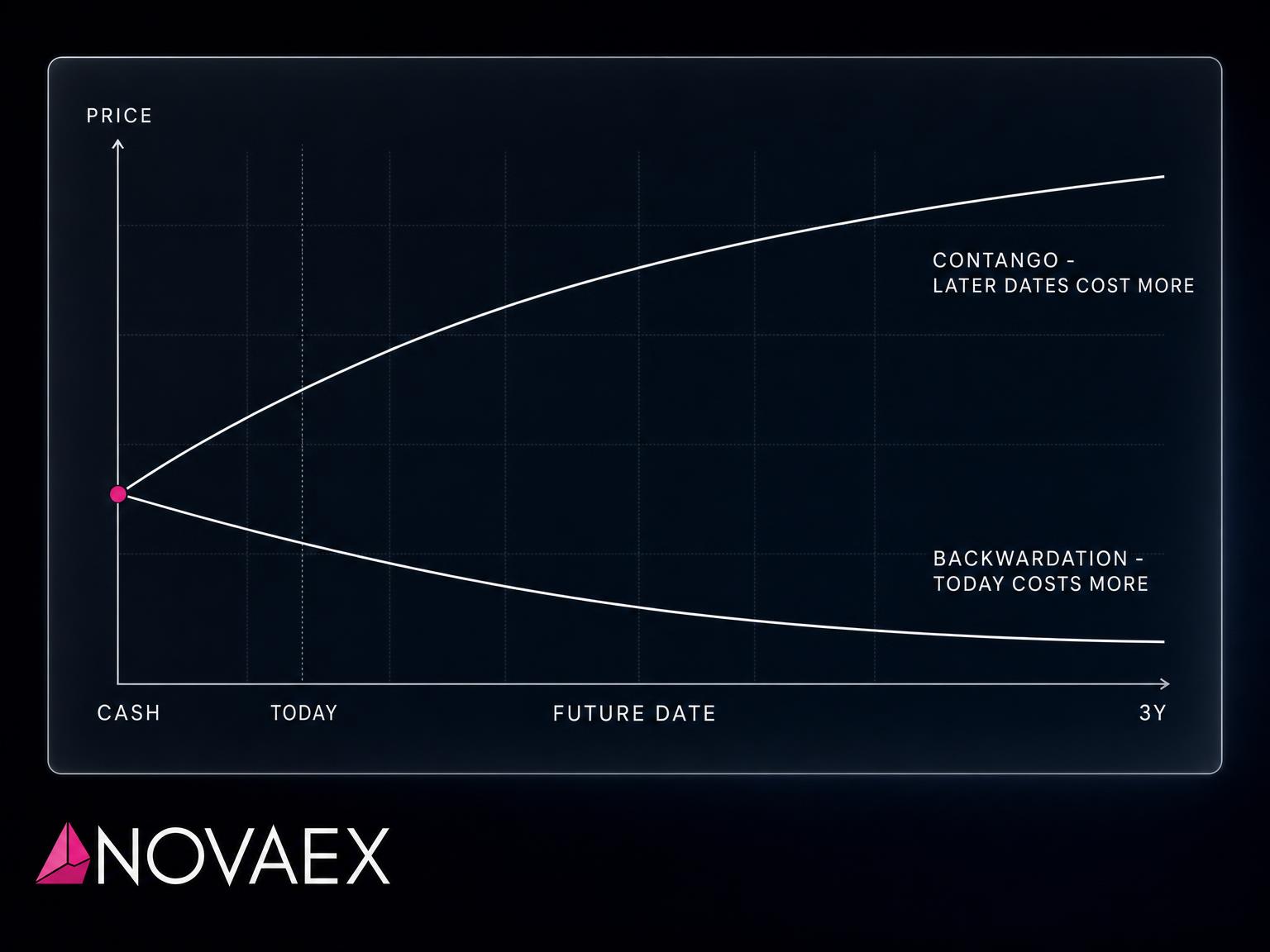
Contango and backwardation translated for the board: what each shape costs in cash and cover, and the two sentences that carry it.
The forward curve is today's price for metal for every future date, plotted as one line. When later dates cost more than today, the market is in contango. When later dates cost less than today, it is in backwardation. That slope tells the board two things: what cover costs right now, and whether holding metal pays or charges.
What is the forward curve, in one line?
The forward curve is the market's price list for metal delivered later. Each point on the line is a price for a different date: cash, one month out, three months out, further. The shape of that line is the market saying whether metal is easy to get hold of or tight. A rising line points to metal in store and time to spare. A falling line points to someone needing metal now.
What does contango mean for our cash and cover?
Contango means metal for later delivery costs more than metal today, so the curve slopes up. It is the normal shape when warehouses hold stock: the extra cost covers storage and finance for carrying metal forward, as CME's curve introduction describes. For the company, contango keeps cover cheap and orderly. Rolling a short hedge forward usually costs little, and holding priced stock carries without a penalty. The cash question is simple. We pay to carry, and the market pays us back for it.
What does backwardation mean for our cash and cover?
Backwardation means metal today costs more than metal for later, so the curve slopes down. Buyers pay extra for immediate units because nearby stock is tight, the same tightness StoneX describes as higher spot prices against lower forward prices. For the company, backwardation makes cover expensive. A short hedge rolled forward buys back high and sells low each time it moves, and that roll cost lands in cash. Unpriced sales left open into a falling curve also lose value while the board waits. This is the structure that needs explaining early, not at month-end.
How do I explain where we stand in two sentences?
Say which shape we are in, then what it costs us. "Copper is in backwardation, so cover is costing us each time we roll. Our priced tonnage is protected; the open tonnage is the exposure." Or the calmer version: "Aluminium sits in contango, so carrying stock and rolling cover costs us little. The position holds as priced." Name the metal, name the shape, name the cash effect. That is the whole translation.
What should the board approve before the desk opens?
Approve the cover on the open tonnage while the curve still allows it. In backwardation, that means agreeing to close the gap now rather than paying the roll each week it stays tight. In contango, it means agreeing to hold the hedge line and let the carry do its work. Novaex reads the curve per metal across aluminium, zinc, nickel, tin, copper and lead, with LME and MCX live on screen and COMEX and SHFE computed into the view, and reconciles the physical, hedge and broker books into one position the board can check line by line. Bring that page, and the curve stops being a chart.
Worth approving before the window moves.