What automated expiry and European-style LME options change on your desk
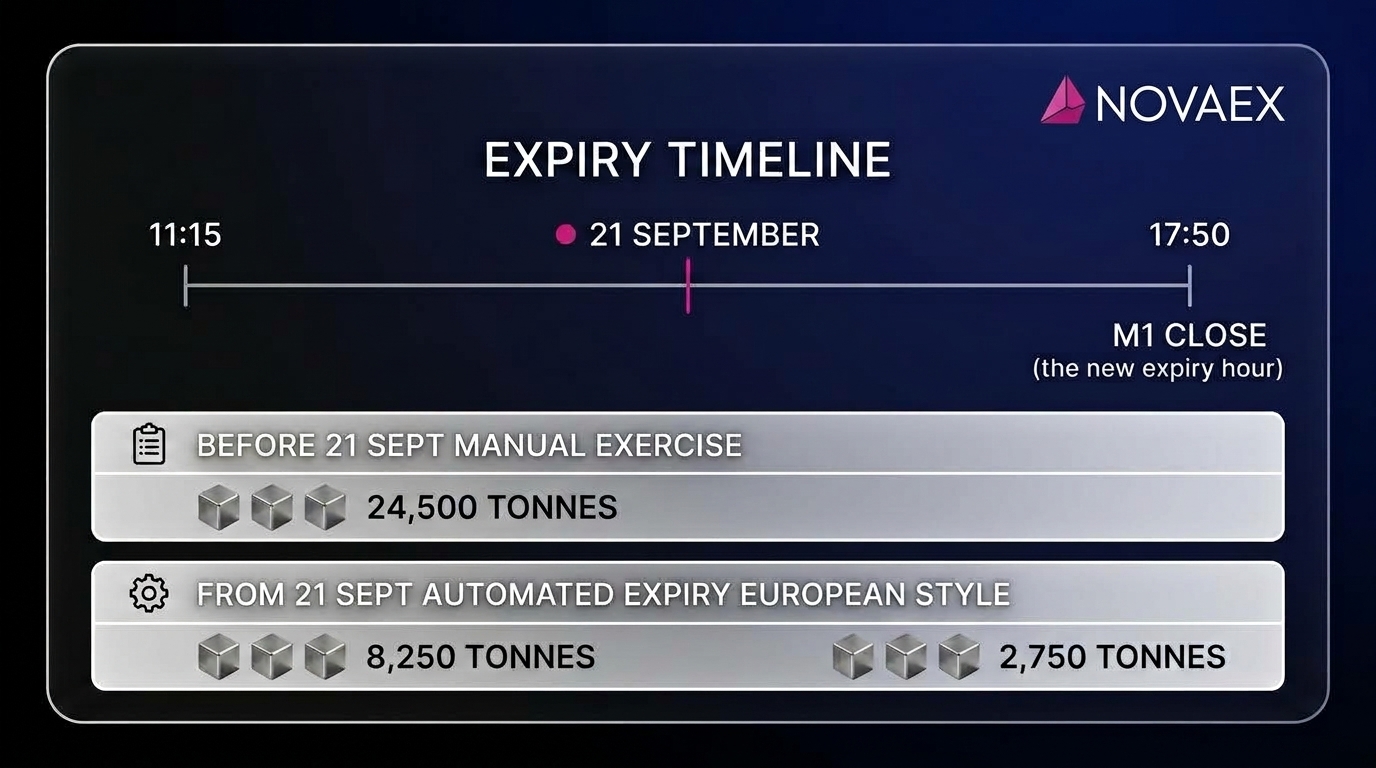
The 21 September cutover as a desk procedure: what happens to open positions, what to decide before the date, and what stops being manual.
On 21 September 2026 the LME moves listed metal options to automated expiry and European-style exercise in a single cutover. Open positions carry across, but early exercise goes away, expiry is decided against the M1 Closing Price near 17:50, and anything in the money at that point is handled by the clearing process rather than by a ticket you file.
What actually changes on 21 September?
From 21 September 2026, LME metal options become European-style and expire automatically. European-style means the option can be exercised only on the expiry date itself, not on any day before it. Automated expiry means the clearing process settles what is in the money against the published reference, without the desk filing a manual exercise instruction to make it happen. The LME options roadmap names the date as a single-day cutover, and consultation respondents backed it because early exercise was rare and the manual process added risk.
The two details that matter on the desk are the reference and the hour. The exercise reference moves to the M1 Closing Price, and the expiry point moves from the old 11:15 morning slot to near 17:50. That shifts which price decides your outcome, and when your cover needs to be in place.
What happens to your open positions?
Nothing is cancelled and nothing is rebooked by you. Positions listed before the cutover carry into the new handling, but they behave under the new rule from the 21st: no early exercise, one reference price, one expiry run. That is the exchange part, stated in the LME notice.
The desk part is your own bookkeeping, and this is desk practice, not exchange rule. Pull every open LME metal option by prompt, strike, long or short, and the physical or hedge it sits against. Where an option was held partly for the right to exercise early, for instance a short-dated long against a shipment sliding inside the quotation period, that reason falls away on the 21st. The position stays. The reason for holding it needs a second look.
Reconcile physical, hedge and broker books line by line before the date, so the carry into automated handling starts from a squared position. Trail attached beats memory here.
What do you have to decide before the date?
Three calls, made before the desk opens on the 21st.
First, which longs you actually want to own into expiry. Under American-style handling you could lift a long early if the physical moved. From the 21st you hold it to the expiry run or you sell it out first. If a long only made sense as an early-exercise candidate, close or replace it now.
Second, what covers your shorts into the new expiry hour. A short that expires in the money becomes a futures position struck against the M1 Closing Price near 17:50, not the old morning reference. Check the forward cover and the margin headroom for that later print. The price that decides you moves to the end of the day.
Third, where your quotation periods sit against the new timing. A physical purchase priced off a morning assessment and a hedge now settling off an evening M1 close leaves a basis gap intraday. Name it per lot, per metal, across copper, aluminium, zinc, nickel, tin and lead, and decide whether the hedge month still matches the physical month.
What stops being a manual choice?
Filing the exercise ticket. Under the old process the desk, or the broker on instruction, had to act to take a position that was in the money through expiry. From the 21st that step sits inside the automated run. Positions in the money against the M1 Closing Price are carried to their futures result by the clearing process, without a separate instruction.
That removes one failure, the missed ticket. It also removes one freedom. You can no longer use early exercise to shape a position mid-life. Timing decisions move earlier: sell, roll, or hold into the run. The desk that used to decide at 11:00 on the day now decides the evening before.
Your checklist for the 21st
List every open LME metal option: prompt, strike, long or short, broker account.
Mark each against its physical or hedge pair and its quotation period.
Flag any long held for early exercise and close, roll, or re-justify it.
Recalculate short cover against the M1 Closing Price near 17:50, with margin headroom checked.
Confirm with each broker how they will report the automated run, and where the resulting futures will land.
Square physical, hedge and broker books to one reconciled position before the cutover, line by line.
LME and MCX prints sit live on screen; COMEX and SHFE values feed the cross-exchange view as computed figures, so read the arb that way on the day.
Square it before the 21st and the cutover stays a procedure.