Why fixed-price sales lose margin when metal prices rise
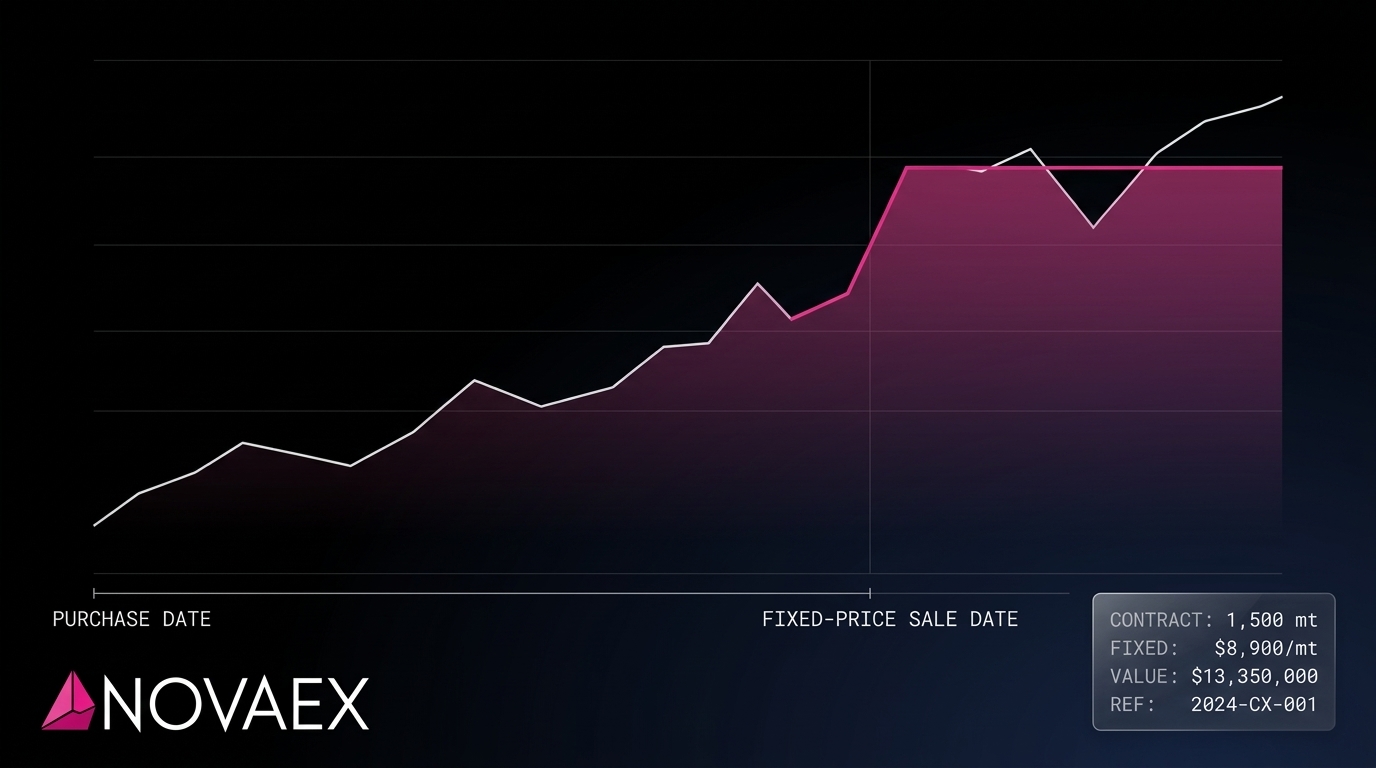
The margin on a fixed-price sale lives between two dates. Date the window, run the worst move across it, then cover it.
A fixed-price sale on a floating metal input leaves the margin open between two dates: the day the metal price is set on the purchase, and the day the finished goods ship at the agreed price. If the metal rises between those dates and the tonnage is unhedged, the margin pays for the move, tonne for tonne.
You quoted the job in good faith. The metal moved anyway. That gap is where the margin went.
Why does a fixed-price sale lose money when metal rises?
A fixed-price sale loses margin when metal rises because the sale price is agreed up front while the metal cost is still floating. Every dollar the metal price climbs between the purchase pricing date and the sale date comes straight off the margin on the unhedged tonnage, with nothing in the sale price to offset it.
The sale fixes revenue. The purchase leaves cost open. Between them sits an open window, sometimes days and sometimes weeks, where the business is short the metal without meaning to be. A cable fabricator quoting assemblies in March against copper bought on an April quotation period carries exactly this window. So does an aluminium packaging maker quoting lids against ingot that prices a month later.
The LME's own hedging guide puts it plainly: manufacturers agreeing fixed-price sales face metal price risk that financial hedges, through futures or forwards, are built to carry (physical and financial hedging guide). The mechanism is simple. The part most books skip is dating the exposure honestly.
How long is your open window, really?
The open window runs from the date the metal price is fixed on the way in to the date the sale price stops being adjustable on the way out. That sounds obvious, and most fixed-price books still measure it once, at quotation, and never again.
Pull the last three fixed-price jobs and date each leg. On the way in: which quotation period actually priced the metal, the supplier invoice date, the monthly average, or the arrival date? On the way out: when did the customer price lock, at order date, dispatch date, or something in between? The window is the distance between those two answers.
Two things stretch it without anyone noticing. Quotation periods mismatch: the purchase prices on one basis period and the sale was costed on another. And tonnage rolls: a repeat order reprices the finished goods while the metal leg still references the old period. Each adds days where the margin is exposed and the book shows nothing.
Write the longest window down, in days, per job. That number is the exposure. Everything else follows from it.
What does a price move inside that window do to margin?
A price move inside the window changes the metal cost while the sale price stands still. The arithmetic is direct: the cost shift equals the price move per tonne multiplied by the exposed tonnage, for the days the window stays open.
Say the window is open and the metal climbs between the purchase pricing date and the sale date. Revenue per unit holds where the quote put it. Metal cost per unit follows the market up. The difference lands on margin in full, on every unhedged tonne. If the metal falls instead, the same window hands the margin back. The window does not care which direction helps.
That symmetry is why the book misleads. A falling market flatters an unhedged fixed-price book for a quarter, and the quote logic looks sound. Then one rising month takes back two quarters of that luck. The margin was never priced. It was gambled, in the gap between two dates.
Leg What is fixed What still floats
Sale Finished-goods price, quantity, delivery date Nothing. Revenue is set
Purchase Quantity, grade, delivery terms Metal price until the quotation period closes
Gap between them Nothing fixed Margin, for every day the window stays open
Cover matters more than direction. A manufacturer using swaps to carry fixed-price commitments while the underlying metal floats is using the standard answer for this shape of risk (how swaps protect margins on fixed-price business). The swap does not predict the move. It closes the window the move would pass through.
Which hedge closes a purchase-to-sale gap?
The hedge that closes the gap is the one dated to the window, not to the month. Match the hedge tenor to the purchase quotation period, for the tonnage quoted fixed, and lift it as the purchase price fixes.
Three checks keep it honest. First, contract against quotation: the hedge references the same pricing basis the supplier invoice will, same metal and same quotation period shape. Second, tonnage against quote: hedged tonnes equal fixed-price tonnes sold, not forecast tonnes. Third, lift against purchase: the hedge comes off as the physical price sets, so the book is never hedged and holding physical at once.
LME prompt-date flexibility exists for exactly this dating work, with daily, weekly and monthly dates that let a hedge sit against the physical date rather than the calendar month. Where the sale and the hedge still sit on different dates, the basis between them is its own exposure, and it gets measured with it, line by line.
This is separate work from building the landed cost itself, which sets the quote from base price plus premium, freight and duty, priced line by line. That calculation sets the quote. This one defends it after the quote goes out.
What should you do before the desk opens?
Model one job, the longest open window on the current book. Date both legs, measure the window in days, and run the worst move you have already lived through across it.
Then decide the cover for that window, per metal, and date it to the purchase quotation period. Worth closing before the window prices against you.